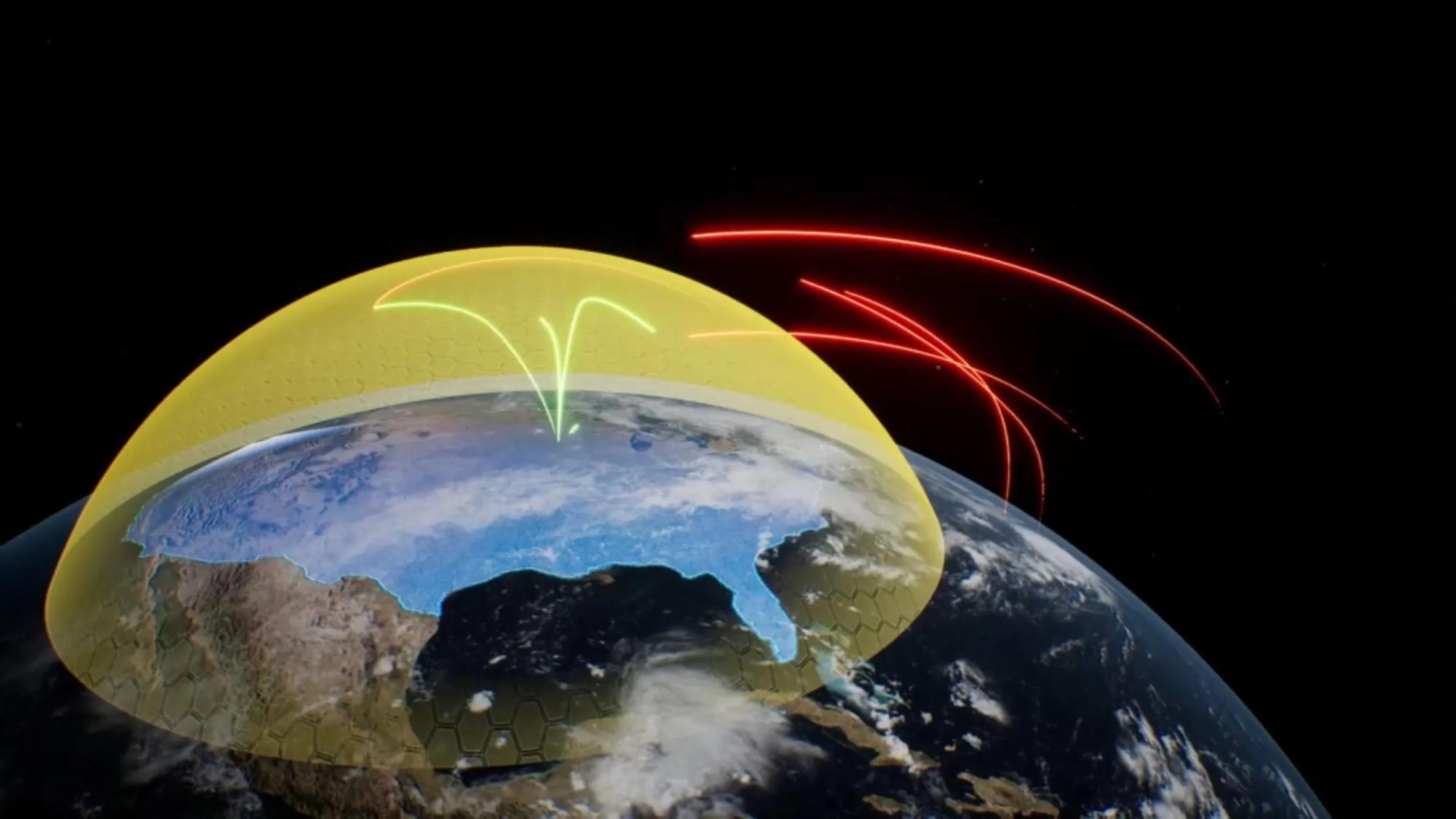
Earlier this week, Pentagon chief Pete Hegseth observed what he called a successful test of "directed energy weapons" against drone and cruise missile attacks as part of the Trump administration's "Golden Dome for America" project. These new weapons, also known as "DEWs," promise defensive measures that can counter drone and missile attacks. They also offer applications against human targets, both on the battlefield and, more controversially, off it. The weapons ... damage their targets not with physical projectiles but with highly concentrated electromagnetic energy fired at the speed of light in the form of sound and particle beams, microwaves and, most famously, lasers. Shooting down such drones with conventional missiles is a drain on resources that favors the attacker. DEWs offer a means to counter this strategy without straining the defender's financial resources. With cheap drone attacks, "your enemy can bankrupt you, so we have to deploy these lasers," former U.S. Navy pilot Matthew "Whiz" Buckley [said]. "The economics are starting to level the battlefield here." Their long-term health impacts on human targets are also not yet clear, which has been a source of controversy following the use of DEWs to disperse crowds, including protesters, and the belief that such weapons may have been used covertly on U.S. officials both at home and abroad, resulting in those attacked suffering from what's been called "Havana syndrome."
Latest
Latest News
Each news summary is created according to strict standards. Here's how we do it.
Each summary is created using a consistent editorial procedure. The target length is approximately 16 lines of 11-point Arial text in a 650-pixel-wide column. Up to 25% of a summary may be set in bold to emphasize the most important ideas. Summaries are composed of verbatim excerpts presented in the same sequence as they appear in the original news source, with very minor editorial additions. Where material has been omitted between excerpts, the omission is indicated with ellipses (...). Any words added by an editor for clarity or context appear in [brackets]. Our original news editor was Fred Burks. Tod Fletcher edited most summaries from 2007 through 2014, and Mark Bailey has served as news editor since 2014.