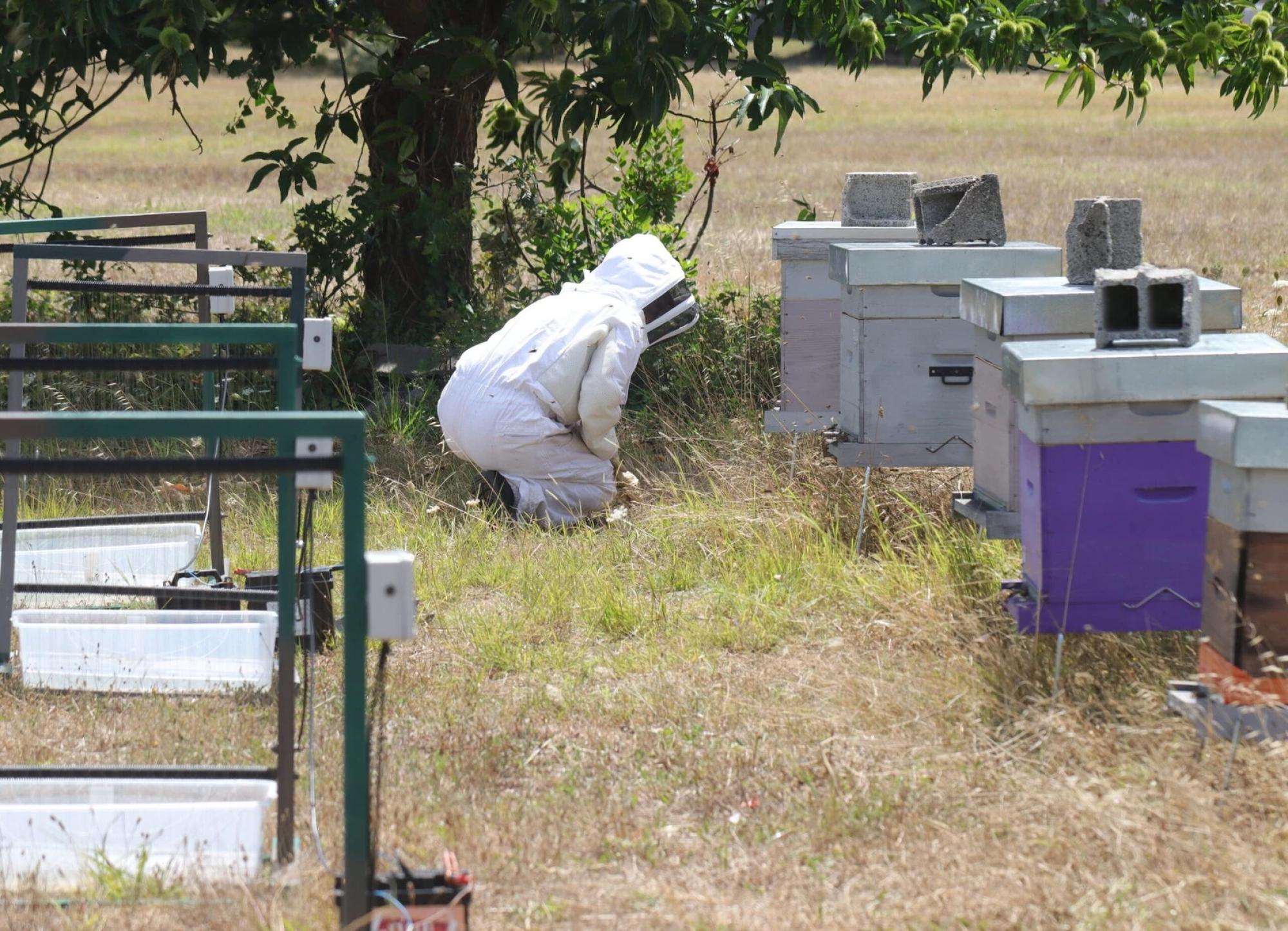
Michel Costa had become a frustrated veteran of an obscure yet devastating war in Europe. The enemy: invasive Asian hornets, which had been massacring his honey bees. When Costa, a retiree and avid beekeeper, discovered a new weapon with the potential to change the course of the entire war, he was intrigued. Several companies had begun selling so-called "electric harps," which they claimed could kill the hornets in droves by electrocuting them as they flew through. Although the harps take different forms, each one is made of some sort of large frame, which is then "strung" with conductive metal wires. These are then connected to a source of electricity, often solar panels, so that the wires conduct simultaneously positive and negative charges. When a hornet flies through, its wings touch the wires on either side, completing a circuit, and thereby delivering a fatal current of electricity. Beekeepers then place the harps around their hives in positions along the hornets' frequent flight paths. The harps can reduce predation pressure by 89 percent " enough to give hives the chance to replenish their stores. In one study only 56 percent of unprotected hives survived through winter, while 78 percent of those protected by harps did. Harps are also cheaper than other methods for beekeepers to install and operate. Beekeepers can buy them in complete kits that cost around $300 ... as Costa did. When combined with solar panels, maintenance costs are minimal.
Latest
Latest News
Each news summary is created according to strict standards. Here's how we do it.
Each summary is created using a consistent editorial procedure. The target length is approximately 16 lines of 11-point Arial text in a 650-pixel-wide column. Up to 25% of a summary may be set in bold to emphasize the most important ideas. Summaries are composed of verbatim excerpts presented in the same sequence as they appear in the original news source, with very minor editorial additions. Where material has been omitted between excerpts, the omission is indicated with ellipses (...). Any words added by an editor for clarity or context appear in [brackets]. Our original news editor was Fred Burks. Tod Fletcher edited most summaries from 2007 through 2014, and Mark Bailey has served as news editor since 2014.