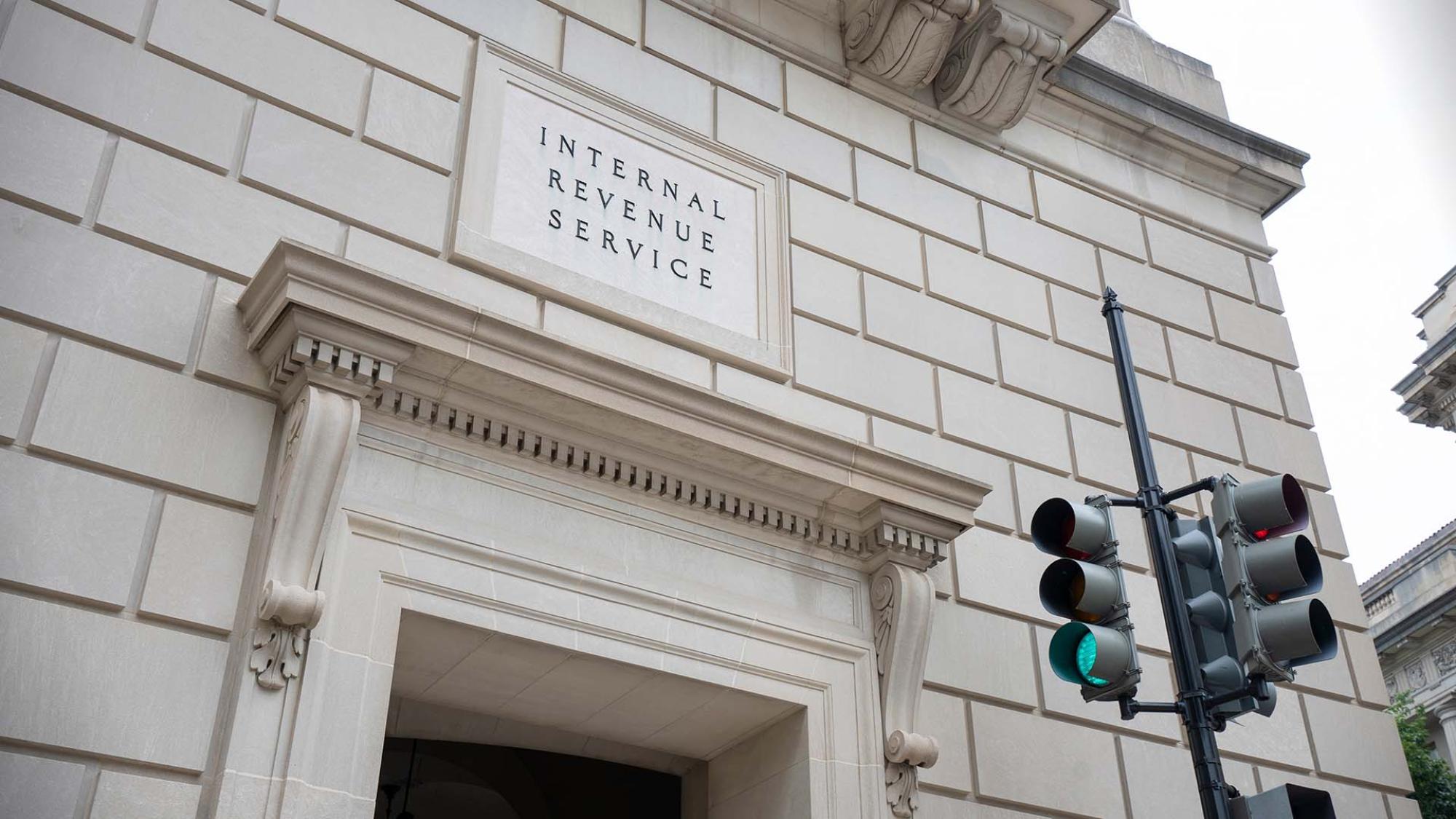
Michael Welu worked at the IRS for decades. During his time at the IRS, he says, upper management in the division tasked with auditing large corporations and ultrawealthy people the Large Business and International Division " was quick to dismiss any suggestion that a powerful taxpayer may have committed a crime, and commonly discouraged frontline agents from pursuing big cases. This stood in deep contrast to the office that policed small businesses and self-employed people, which was empowered to ... take an appropriately firm stance toward taxpayers breaking the law. "I was putting butchers, bakers and candlestick makers in jail, but the big stuff we really wanted to go after was being ignored," Welu told the International Consortium of Investigative Journalists. "It could be the most egregious, ridiculous scheme and they were just not interested." Over the past five years, [the Large Business and International Division] flagged no more than 22 instances of possible tax crimes for the agency's criminal investigators to review further " out of trillions of dollars in annual income from large corporations and ultrawealthy people that the office oversees. During the same five years, the IRS office that covers small businesses and self-employed people flagged roughly 40 times more possible crimes, sending criminal investigators 848 referrals. The IRS says the amount of U.S. taxes left uncollected could exceed $600 billion per year.
Latest
Latest News
Each news summary is created according to strict standards. Here's how we do it.
Each summary is created using a consistent editorial procedure. The target length is approximately 16 lines of 11-point Arial text in a 650-pixel-wide column. Up to 25% of a summary may be set in bold to emphasize the most important ideas. Summaries are composed of verbatim excerpts presented in the same sequence as they appear in the original news source, with very minor editorial additions. Where material has been omitted between excerpts, the omission is indicated with ellipses (...). Any words added by an editor for clarity or context appear in [brackets]. Our original news editor was Fred Burks. Tod Fletcher edited most summaries from 2007 through 2014, and Mark Bailey has served as news editor since 2014.