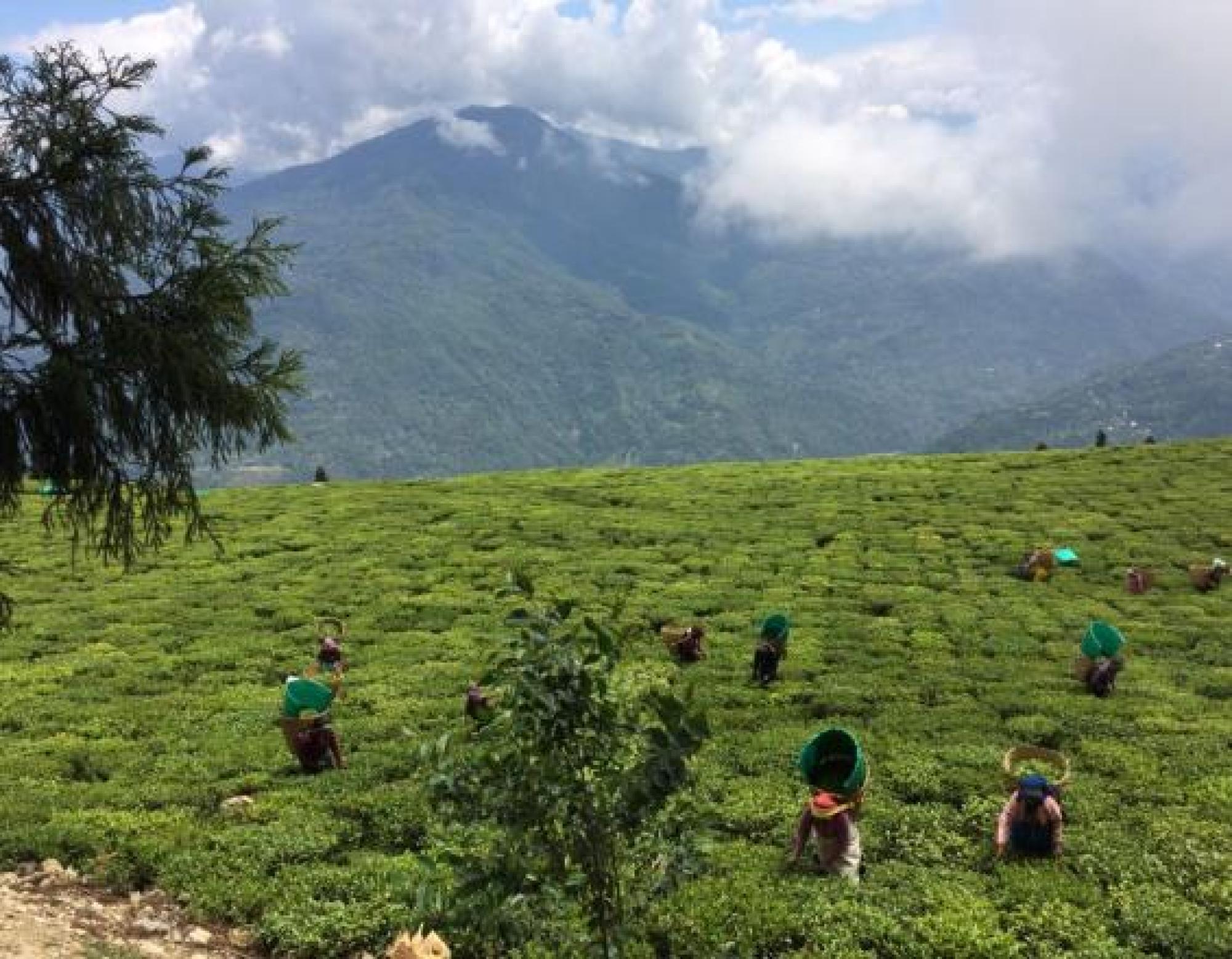
Western Sikkim in India ... officially went 100 percent organic in 2016, and won what many regard as the Oscar for best public policies the UN Food and Agriculture Organisation's Future Policy Gold Award " in 2018. This change is necessary: An estimated 52 percent of agricultural land across the globe is moderately to severely degraded due to monoculture, chemical pesticide and fertilizer use, and groundwater extraction " and this will accelerate unless these practices change. Sikkim is India's most sparsely populated state. Its mainly subsistence farms were, and continue to be, spread thinly across mountainous terrain, which makes supplying inorganic fertilizers expensive. Consequently, using homegrown organic manure and vermicompost (compost created from worm waste) was very much the norm. It also helped that the local populace already understood the value of organic food. "As children, we were taught that basti (local) vegetables grown without any chemical inputs by small farmers, were the best vegetables to eat," says Renzino Lepcha, CEO of Mevedir, an organic agri-business and certification agency in Sikkim. [Former] chief minister Pawan Chamling wrote, "[W]e have not inherited this earth from our forefather but have borrowed it from our future generations, it is our duty to protect it by living in complete harmony with nature and environment." Rain-fed agriculture has helped reduce the need for irrigation and conserve water. Some reports suggest that since 2014, bee populations have been rebounding, with yields of pollinator-dependent cardamom increasing by more than 23 percent.
Latest
Latest News
Each news summary is created according to strict standards. Here's how we do it.
Each summary is created using a consistent editorial procedure. The target length is approximately 16 lines of 11-point Arial text in a 650-pixel-wide column. Up to 25% of a summary may be set in bold to emphasize the most important ideas. Summaries are composed of verbatim excerpts presented in the same sequence as they appear in the original news source, with very minor editorial additions. Where material has been omitted between excerpts, the omission is indicated with ellipses (...). Any words added by an editor for clarity or context appear in [brackets]. Our original news editor was Fred Burks. Tod Fletcher edited most summaries from 2007 through 2014, and Mark Bailey has served as news editor since 2014.