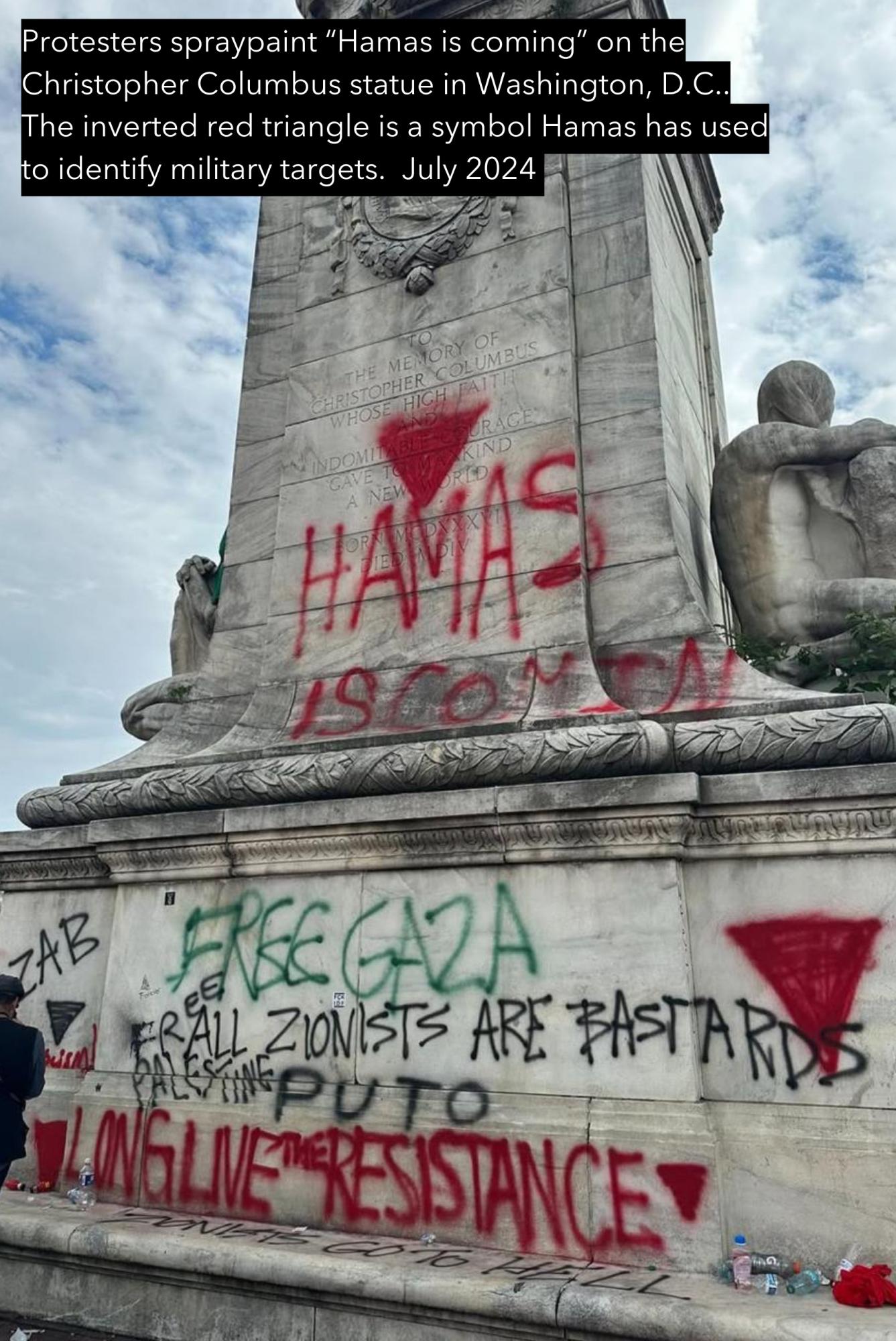
In yet another example of Donald Trump announcing new policy via social media, the president has now pledged to crack down on "illegal protests" at universities, warning that "agitators" will be headed to jail or targeted for deportation. On the campaign trail, Trump already pledged to crush pro-Palestinian protests if they ramp up again, including deporting foreign national students who participate. Peaceful protest isn't illegal. But what many do not realize is that counterterrorism law gives enormously wide-ranging discretionary authority to the president, to law enforcement, and to immigration officials that could be used to squelch free speech and dissent. For example: providing material support for terrorism is a federal crime. The breathtaking scope of this provision becomes more clear once we see how the terms are defined. "Material support" includes the provision of "service," "expert advice or assistance," "communications equipment," or "personnel" (including yourself). And the Supreme Court has confirmed that the support does not actually have to go toward any particular violent act that might be considered terrorism, only to a group that is designated as a Foreign Terrorist Organization (FTO) by the U.S. government, even if that support is otherwise lawful. Hamas is designated as an FTO and those opposing U.S. and Israeli policy are often accused of supporting Hamas. Could peaceful pro-Palestine protesters be charged with materially supporting terrorism?
Latest
Latest News
Each news summary is created according to strict standards. Here's how we do it.
Each summary is created using a consistent editorial procedure. The target length is approximately 16 lines of 11-point Arial text in a 650-pixel-wide column. Up to 25% of a summary may be set in bold to emphasize the most important ideas. Summaries are composed of verbatim excerpts presented in the same sequence as they appear in the original news source, with very minor editorial additions. Where material has been omitted between excerpts, the omission is indicated with ellipses (...). Any words added by an editor for clarity or context appear in [brackets]. Our original news editor was Fred Burks. Tod Fletcher edited most summaries from 2007 through 2014, and Mark Bailey has served as news editor since 2014.