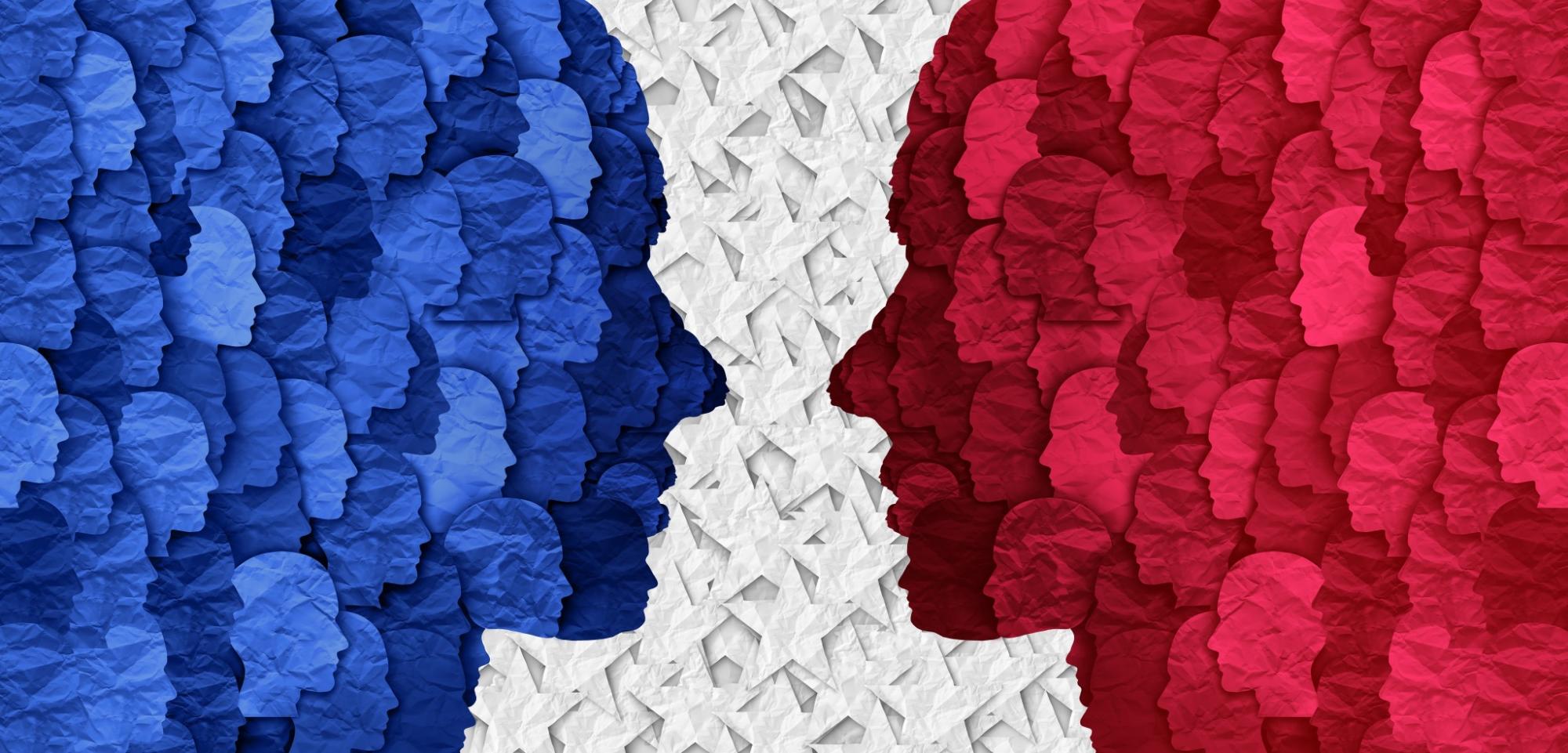
Polarization is widely recognized as one of the most pressing issues now facing the United States. Even as polarization has increased in recent years, survey research has consistently shown that many Americans think the nation is more divided than it truly is. Meanwhile, Democrats and Republicans think they dislike each other more than they actually do. Social media companies are often blamed for driving greater polarization by virtue of the way they segment political audiences and personalize recommendations in line with their users' existing beliefs and preferences. Given their scale and reach, however, they are also uniquely positioned to help reduce polarization. Jamie Settle's work demonstrates, through a combination of surveys and experiments, that affective polarization is likely to rise when social media users encounter content with partisan cues, even if the content is not explicitly political. A 2020 study by Hunt Allcott and colleagues echoes these concerns. The authors asked some participants to refrain from using Facebook for four weeks. Afterward, these participants reported holding less polarized political views than those who had not been asked to refrain from using Facebook. Deactivating Facebook also made people less hostile toward "the other party." When people interact with someone from their social "outgroup," they often come to view that outgroup in a more favorable light. Spreading more examples of positive intergroup contact ... could go a long way.
Latest
Latest News
Each news summary is created according to strict standards. Here's how we do it.
Each summary is created using a consistent editorial procedure. The target length is approximately 16 lines of 11-point Arial text in a 650-pixel-wide column. Up to 25% of a summary may be set in bold to emphasize the most important ideas. Summaries are composed of verbatim excerpts presented in the same sequence as they appear in the original news source, with very minor editorial additions. Where material has been omitted between excerpts, the omission is indicated with ellipses (...). Any words added by an editor for clarity or context appear in [brackets]. Our original news editor was Fred Burks. Tod Fletcher edited most summaries from 2007 through 2014, and Mark Bailey has served as news editor since 2014.