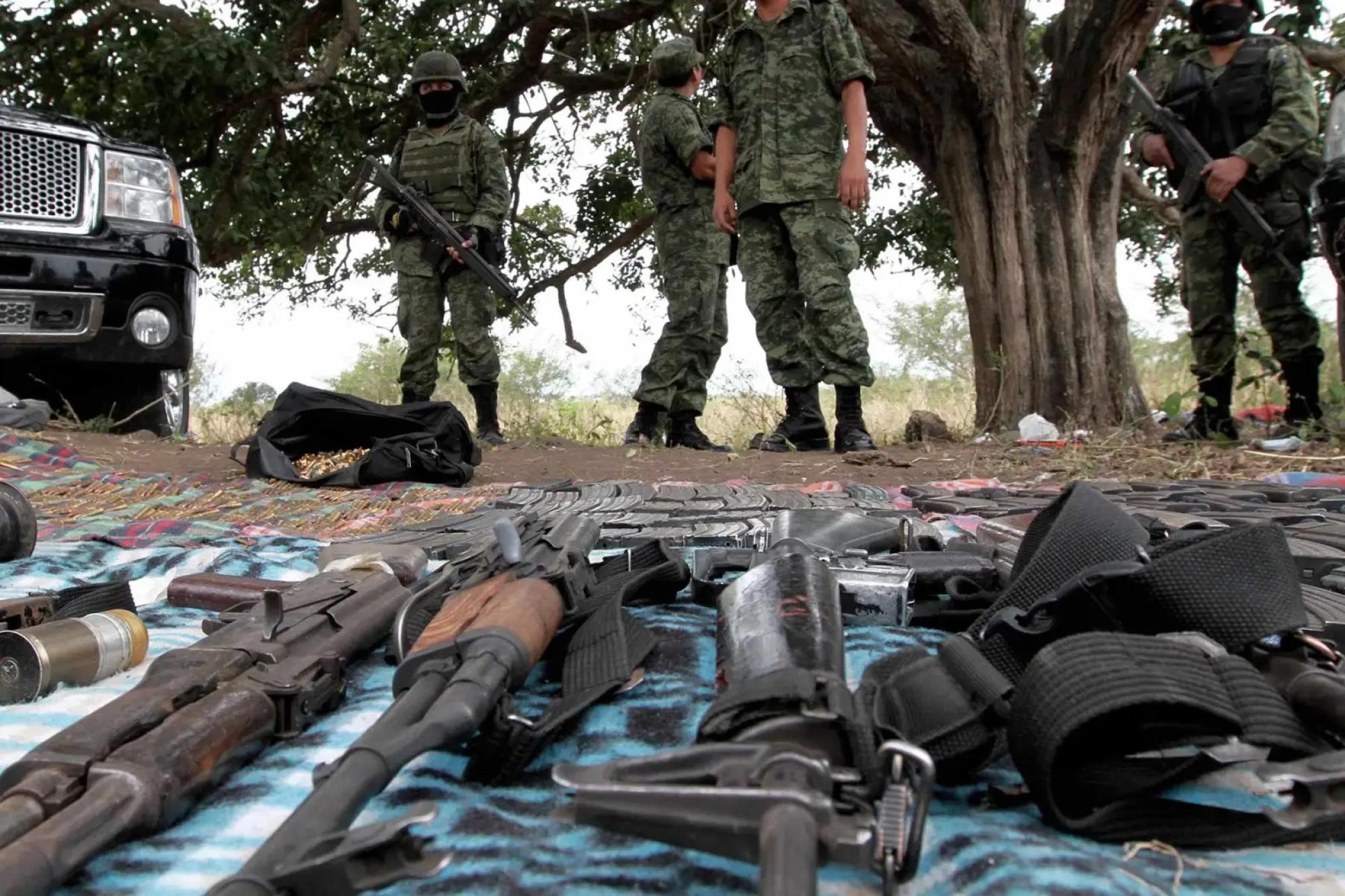
Project Gunrunner [was] a nationwide initiative launched in Laredo, Texas, in 2005, which sought to reduce the smuggling of firearms across the U.S. southern border. But while the primary tactic of Gunrunner was the interdiction of buyers and sellers who were violating the laws, [ATF] agents in Phoenix had other plans. They wanted to see where the guns went if they were allowed to cross the border to follow the small fish until they caught bigger ones. Agents named their operation "Fast and Furious," after the popular movie about car racing. Between September 2009 and December 2010, a joint task force comprised of federal officials from ATF, FBI, DEA, and ICE, working under the U.S. Attorney's Office for the District of Arizona, let over two thousand guns "walk" to Mexico. The murder that made the flawed operation public and political in the United States was of an American citizen on US soil: the killing of US Border Patrol agent Brian Terry. Though the investigators could not identify the specific gun that fired the bullet, two AK-47 style WASR-10 rifles were recovered at the scene. Both were traced to ... one of the straw purchasers the agents were monitoring under the Fast and Furious operation. ATF agents who shared their experiences during interviews conducted by a congressional committee admitted they knew that the only way they would learn the whereabouts of the guns they let go would be when Mexican law enforcement recovered them at crime scenes.
Latest
Latest News
Each news summary is created according to strict standards. Here's how we do it.
Each summary is created using a consistent editorial procedure. The target length is approximately 16 lines of 11-point Arial text in a 650-pixel-wide column. Up to 25% of a summary may be set in bold to emphasize the most important ideas. Summaries are composed of verbatim excerpts presented in the same sequence as they appear in the original news source, with very minor editorial additions. Where material has been omitted between excerpts, the omission is indicated with ellipses (...). Any words added by an editor for clarity or context appear in [brackets]. Our original news editor was Fred Burks. Tod Fletcher edited most summaries from 2007 through 2014, and Mark Bailey has served as news editor since 2014.