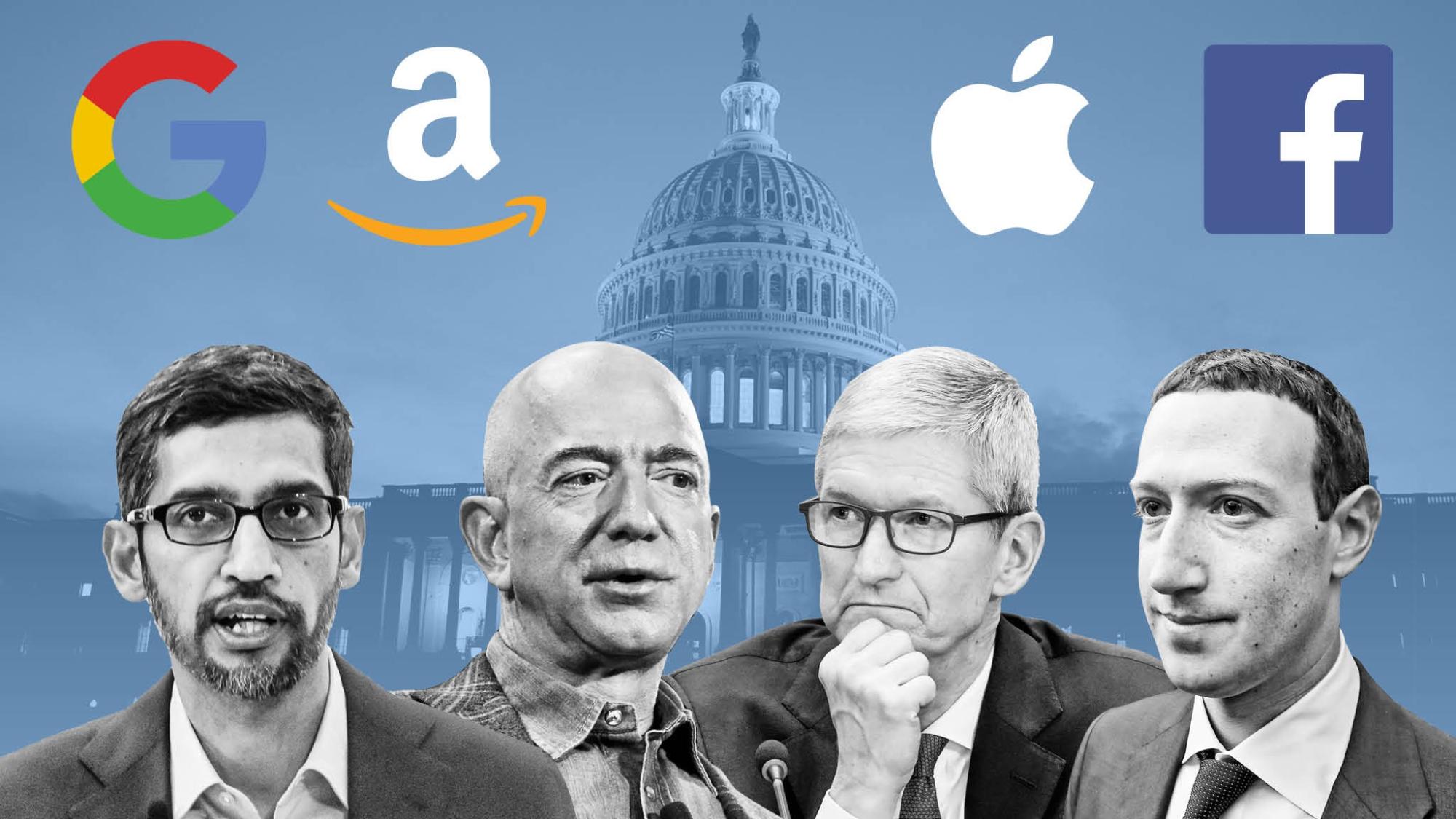
In almost every country on Earth, the digital infrastructure upon which the modern economy was built is owned and controlled by a small handful of monopolies, based largely in Silicon Valley. This system is looking more and more like neo-feudalism. Just as the feudal lords of medieval Europe owned all of the land ... the US Big Tech monopolies of the 21st century act as corporate feudal lords, controlling all of the digital land upon which the digital economy is based. A monopolist in the 20th century would have loved to control a country's supply of, say, refrigerators. But the Big Tech monopolists of the 21st century go a step further and control all of the digital infrastructure needed to buy those fridges from the internet itself to the software, cloud hosting, apps, payment systems, and even the delivery service. These corporate neo-feudal lords don't just dominate a single market or a few related ones; they control the marketplace. They can create and destroy entire markets. Their monopolistic control extends well beyond just one country, to almost the entire world. If a competitor does manage to create a product, US Big Tech monopolies can make it disappear. Imagine you are an entrepreneur. You develop a product, make a website, and offer to sell it online. But then you search for it on Google, and it does not show up. Instead, Google promotes another, similar product in the search results. This is not a hypothetical; this already happens.
Latest
Latest News
Each news summary is created according to strict standards. Here's how we do it.
Each summary is created using a consistent editorial procedure. The target length is approximately 16 lines of 11-point Arial text in a 650-pixel-wide column. Up to 25% of a summary may be set in bold to emphasize the most important ideas. Summaries are composed of verbatim excerpts presented in the same sequence as they appear in the original news source, with very minor editorial additions. Where material has been omitted between excerpts, the omission is indicated with ellipses (...). Any words added by an editor for clarity or context appear in [brackets]. Our original news editor was Fred Burks. Tod Fletcher edited most summaries from 2007 through 2014, and Mark Bailey has served as news editor since 2014.