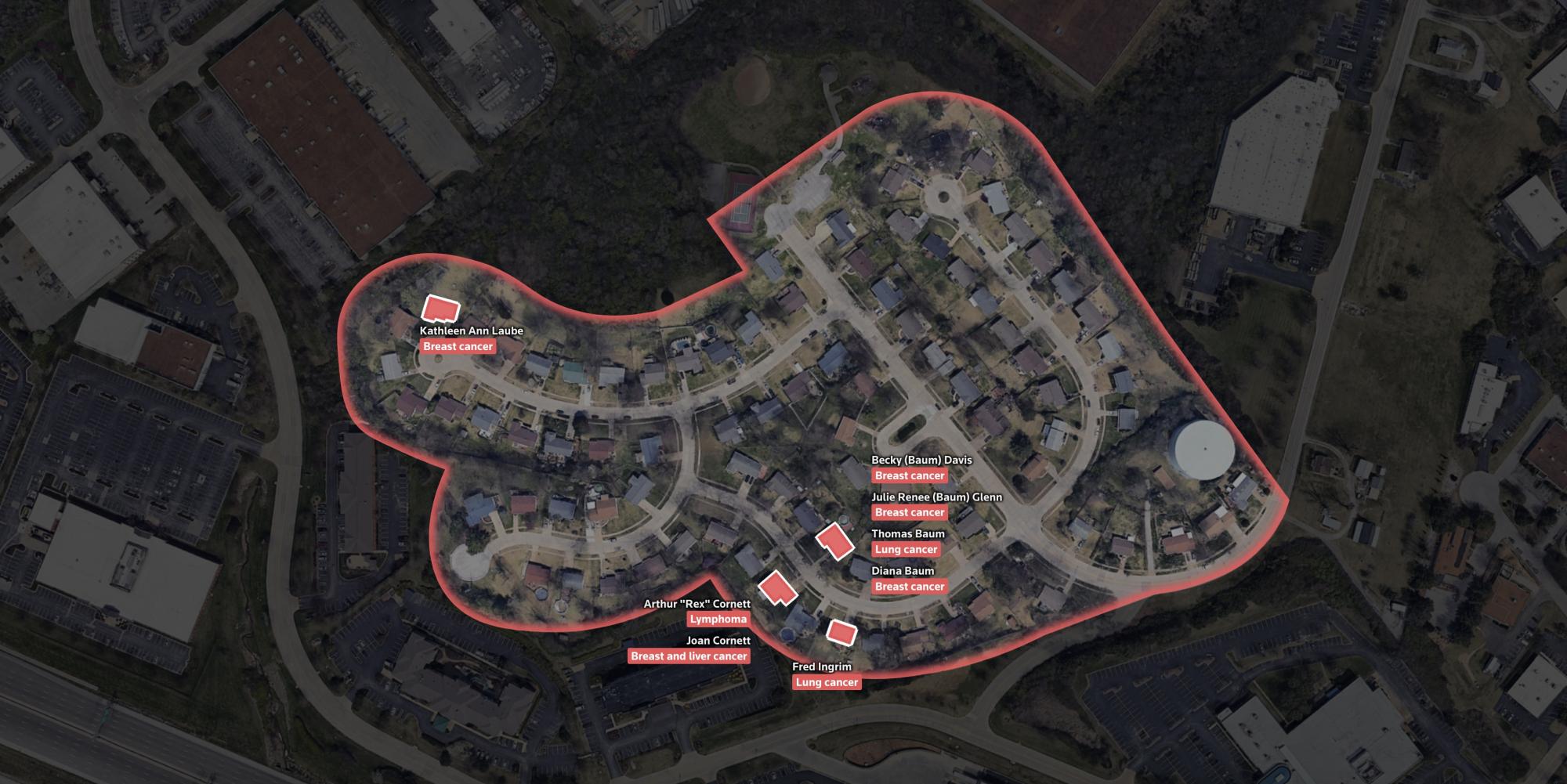
The 43,000 tons of radioactive waste and soil came from a top-secret initiative: The Manhattan Project, which built the atomic bombs America dropped on Japan in 1945. In 1973, that waste ended up in an unlined landfill in Bridgeton, Missouri, a St. Louis suburb. Workers spread it to cover trash and construction debris. In 1990, the U.S. Environmental Protection Agency declared the West Lake Landfill one of the nation's most contaminated sites requiring cleanup. [In 2012], residents mobilized, spotlighting stories of children dying from cancer. And they pressed waste-management giant Republic Services, the dump's owner, to remove the radioactive waste. In refuting neighbors' complaints, Republic tapped an unlikely ally that U.S. corporations have leaned on for decades: a federal health agency set up to protect people from environmental hazards just like the West Lake dump. A 2015 report by that small bureaucracy, the Agency for Toxic Substances and Disease Registry (ATSDR) ... declared that the landfill posed no health risk to the community. Deborah Mitchell grew up ... less than a mile from the dump. She lost both parents to cancer and battled the disease herself. Dozens of neighbors have similar stories. Three cancer researchers told Reuters the number of cases in the neighborhood is worrisome. "You just feel like you're being gaslighted by your own government," Mitchell said of the ATSDR's role.
Latest
Latest News
Each news summary is created according to strict standards. Here's how we do it.
Each summary is created using a consistent editorial procedure. The target length is approximately 16 lines of 11-point Arial text in a 650-pixel-wide column. Up to 25% of a summary may be set in bold to emphasize the most important ideas. Summaries are composed of verbatim excerpts presented in the same sequence as they appear in the original news source, with very minor editorial additions. Where material has been omitted between excerpts, the omission is indicated with ellipses (...). Any words added by an editor for clarity or context appear in [brackets]. Our original news editor was Fred Burks. Tod Fletcher edited most summaries from 2007 through 2014, and Mark Bailey has served as news editor since 2014.