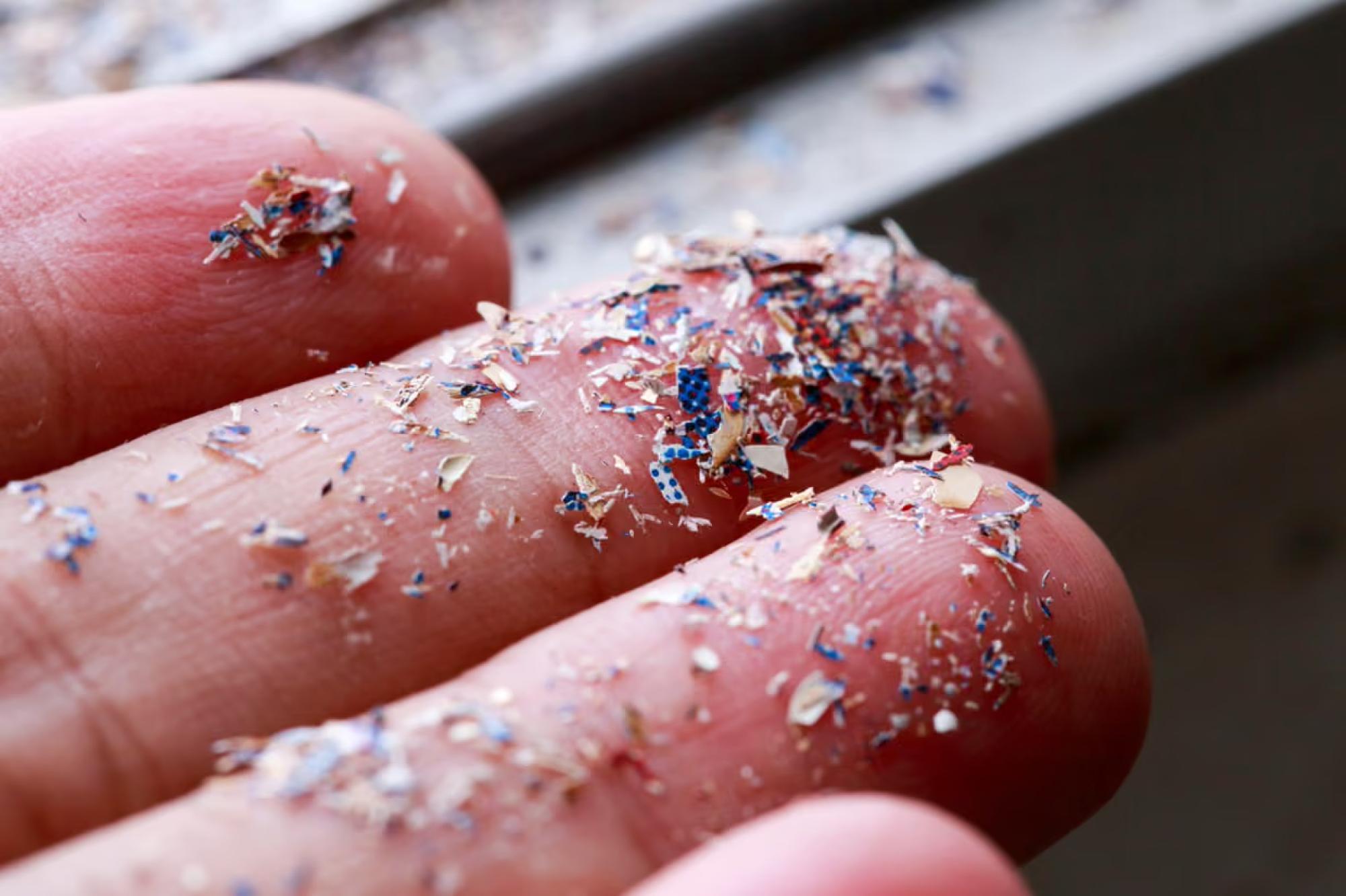
Every breath people take in their homes or car probably contains significant amounts of microplastics small enough to burrow deep into lungs, new peer-reviewed research finds, bringing into focus a little understood route of exposure and health threat. The study ... estimates humans can inhale as much as 68,000 tiny plastic particles daily. Previous studies have identified larger pieces of airborne microplastics, but those are not as much of a health threat because they do not hang in the air as long. The smaller bits measure between 1 and 10 micrometers, or about one-seventh the thickness of a human hair, and present more of a health threat because they can more easily be distributed throughout the body. The findings "suggest that the health impacts of microplastic inhalation may be more substantial than we realize", the authors wrote. Microplastics are tiny bits of plastic either intentionally added to consumer goods, or which are products of larger plastics breaking down. The particles contain any number of 16,000 plastic chemicals, of which many, such as BPA, phthalates and Pfas, present serious health risks. The study measured air in multiple rooms throughout several apartments. The source of the microplastics in the apartments is thought to be degrading plastic in consumer products, from clothing to kitchen goods to carpets. The concentration of plastic in ... cars' air was about four times higher than in the apartments.
Latest
Latest News
Each news summary is created according to strict standards. Here's how we do it.
Each summary is created using a consistent editorial procedure. The target length is approximately 16 lines of 11-point Arial text in a 650-pixel-wide column. Up to 25% of a summary may be set in bold to emphasize the most important ideas. Summaries are composed of verbatim excerpts presented in the same sequence as they appear in the original news source, with very minor editorial additions. Where material has been omitted between excerpts, the omission is indicated with ellipses (...). Any words added by an editor for clarity or context appear in [brackets]. Our original news editor was Fred Burks. Tod Fletcher edited most summaries from 2007 through 2014, and Mark Bailey has served as news editor since 2014.