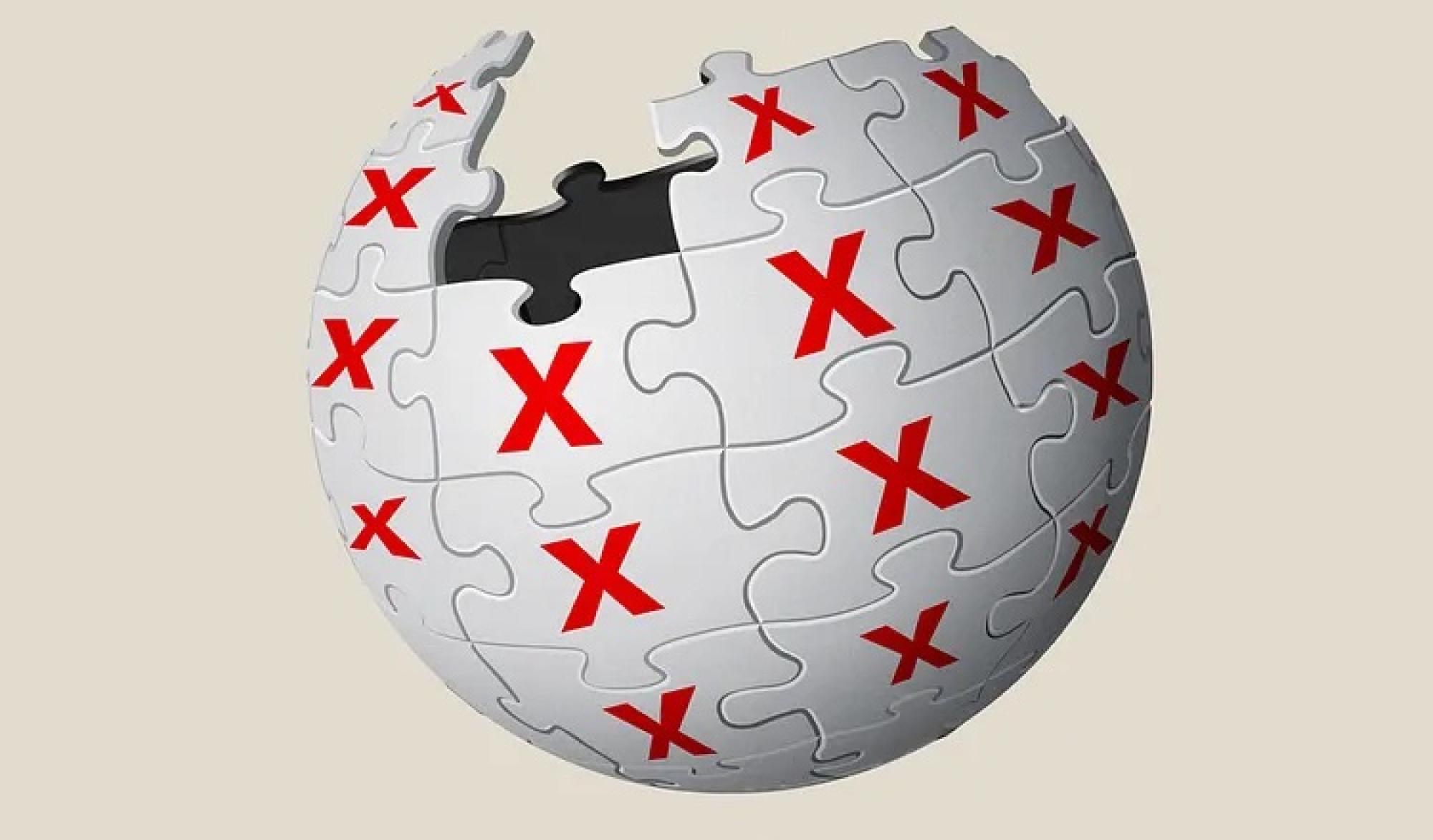
Twenty-five years ago, I co-founded Wikipedia, arguably the most important encyclopedia in human history. On Monday, I was indefinitely banned from the site. In early 2000, the internet was ... much freer. But it was also harder to use, and finding information took much longer. We needed a free, fair storehouse of knowledge: an encyclopedia built by, and open to, the public. It was exhilarating to build Wikipedia at that time. I watched in dismay as the site I'd created began to drift from its founding mission. Wikipedia has, over time, become decidedly globalist, academic, secular, and progressive. Important contributors have been blocked; facts censored in the name of "undue weight" and avoiding "fringe views"; and left-leaning outlets overwhelmingly favored. The Republican Party, for instance, is classified as being on the "right-wing to far-right" of the political spectrum. And the Democratic Party? "Center to center-left.". All this transpires with no mechanisms for real accountability. I was blocked from the site by one Wikipedia admin who declared that the consensus of the mob (the "community") favored my banning. Information is the most valuable currency in any society, and the ability of citizens to access, evaluate, and learn from a diversity of viewpoints is essential to a free civilization. Yet Wikipedia's yearslong shift away from that principletoward ideological gatekeeping and narrative control"undermines the very purpose for which it was created. So, now that I am powerless to try to fix the platform from the inside, what should I do?
Latest
Latest News
Each news summary is created according to strict standards. Here's how we do it.
Each summary is created using a consistent editorial procedure. The target length is approximately 16 lines of 11-point Arial text in a 650-pixel-wide column. Up to 25% of a summary may be set in bold to emphasize the most important ideas. Summaries are composed of verbatim excerpts presented in the same sequence as they appear in the original news source, with very minor editorial additions. Where material has been omitted between excerpts, the omission is indicated with ellipses (...). Any words added by an editor for clarity or context appear in [brackets]. Our original news editor was Fred Burks. Tod Fletcher edited most summaries from 2007 through 2014, and Mark Bailey has served as news editor since 2014.