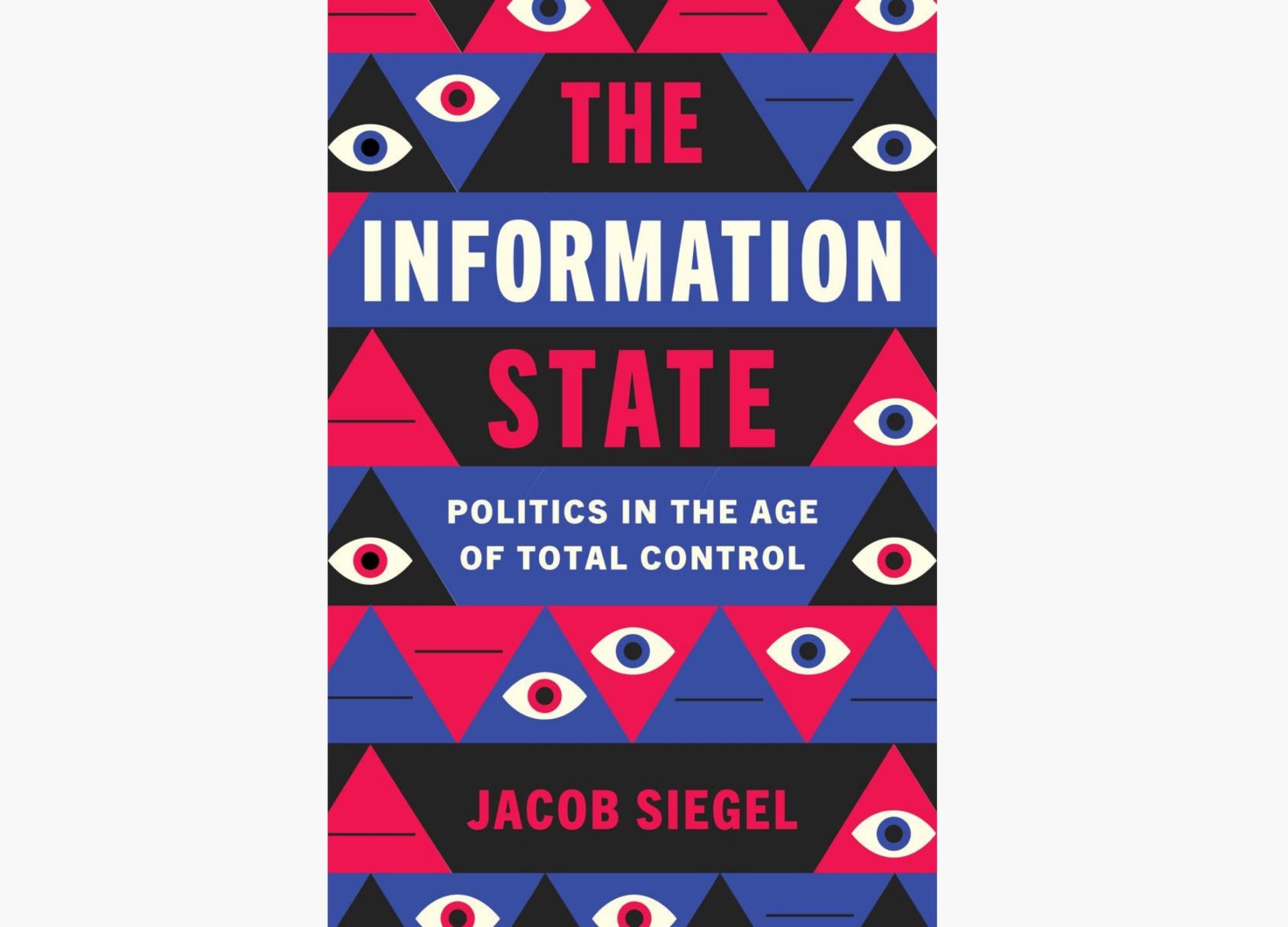
Last week, I published a book called The Information State: Politics in the Age of Total Control. It describes how, as technology has advanced, American politics and government have been transformed by the shift in societal power from visible laws and institutions to opaque forms of digital and informational control. One of the consequences of this shift has been the ability of the government-tech alliance"what I call "the information state""to carry out mass censorship online. This point was noted in a generally positive review of the book that ran on March 24 in a left-wing magazine called The Baffler. So I could only savor the irony when, less than a day later, the magazine purged the review from its website. In place of the purged piece is an editor's note informing visitors that the magazine removed the review "after determining that it does not meet The Baffler's fact-checking standards." If a magazine publishes something that generates significant controversy ... the liberal thing to do is to publish a counterargument. To cite a "factchecking" error without elaborating what it is leaves the public even less informed than before. The book [describes how] smart and often decent people wound up being puppeteered by a vast technocratic apparatus for managing public opinion that had disastrous consequences. To them, the real censors are not the paragovernmental information regulators, but the authors whose books they disagree with.
Latest
Latest News
Each news summary is created according to strict standards. Here's how we do it.
Each summary is created using a consistent editorial procedure. The target length is approximately 16 lines of 11-point Arial text in a 650-pixel-wide column. Up to 25% of a summary may be set in bold to emphasize the most important ideas. Summaries are composed of verbatim excerpts presented in the same sequence as they appear in the original news source, with very minor editorial additions. Where material has been omitted between excerpts, the omission is indicated with ellipses (...). Any words added by an editor for clarity or context appear in [brackets]. Our original news editor was Fred Burks. Tod Fletcher edited most summaries from 2007 through 2014, and Mark Bailey has served as news editor since 2014.