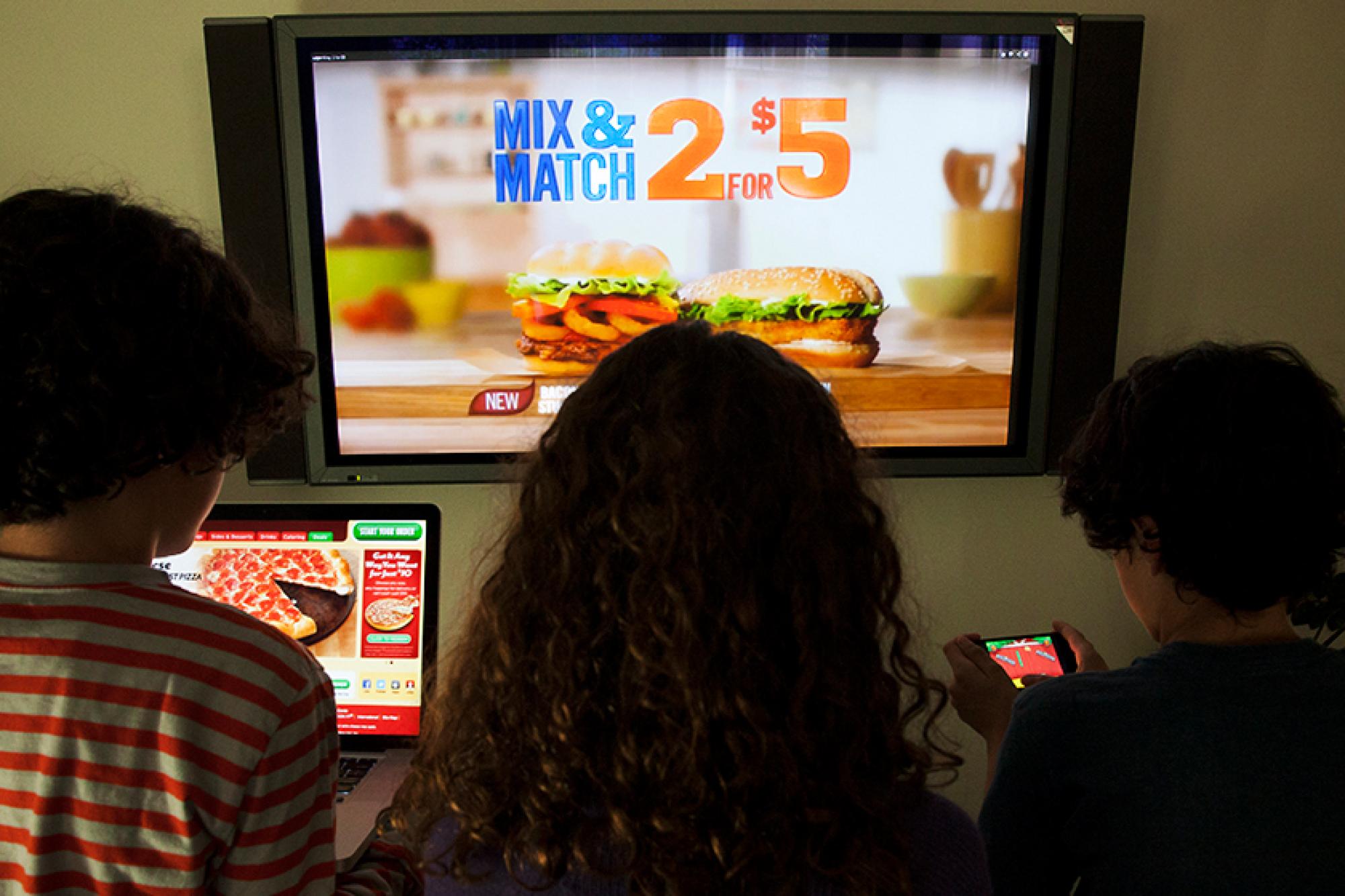
Unhealthy foods are becoming a silent epidemic, with one in seven adults and one in eight children globally now effectively addicted to ultra-processed foods. It's time to address this issue at its source: advertising. Consumption of junk food begins not with what goes in our mouths but with the messaging into our brains via advertising. UK junk food advertising is an industry worth tens of millions of pounds working to glamorise unhealthy diets. My own work looks at outdoor advertising, such as on billboards and bus stops. In 2022, among the biggest spenders on outdoor advertising were the likes of Coca-Cola, McDonald's, KFC, Subway and Müller. They spent £195m filling public spaces with monuments to fat, salt and sugar. Advertisers will say this is simply a question of choice, and that junk food ads respond to consumer demand. But do any of us feel deprived of choice by the absence of ads touting the supposed health benefits of smoking? Of course not. Society would be better off without ads for junk food on street corners. The good news? We can take action. Local authorities can introduce ethical ad policies that ban junk food ads on council-owned sites. Somerset council recently took this step, following in the footsteps of Bristol and Transport for London, whose junk food ad ban was predicted to save the NHS more than £200m. Outdoor advertising offers a poorly regulated platform for big corporations to push unhealthy diets on an unassuming public.
Latest
Latest News
Each news summary is created according to strict standards. Here's how we do it.
Each summary is created using a consistent editorial procedure. The target length is approximately 16 lines of 11-point Arial text in a 650-pixel-wide column. Up to 25% of a summary may be set in bold to emphasize the most important ideas. Summaries are composed of verbatim excerpts presented in the same sequence as they appear in the original news source, with very minor editorial additions. Where material has been omitted between excerpts, the omission is indicated with ellipses (...). Any words added by an editor for clarity or context appear in [brackets]. Our original news editor was Fred Burks. Tod Fletcher edited most summaries from 2007 through 2014, and Mark Bailey has served as news editor since 2014.