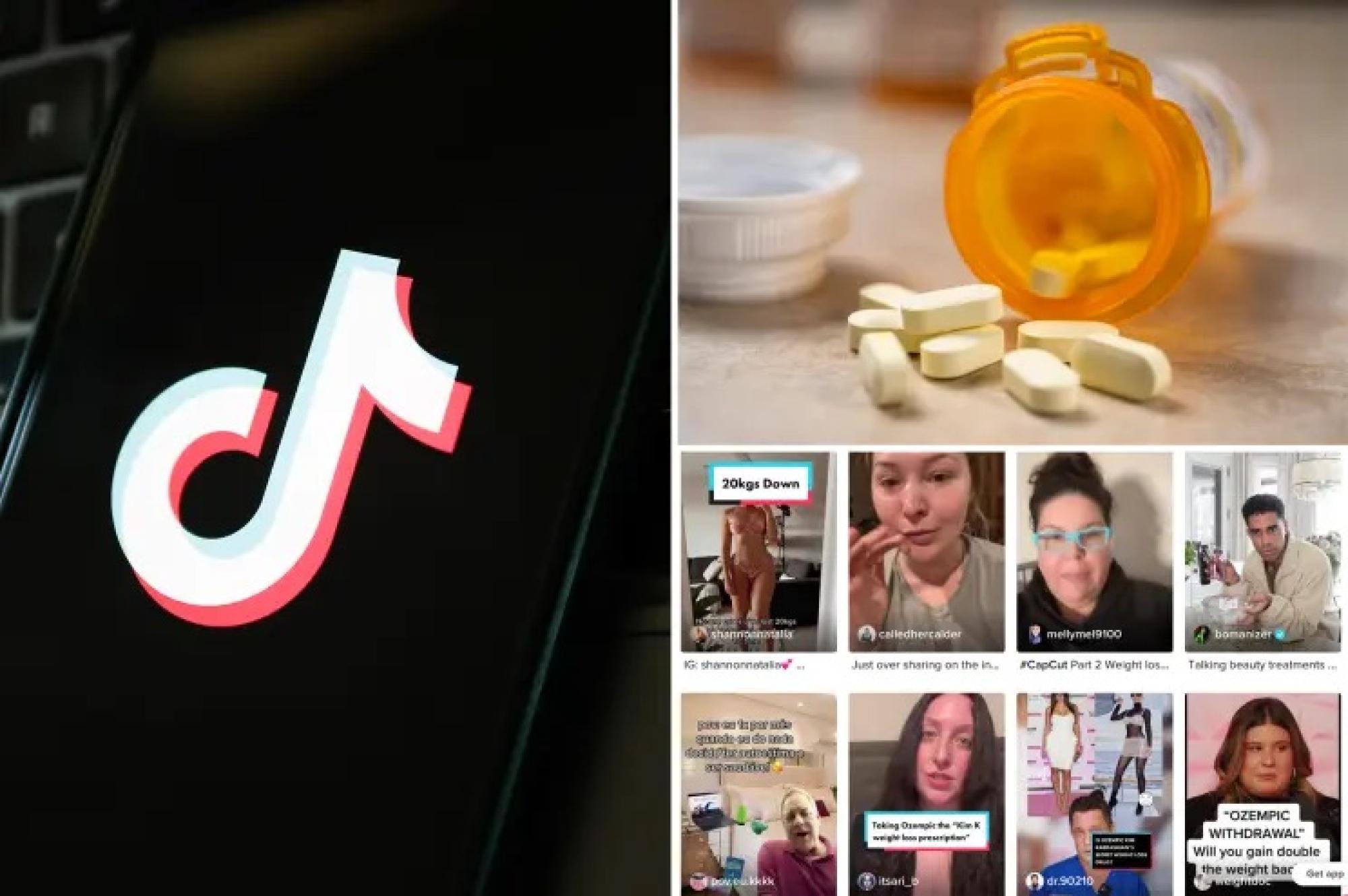
A young TikTok user has long, wavy hair. She's slim and wants you to know exactly why: she's using Wegovy, a prescription drug originally developed to treat diabetes that's become a popular drug for weight loss. In one clip, she picks up the medication from a pharmacy ... then demonstrates in a following clip how she injects it into her leg. She's what's called a patient influencer. They have no medical training and claim that they're simply sharing their personal experiences with their TikTok and Instagram followers. But in this ... unregulated arena, it's gotten harder to tell when influencing crosses legal and ethical lines. Many patient influencers offer prescription drug advice to their followers without always revealing their relationships with drug companies, according to Erin Willis ... who authored a study about patient influencers. A patient influencer can expect to earn anywhere from "the low hundreds to a few thousand dollars" per social media post. Part of what makes patient influencers effective is that they often push messaging further than what would be allowed on media like TV, where ads are far more closely scrutinized by regulators like the FDA and Federal Trade Commission. Willis calls patient influencing "an interactive form of advertising" that's "difficult to regulate, if it's been regulated at all". Studies find [direct-to-consumer] ads lead to doctors prescribing them more " driving the market for these ads to nearly $7bn last year, industry statistics show.
Latest
Latest News
Each news summary is created according to strict standards. Here's how we do it.
Each summary is created using a consistent editorial procedure. The target length is approximately 16 lines of 11-point Arial text in a 650-pixel-wide column. Up to 25% of a summary may be set in bold to emphasize the most important ideas. Summaries are composed of verbatim excerpts presented in the same sequence as they appear in the original news source, with very minor editorial additions. Where material has been omitted between excerpts, the omission is indicated with ellipses (...). Any words added by an editor for clarity or context appear in [brackets]. Our original news editor was Fred Burks. Tod Fletcher edited most summaries from 2007 through 2014, and Mark Bailey has served as news editor since 2014.