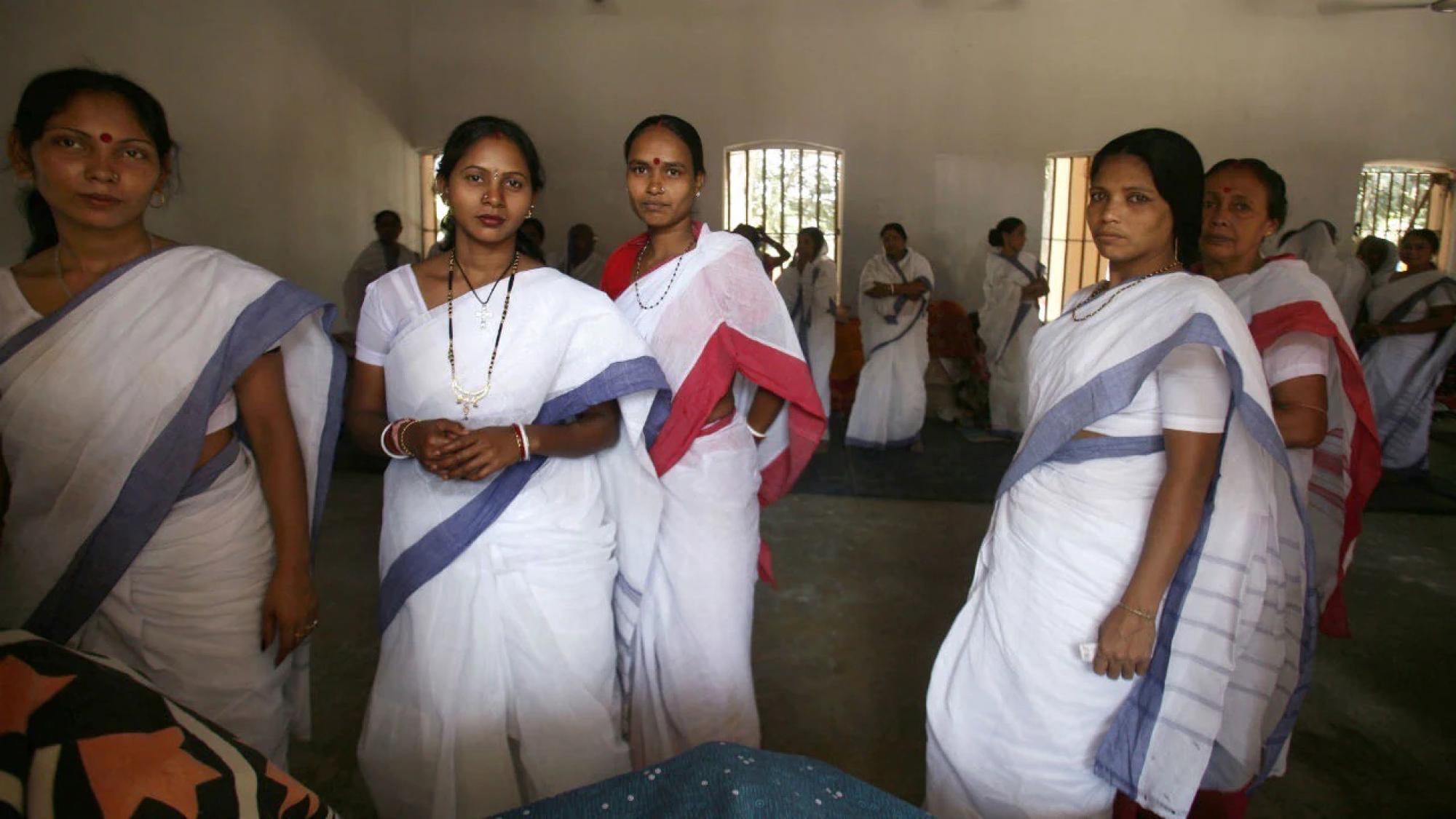
Though the people held at Sanganer open prison are technically incarcerated, they can leave the facility during the day and travel within the city limits. Almost immediately upon his arrival, Arjiram's sense of self-worth grew. "It didn't feel like I was in a prison," he says. "I could go out and work and come back, and the best thing was they trusted me." After being faceless and nameless for over a decade, he felt like a person again. According to the country's National Crime Records Bureau, there are about 88 open prisons in India, the largest share of which are in the state of Rajasthan, where the model is being pioneered. India's open prisons are defined by minimal security. They are run and maintained by the state, and those incarcerated within them are free to come and go as they please. At Sanganer, the prison is open for up to 12 hours each day. Every evening, prisoners must return to be counted at an end-of-day roll call. Designed to foster reform as opposed to punishment, the system is based on the premise that trust is contagious. It assumes " and encourages " self-discipline on the part of the prisoners. Letting incarcerated folks go to work also allows them to earn money for themselves and their families, build skills, and maintain contacts in the outside world that can help them once they're released. In addition to allowing inmates to support themselves, open prisons require far less staff, and their operating costs are a fraction of those in closed prisons.
Latest
Latest News
Each news summary is created according to strict standards. Here's how we do it.
Each summary is created using a consistent editorial procedure. The target length is approximately 16 lines of 11-point Arial text in a 650-pixel-wide column. Up to 25% of a summary may be set in bold to emphasize the most important ideas. Summaries are composed of verbatim excerpts presented in the same sequence as they appear in the original news source, with very minor editorial additions. Where material has been omitted between excerpts, the omission is indicated with ellipses (...). Any words added by an editor for clarity or context appear in [brackets]. Our original news editor was Fred Burks. Tod Fletcher edited most summaries from 2007 through 2014, and Mark Bailey has served as news editor since 2014.