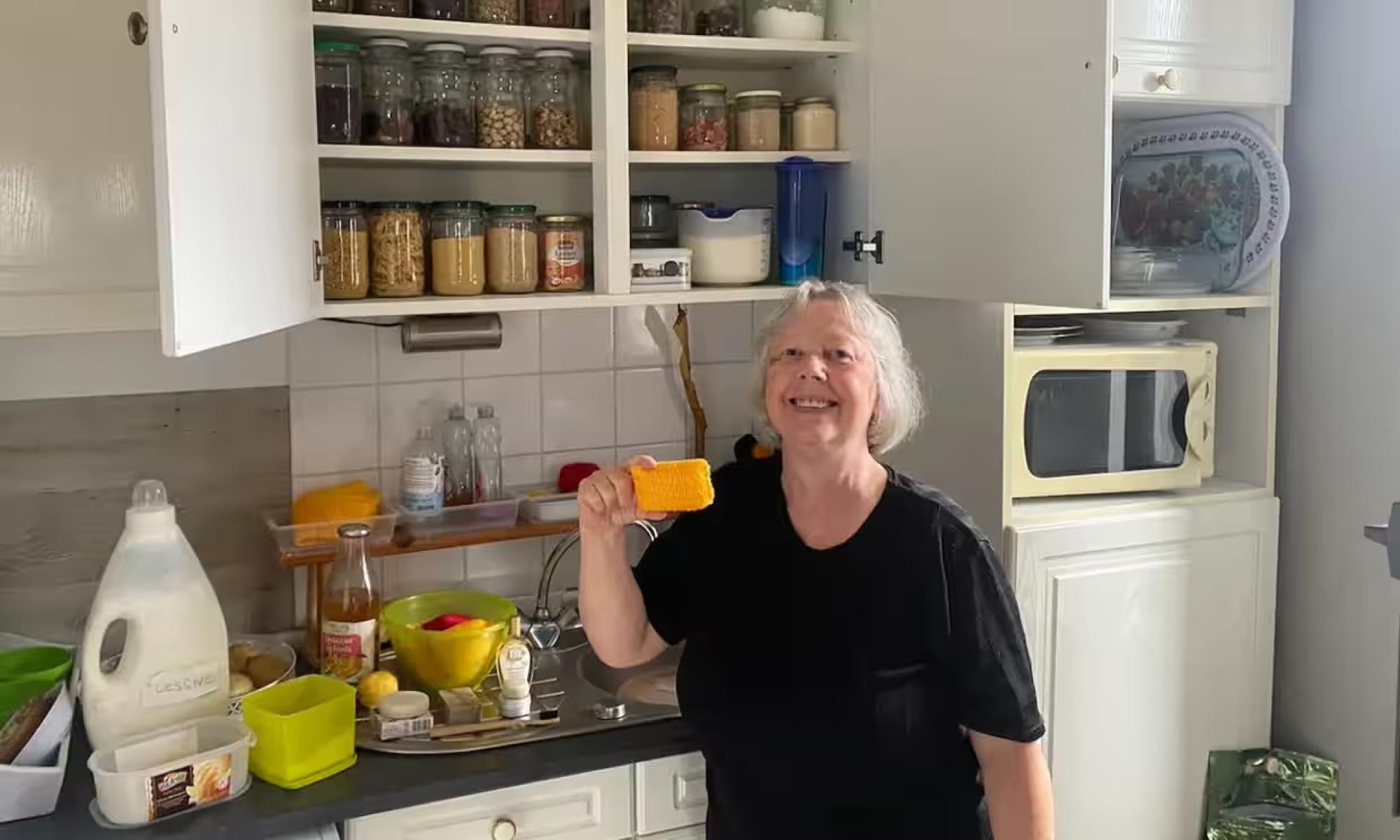
When [city councillor] Alexandre Garcin dreamed up Zero-Waste Roubaix, it wasn't sustainability he wanted to tackle, but the litter problem that plagued his city. Garcin sent out leaflets looking for 100 volunteers to participate in a free, year-long pilot programme that would teach them how to live waste-free. These familles zéro déchet, or zero-waste families, would receive training and attend workshops on topics such as making your own yoghurt and cleaning with homemade products, with the goal of halving their waste by the year's end. Volunteers weren't offered any direct financial incentives to participate only the promise of helping solve the litter problem and protecting the environment. The project focused on creating an identity around zero-waste and assigning families quantitative waste-reduction targets " strategies that are proven to be effective in other contexts, and everyone got pretty straightforward guidelines " for example, "don't buy more food than you can eat". According to Garcin, it's actually "not that difficult" to halve a household's waste production. Composting gets you most of the way there, since organic waste makes up about a third of the average French family's municipal waste by weight. Another third is glass and metal, a significant chunk of which can probably be kept out of the landfill through recycling, and 10% is plastic, much of which can be avoided by finding reusable alternatives to plastic grocery bags, cutlery, packaging and other single-use items.
Latest
Latest News
Each news summary is created according to strict standards. Here's how we do it.
Each summary is created using a consistent editorial procedure. The target length is approximately 16 lines of 11-point Arial text in a 650-pixel-wide column. Up to 25% of a summary may be set in bold to emphasize the most important ideas. Summaries are composed of verbatim excerpts presented in the same sequence as they appear in the original news source, with very minor editorial additions. Where material has been omitted between excerpts, the omission is indicated with ellipses (...). Any words added by an editor for clarity or context appear in [brackets]. Our original news editor was Fred Burks. Tod Fletcher edited most summaries from 2007 through 2014, and Mark Bailey has served as news editor since 2014.