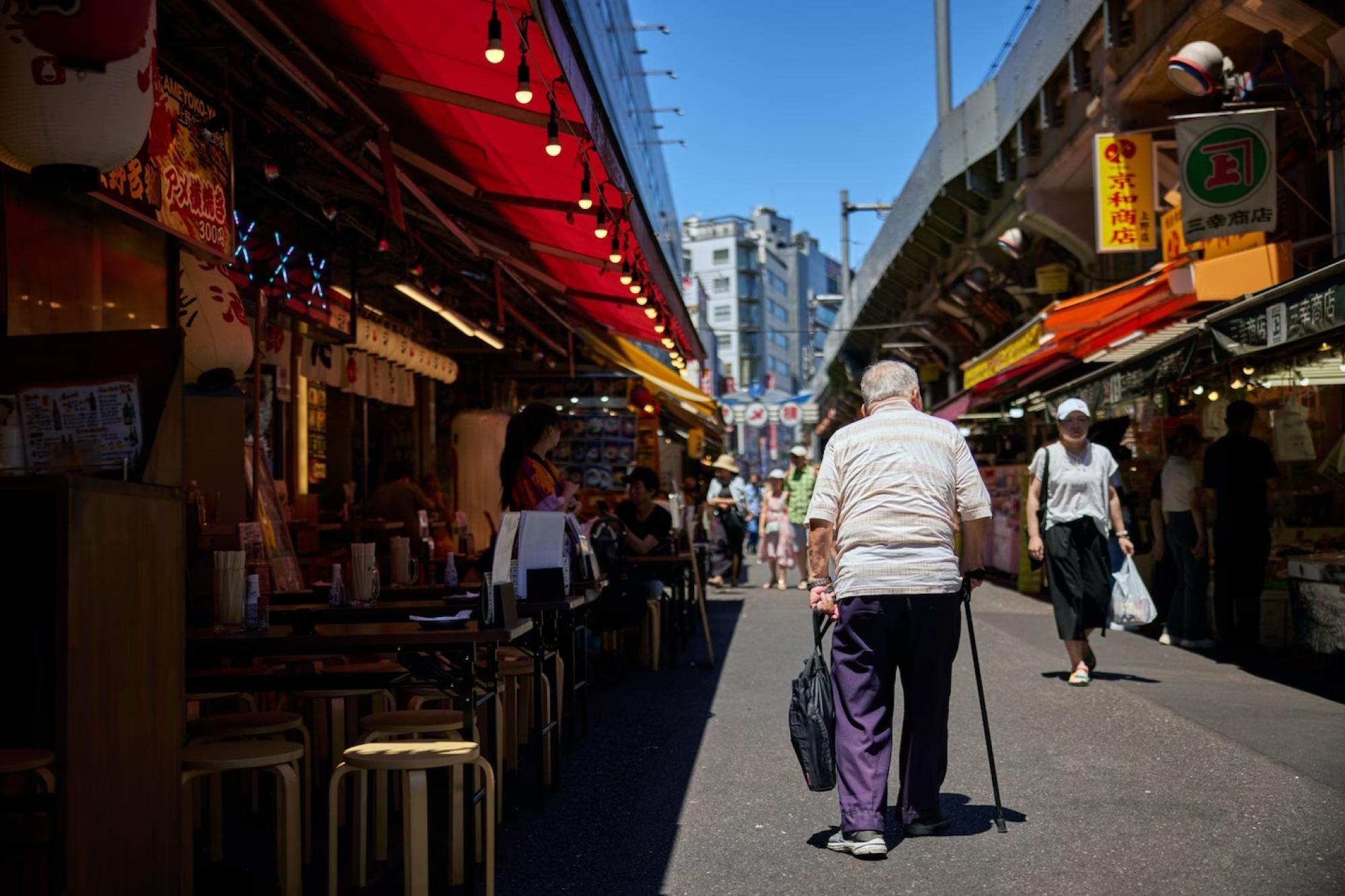
If you want a glimpse of the future, go to Japan. What lies ahead for many other countries, including the United States, is in rural areas and regional cities outside greater Tokyo: lots of people aging and dying, and relatively few giving birth and raising kids. In today's Japan, the young and middle-aged are consumed by caring for the old, and small-town resources are overstretched. Japanese innovators are already demonstrating what's possible and, in many cases, not with high-tech fixes but by showcasing design thinking, dignity and respect. Instead, they would be invited to share their wisdom and skills to help them stay active, sharp and socially engaged. Old people at the center cook for one another and teach young people how to grow vegetables and make art. The city [of Toyama] repurposed old train and tram lines into a sleek light-rail system, with platforms placed at the level of the train cars so that people would not need to climb or descend stairs. Public transit ridership among people in their 60s and 70s has since more than tripled, and this has helped seniors maintain active and social lifestyles. Other social entrepreneurs in Japan have focused on food " for instance, bringing children and the elderly together in cafeterias that serve traditional dishes. One Tokyo pop-up eatery, dubbed the Restaurant of Mistaken Orders, has employed people with dementia as its waitstaff. [Japanese innovators have] yielded ideas that prioritize helping old people flourish, not just managing their illnesses, disabilities and deaths.
Latest
Latest News
Each news summary is created according to strict standards. Here's how we do it.
Each summary is created using a consistent editorial procedure. The target length is approximately 16 lines of 11-point Arial text in a 650-pixel-wide column. Up to 25% of a summary may be set in bold to emphasize the most important ideas. Summaries are composed of verbatim excerpts presented in the same sequence as they appear in the original news source, with very minor editorial additions. Where material has been omitted between excerpts, the omission is indicated with ellipses (...). Any words added by an editor for clarity or context appear in [brackets]. Our original news editor was Fred Burks. Tod Fletcher edited most summaries from 2007 through 2014, and Mark Bailey has served as news editor since 2014.