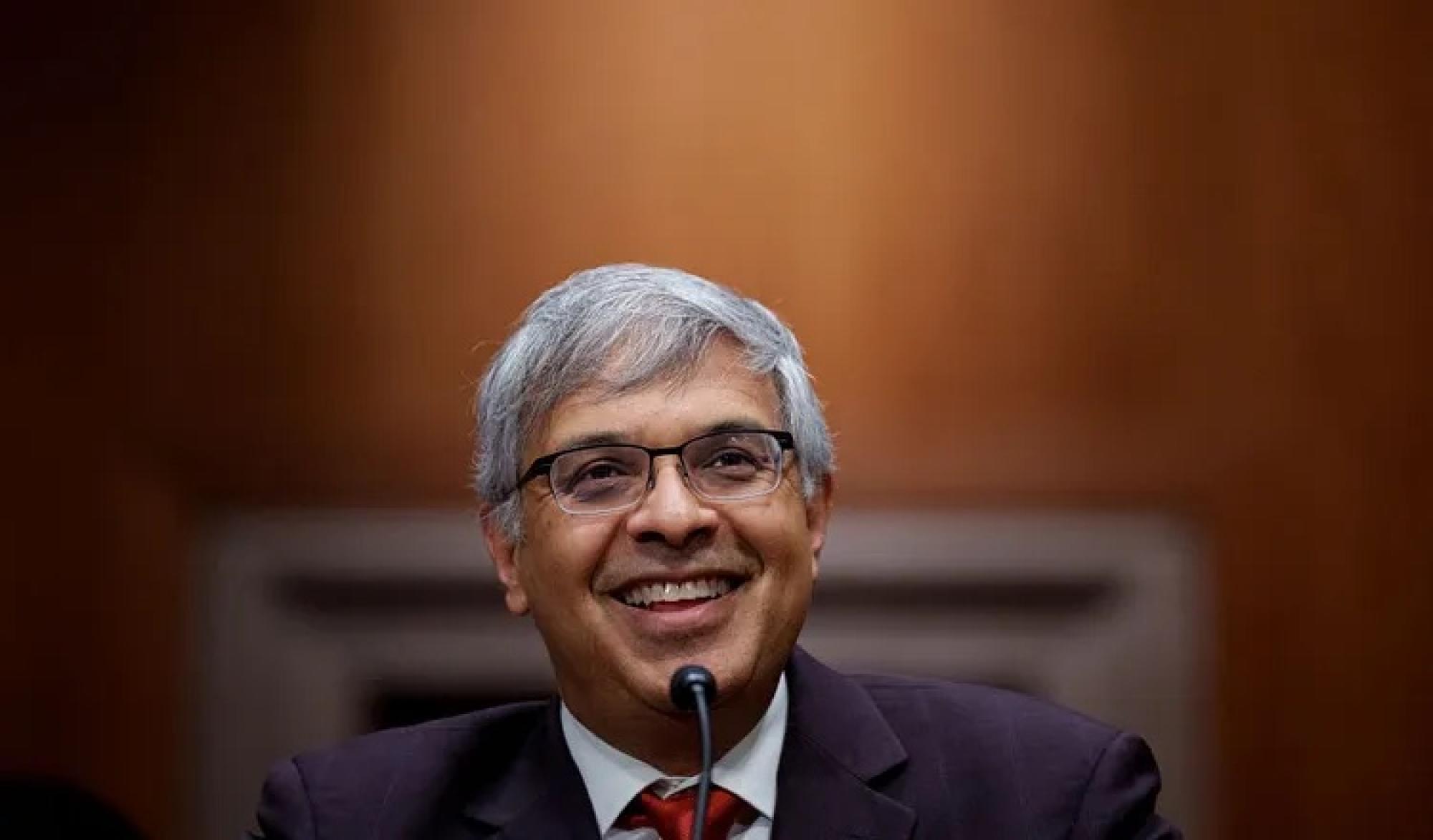
In 2020, Dr. Jay Bhattacharya was condemned as a quack and considered a pariah by the medical field for co-authoring a public declaration questioning the efficacy of Covid lockdowns. In an October 2020 email to Dr. Anthony Fauci that was later leaked online, [former director of the National Institutes of Health Francis] Collins called Bhattacharya a "fringe epidemiologist," and urged a "quick and devastating published takedown" of his declaration. Bhattacharya is now the new director of the NIH. He [said] Collins has since apologized for his comments"but only in private. Bhattacharya said of Collins: "I've been praying for him ever since I found out that he'd written that email. Reconciliation is really possible. Even if people disagree with each other fundamentally, even hate each other"and I'd never hated him and never will." Bhattacharya "wants to extend [Fauci] the same grace that I want to extend to everybody. I think he was deeply wrong in his scientific ideas in 2020, but I believe ... he was trying to do what he viewed as the best for the American people." President Biden preemptively pardoned Fauci for his extreme Covid response measures. The first step to rebuilding trust, Bhattacharya argues, is transparency. A database on doctors' relationships with Big Pharma already exists, thanks to the 2010 Physician Payments Sunshine Act, which allows anyone to search for and view all pharmaceutical money doctors have received since 2013. Producing a similar website that shows where scientists get their research funding, and the results of their research, "would be a really productive way to reestablish trust ... "The work of the NIH in particular affects basically every single aspect of biomedical research. And of course, there are pecuniary interests involved. People make money off of the results of the research."
Latest
Latest News
Each news summary is created according to strict standards. Here's how we do it.
Each summary is created using a consistent editorial procedure. The target length is approximately 16 lines of 11-point Arial text in a 650-pixel-wide column. Up to 25% of a summary may be set in bold to emphasize the most important ideas. Summaries are composed of verbatim excerpts presented in the same sequence as they appear in the original news source, with very minor editorial additions. Where material has been omitted between excerpts, the omission is indicated with ellipses (...). Any words added by an editor for clarity or context appear in [brackets]. Our original news editor was Fred Burks. Tod Fletcher edited most summaries from 2007 through 2014, and Mark Bailey has served as news editor since 2014.