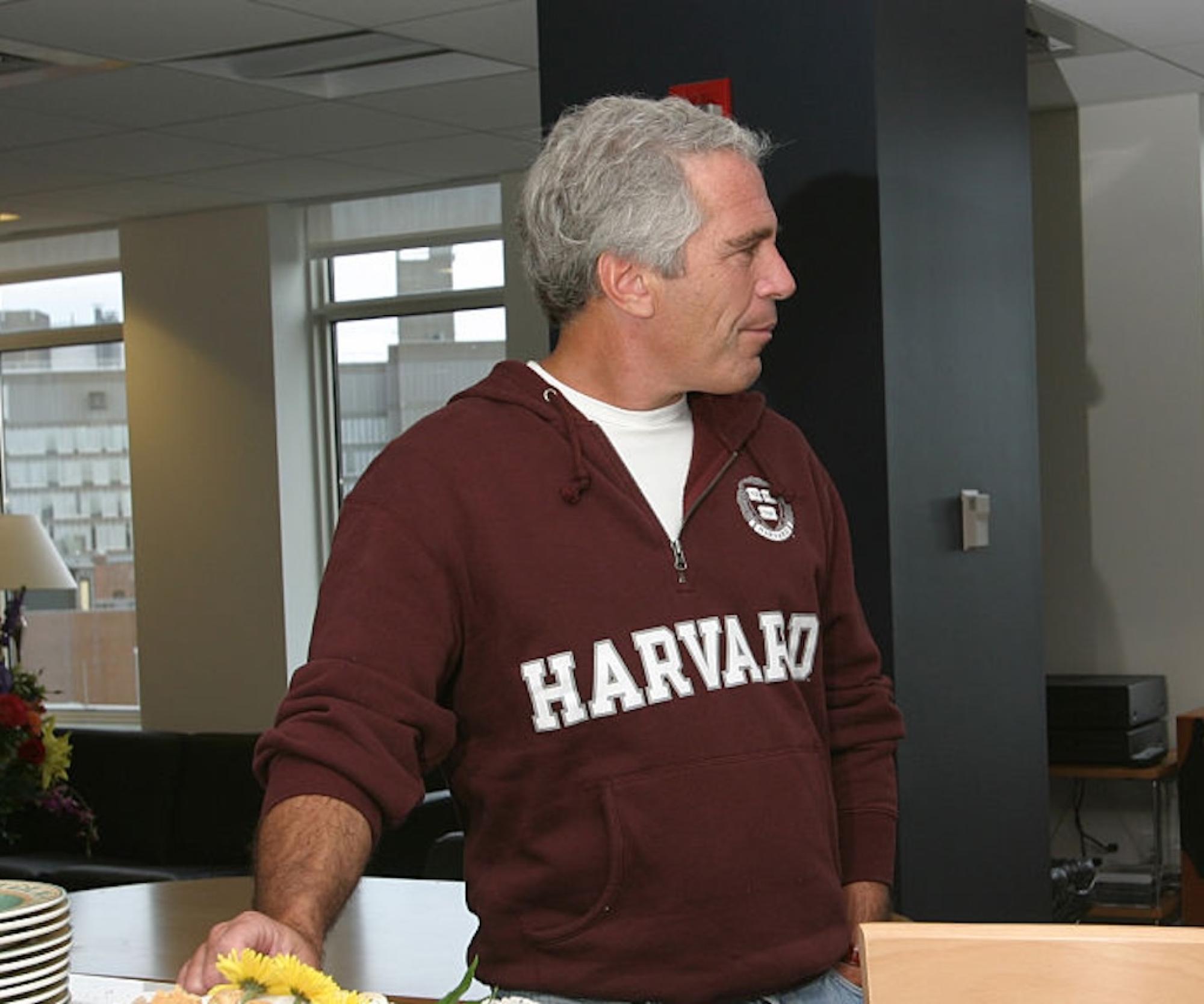
As more details come to light about Jeffrey Epstein, the billionaire sex trafficker is increasingly suspected of having used his wealth, influence, and connections to shape the way political power is used, particularly when it comes to foreign policy. If true, what kind of foreign policy did he favor and what goals did he hope to achieve? Over the years, Epstein exchanged emails with former Israeli prime minister Ehud Barak opposing the Iran nuclear deal and favoring military action against Syria; expressed concern about Israel's intensifying turn away from the two-state solution; and counseled Donald Trump adviser ... Steve Bannon on how the Trump administration could best take on this leading global rival of the United States. The country that featured most heavily in Epstein's private discussions contained in the files wasn't Israel; it was China. It was in his private chats with the virulently anti-China Bannon that the country most often came up, with Epstein often framing China as a serious threat that had to be defeated. Epstein bounced between certainty that China was falling apart and warnings that it was a formidable foe. China is "a unified nationalist economic country" whose forty-year-long strategy is "right on track," Epstein told Bannon in July 2018. "My meeting the other day was around how these peasants looked into their own systems, found the NSA cybertools that we had inserted and then used them against us interests," Epstein wrote [in another exchange].
Latest
Latest News
Each news summary is created according to strict standards. Here's how we do it.
Each summary is created using a consistent editorial procedure. The target length is approximately 16 lines of 11-point Arial text in a 650-pixel-wide column. Up to 25% of a summary may be set in bold to emphasize the most important ideas. Summaries are composed of verbatim excerpts presented in the same sequence as they appear in the original news source, with very minor editorial additions. Where material has been omitted between excerpts, the omission is indicated with ellipses (...). Any words added by an editor for clarity or context appear in [brackets]. Our original news editor was Fred Burks. Tod Fletcher edited most summaries from 2007 through 2014, and Mark Bailey has served as news editor since 2014.