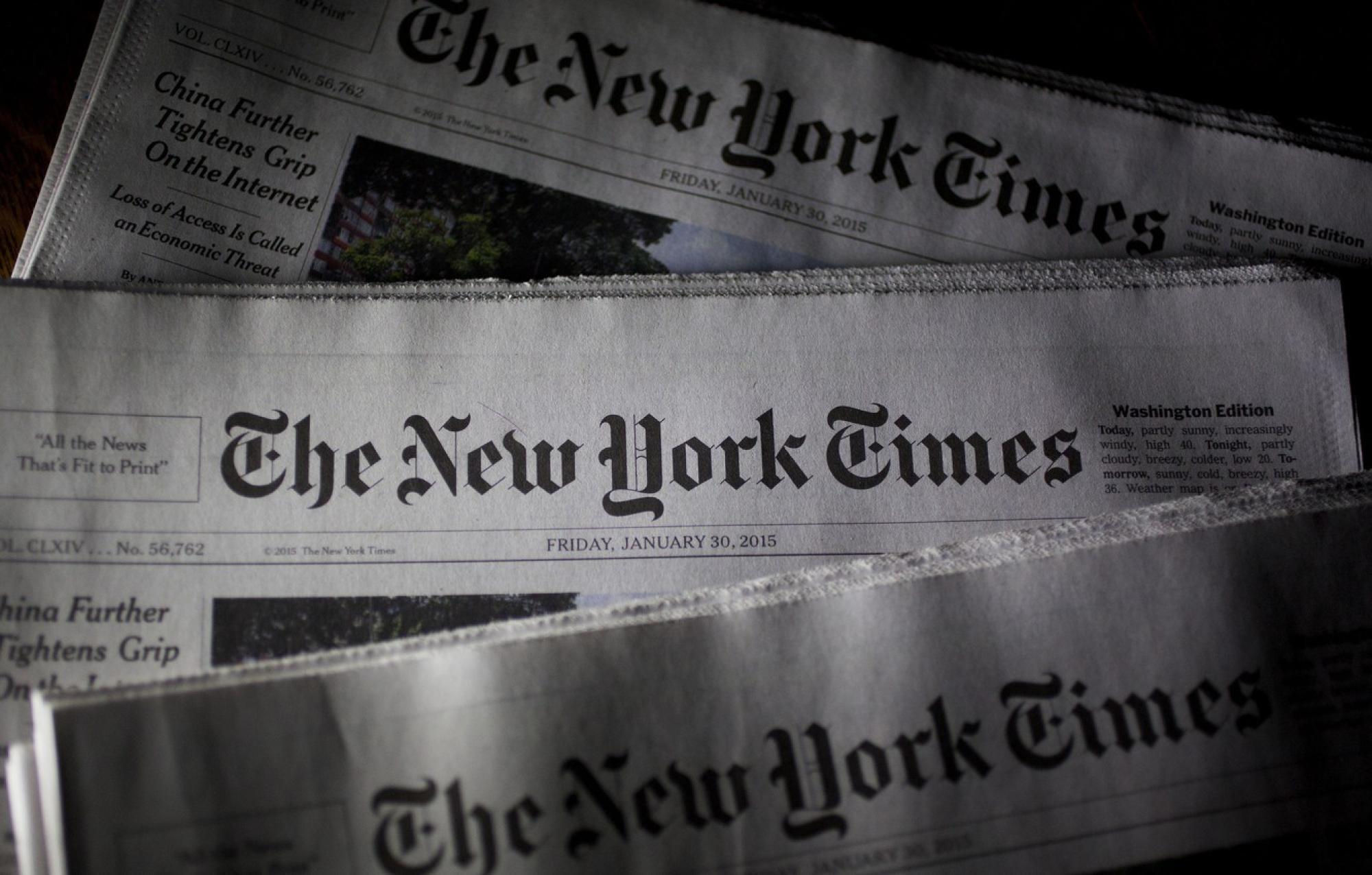
The former opinion editor of the New York Times, James Bennet, took his former employer to task recently in a lengthy essay. The headline of the piece boldly asserted that the New York Times has "lost its way." Inasmuch as the newspaper represents professional expectations and standards for the entire journalism world, Bennet could be translated as saying the broader news industry has also lost its way. The Times is just the largest float at the front of a parade heading in the wrong direction. Public sentiment about the news industry as a whole is at dismal levels. Gallup polling shows Americans' confidence in the news media to report in a "full, fair and accurate way" is at historically low levels. Given this lack of trust, it only stands to reason that Americans are less likely to follow the news at all. There is no need to consume news from sources one can't trust. Journalists rank near the bottom of public ratings of professions in terms of ethics and honesty. Activism has replaced journalism's former mission to provide fact-based information on which citizens can manage their lives and hold the powerful accountable. Of course, opinion and analysis have always been a part of journalism. But there has long been a sense in the journalism profession that such activist content was to be confined to designated sections, and that the news was to be fact-driven and balanced. Fairness is a skill that journalists once prided themselves on achieving.
Latest
Latest News
Each news summary is created according to strict standards. Here's how we do it.
Each summary is created using a consistent editorial procedure. The target length is approximately 16 lines of 11-point Arial text in a 650-pixel-wide column. Up to 25% of a summary may be set in bold to emphasize the most important ideas. Summaries are composed of verbatim excerpts presented in the same sequence as they appear in the original news source, with very minor editorial additions. Where material has been omitted between excerpts, the omission is indicated with ellipses (...). Any words added by an editor for clarity or context appear in [brackets]. Our original news editor was Fred Burks. Tod Fletcher edited most summaries from 2007 through 2014, and Mark Bailey has served as news editor since 2014.