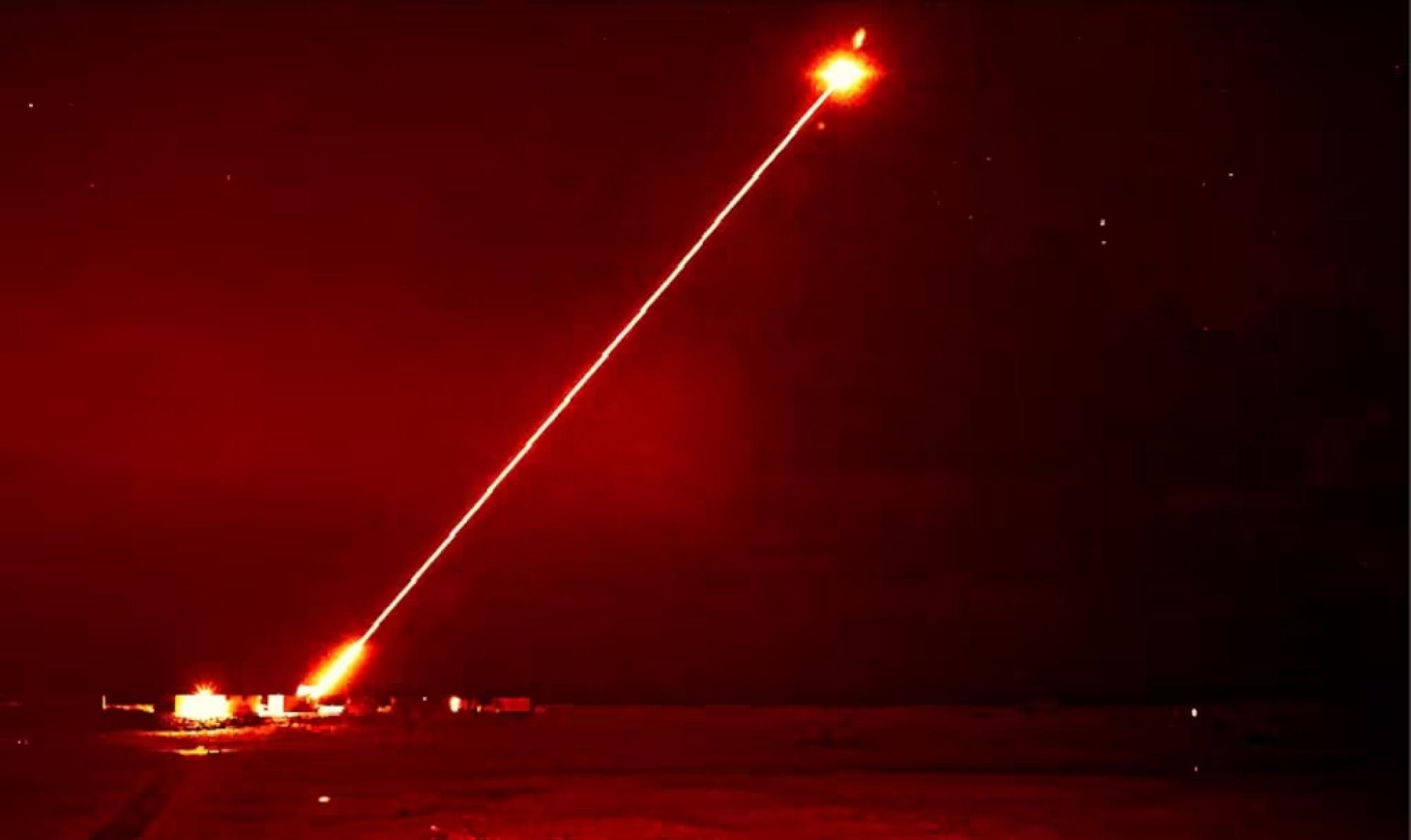
The US Army is about to make a working laser weapon an official part of its arsenal. The Pentagon is poised to sign a contract to acquire and rapidly deploy what's called an Enduring High Energy Laser in and around bases across the world to defend them from drone attacks. It will mark the first time that the US military will have committed to equipping its forces with laser weapons in significant numbers. The US military, at this moment, has either deployed or is actively testing a half-dozen laser weapons systems. The deployments haven't all gone great. Four vehicles equipped with Raytheon air-defense lasers were yanked from the Middle East after poor reviews from soldiers. One laser, built by the defense contractor AeroVironment and positioned along the southern US border, accidentally zapped a party balloon in February, causing the Federal Aviation Administration to briefly close the airspace around El Paso, Texas. Once it was reopened, the laser shot down a Border Patrol drone by mistake. Despite such mishaps, the Army appears ready to go beyond the one-offs and the experiments. The Pentagon and its suppliers had been scrambling to field something, anything to defend against mass-produced, low-cost attack drones. They've rolled out radio frequency jammers, microwave weapons, an array of missiles, drones designed to kill other drones, even copies of the Iranian robots. None of them ... have been enough.
Latest
Latest News
Each news summary is created according to strict standards. Here's how we do it.
Each summary is created using a consistent editorial procedure. The target length is approximately 16 lines of 11-point Arial text in a 650-pixel-wide column. Up to 25% of a summary may be set in bold to emphasize the most important ideas. Summaries are composed of verbatim excerpts presented in the same sequence as they appear in the original news source, with very minor editorial additions. Where material has been omitted between excerpts, the omission is indicated with ellipses (...). Any words added by an editor for clarity or context appear in [brackets]. Our original news editor was Fred Burks. Tod Fletcher edited most summaries from 2007 through 2014, and Mark Bailey has served as news editor since 2014.