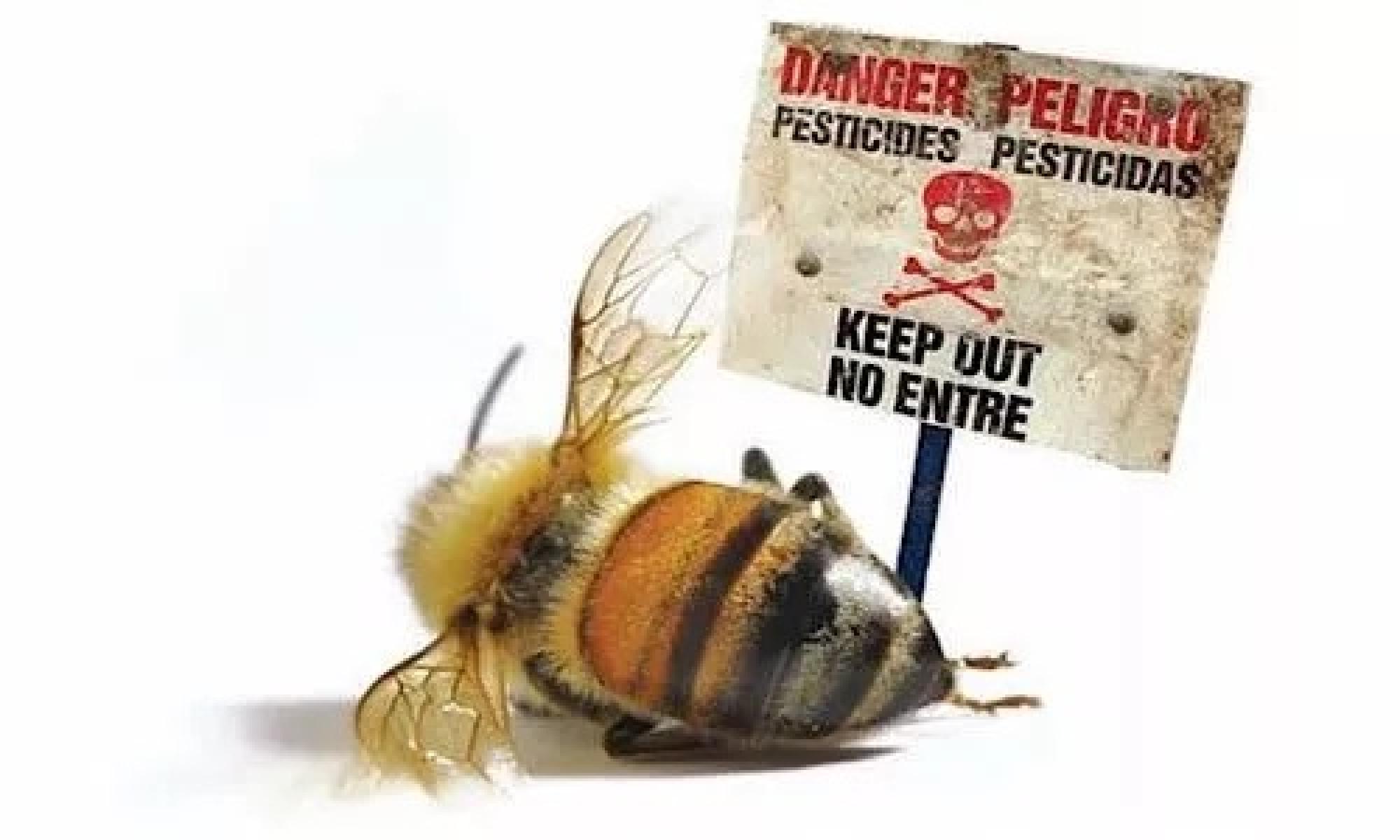
New York state on Friday became the first state in the nation to pass legislation restricting neonicotinoid pesticides (neonics) that are toxic to bees and other pollinators and wildlife. The Birds and Bees Protection Act would eliminate 80 to 90% of the neonics used in New York each year by banning applications that are either easily replaceable or do not give an economic boost to farmers. "Every year for the past decade, New York beekeepers have lost more than 40% of their bee colonies"largely due to neonic pesticides," bill sponsor State Senator Brad Hoylman-Sigal said in a statement. "Today, in this landmark victory for our pollinators, economy, and farming industry, New York is working to reverse that trend." The bill ... bans the use of neonics to coat corn, soybean, and wheat seeds as well as for lawns and gardens. Neonics are a class of pesticides that work by attacking the nervous systems of insect pests. A lethal dose will cause paralysis and death, while non-lethal effects include memory, immune, navigation, and fertility problems. They are one of the deadliest pesticides out there, yet they are also the leading insecticide used in the U.S. This is a problem because about 95% of neonics used to coat seeds don't enter the plant at all, but instead spread into the environment via the soil, where they do not break down easily. They also harm the development of birds and mammals; and studies have linked ingredients of neoicotinoid insecticides with adverse human health outcomes as well.
Latest
Latest News
Each news summary is created according to strict standards. Here's how we do it.
Each summary is created using a consistent editorial procedure. The target length is approximately 16 lines of 11-point Arial text in a 650-pixel-wide column. Up to 25% of a summary may be set in bold to emphasize the most important ideas. Summaries are composed of verbatim excerpts presented in the same sequence as they appear in the original news source, with very minor editorial additions. Where material has been omitted between excerpts, the omission is indicated with ellipses (...). Any words added by an editor for clarity or context appear in [brackets]. Our original news editor was Fred Burks. Tod Fletcher edited most summaries from 2007 through 2014, and Mark Bailey has served as news editor since 2014.