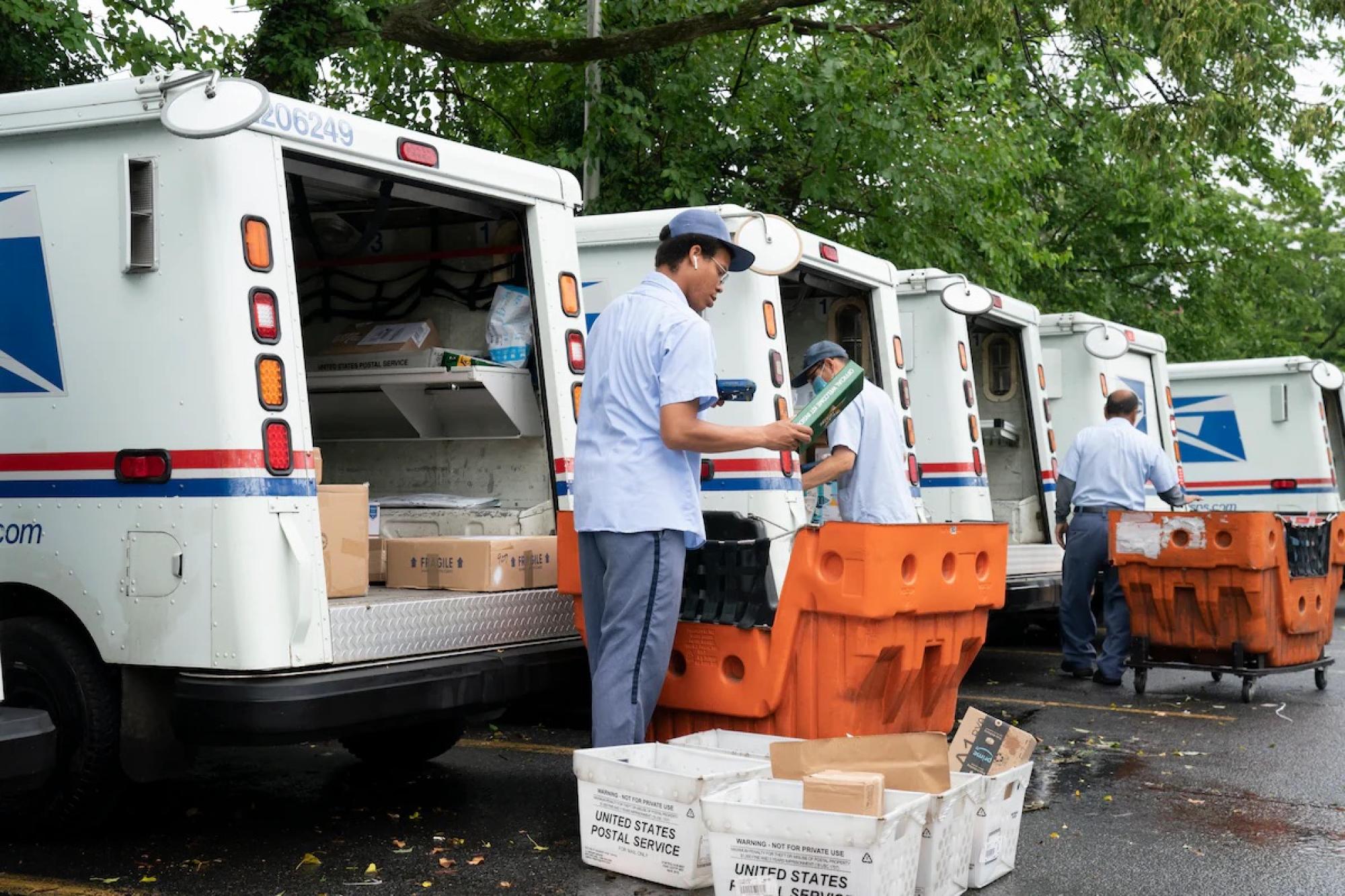
The U.S. Postal Service has shared information from thousands of Americans' letters and packages with law enforcement every year for the past decade, conveying the names, addresses and other details from the outside of boxes and envelopes without requiring a court order. Postal Service officials have received more than 60,000 requests from federal agents and police officers since 2015. Each request can cover days or weeks of mail sent to or from a person or address, and 97 percent of the requests were approved. The surveillance technique, known as the mail covers program, has long been used by postal inspectors to help track down suspects or evidence. The practice is legal, and the inspectors said they share only what they can see on the outside of the mail. [Sen. Ron] Wyden said in a statement, "Thousands of Americans are subjected to warrantless surveillance each year, and ... the Postal Inspection Service rubber stamps practically all of the requests they receive." He also criticized the agency for "refusing to raise its standards and require law enforcement agencies monitoring the outside of Americans' mail to get a court order, which is already required to monitor emails and texts." Anxieties over postal surveillance are classically American. In 1798, Vice President Thomas Jefferson wrote in a letter that his fears of having his private communications exposed by the "infidelities of the post office" had stopped him from "writing fully & freely."
Latest
Latest News
Each news summary is created according to strict standards. Here's how we do it.
Each summary is created using a consistent editorial procedure. The target length is approximately 16 lines of 11-point Arial text in a 650-pixel-wide column. Up to 25% of a summary may be set in bold to emphasize the most important ideas. Summaries are composed of verbatim excerpts presented in the same sequence as they appear in the original news source, with very minor editorial additions. Where material has been omitted between excerpts, the omission is indicated with ellipses (...). Any words added by an editor for clarity or context appear in [brackets]. Our original news editor was Fred Burks. Tod Fletcher edited most summaries from 2007 through 2014, and Mark Bailey has served as news editor since 2014.