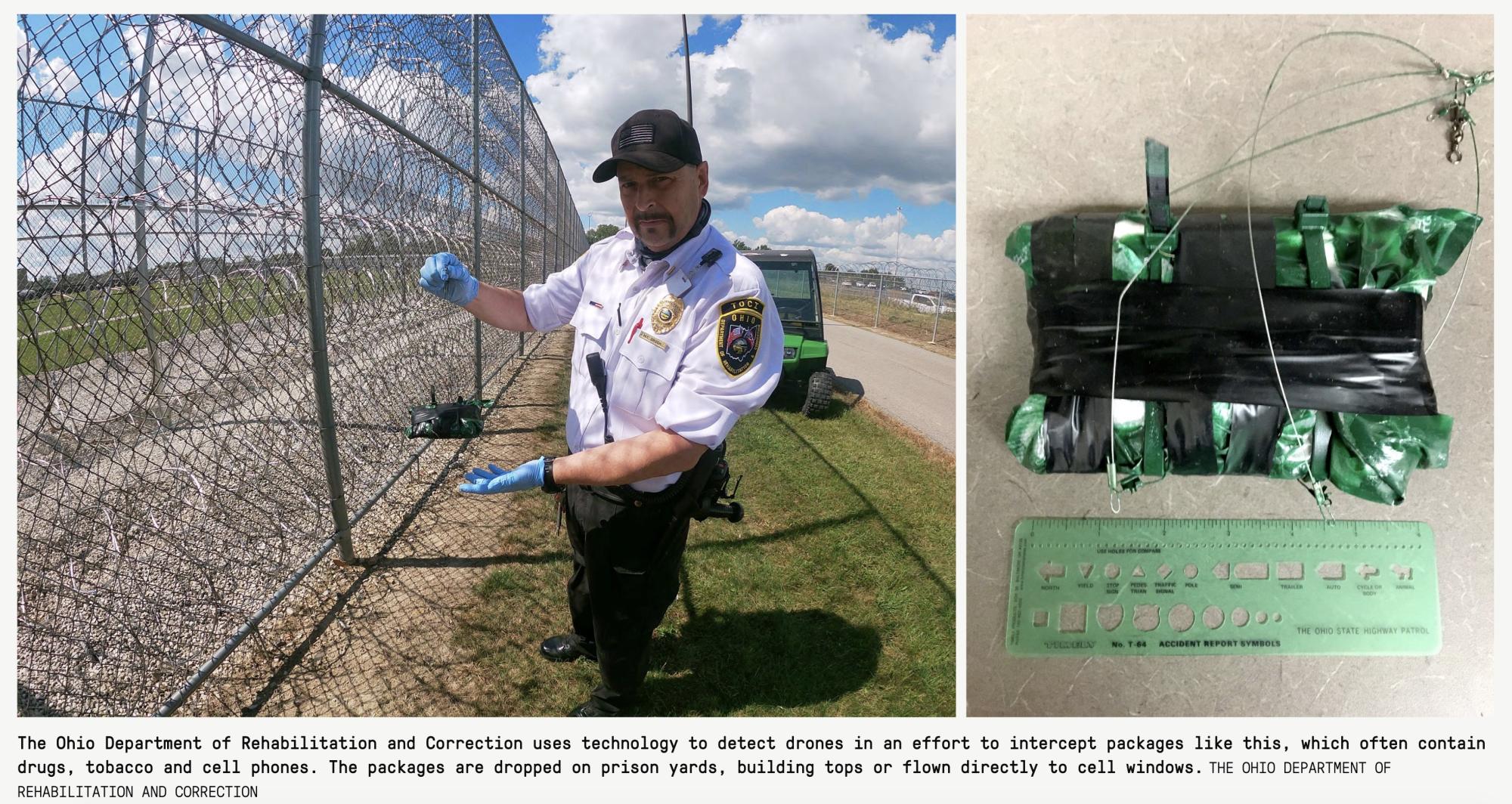
Jayson Murphy lit the speck of paper and inhaled, holding the smoke in his lungs as long as he could. His cellmate, John Jenkins, purchased the drug-soaked paper from another incarcerated man at Lebanon Correctional Institution, a state prison notorious for substance abuse and violence. The next morning, Jenkins set his dirty laundry outside the cell and tapped Murphy's leg. But Murphy, 50, didn't move. "Oh man, my cellie is dead," Jenkins recalled telling a corrections officer. A crime lab detected potent synthetic drugs that incarcerated users call K2 in the partially burnt paper found near Murphy's body. Authorities closed their criminal investigation the moment the coroner ruled the death an overdose, abandoning any effort to determine how the drug entered the prison. Drug-soaked paper, sold in confetti-sized hits, is now the most commonly found drug in Ohio prisons, fueling violence and accounting for more deaths than any other substance. The highly addictive drug is smuggled in by staff and visitors, tossed over fences and dropped in by drones. Wide-ranging and unpredictable side effects include vomiting, twitching, convulsing, aggression and psychosis. Jenkins said nearly all 150 men in his cellblock smoke paper. He described a scene from "The Walking Dead" " men passing out or shuffling around. Murphy was among at least 13 people incarcerated in Ohio who fatally overdosed on K2 in 2024, up from just three the year before.
Latest
Latest News
Each news summary is created according to strict standards. Here's how we do it.
Each summary is created using a consistent editorial procedure. The target length is approximately 16 lines of 11-point Arial text in a 650-pixel-wide column. Up to 25% of a summary may be set in bold to emphasize the most important ideas. Summaries are composed of verbatim excerpts presented in the same sequence as they appear in the original news source, with very minor editorial additions. Where material has been omitted between excerpts, the omission is indicated with ellipses (...). Any words added by an editor for clarity or context appear in [brackets]. Our original news editor was Fred Burks. Tod Fletcher edited most summaries from 2007 through 2014, and Mark Bailey has served as news editor since 2014.