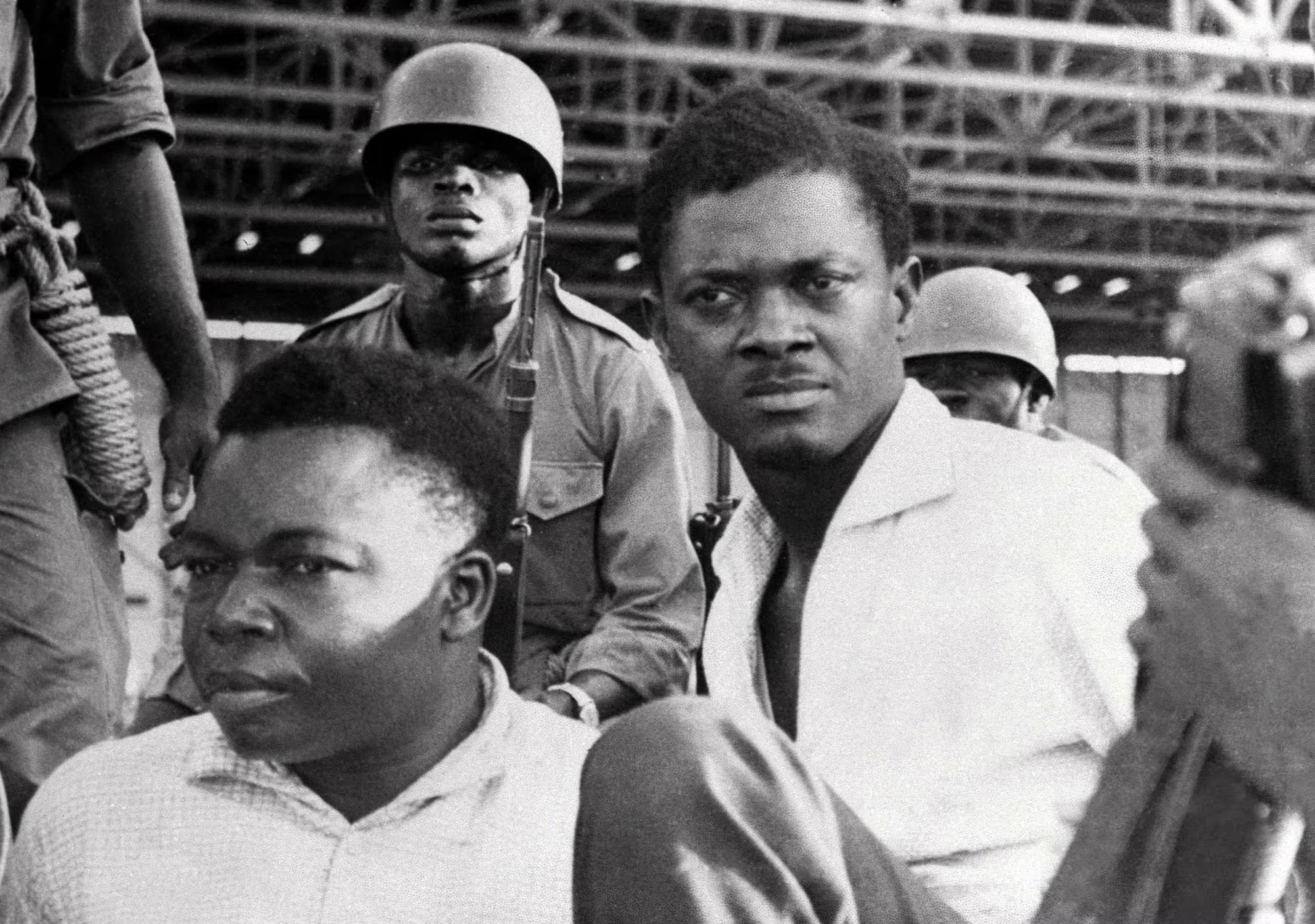
Louis Armstrong, his wife and a diplomat from the US embassy were out for dinner in a restaurant in what was still Léopoldville, capital of the newly independent Congo. The [musician] was in the middle of a tour of Africa ... organised and sponsored by the State Department. What Armstrong did not know was that his host that night in November 1960 was not the political attaché as described, but the head of the CIA in Congo. "Armstrong was basically a Trojan horse for the CIA," said Susan Williams ... author of White Malice, a new book which exposes the astonishing extent of the CIA's activities across central and west Africa. Armstrong's host, CIA station chief Larry Devlin, and other US intelligence officers posted to Congo used the cover of the musicians's visit to get access to the strategically important and very wealthy province of Katanga, which had recently seceded. There was much of interest to the CIA in Katanga, ranging from senior officials with whom they could not otherwise meet to crucial mining infrastructure, with 1,500 tons of uranium and vast potential to procure more. The CIA in the Congo, led by Devlin, was trying to kill the Congo's first democratically elected prime minister, 35-year-old Patrice Lumumba, fearful that he would lead the country into the Soviet camp. A mile or so from where Armstrong and Devlin had dined, the charismatic Lumumba was being held prisoner ... by soldiers loyal to Joseph-Désiré Mobutu, the young military chief with a close working relationship with the CIA, who had effectively seized power some weeks earlier. Within two months of Armstrong's tour, Lumumba was murdered in Katanga. Devlin later claimed that the CIA was responsible, telling a US Congressional investigation "that the coup of Mobutu … was arranged and supported, and indeed, managed, by the CIA".
Latest
Latest News
Each news summary is created according to strict standards. Here's how we do it.
Each summary is created using a consistent editorial procedure. The target length is approximately 16 lines of 11-point Arial text in a 650-pixel-wide column. Up to 25% of a summary may be set in bold to emphasize the most important ideas. Summaries are composed of verbatim excerpts presented in the same sequence as they appear in the original news source, with very minor editorial additions. Where material has been omitted between excerpts, the omission is indicated with ellipses (...). Any words added by an editor for clarity or context appear in [brackets]. Our original news editor was Fred Burks. Tod Fletcher edited most summaries from 2007 through 2014, and Mark Bailey has served as news editor since 2014.