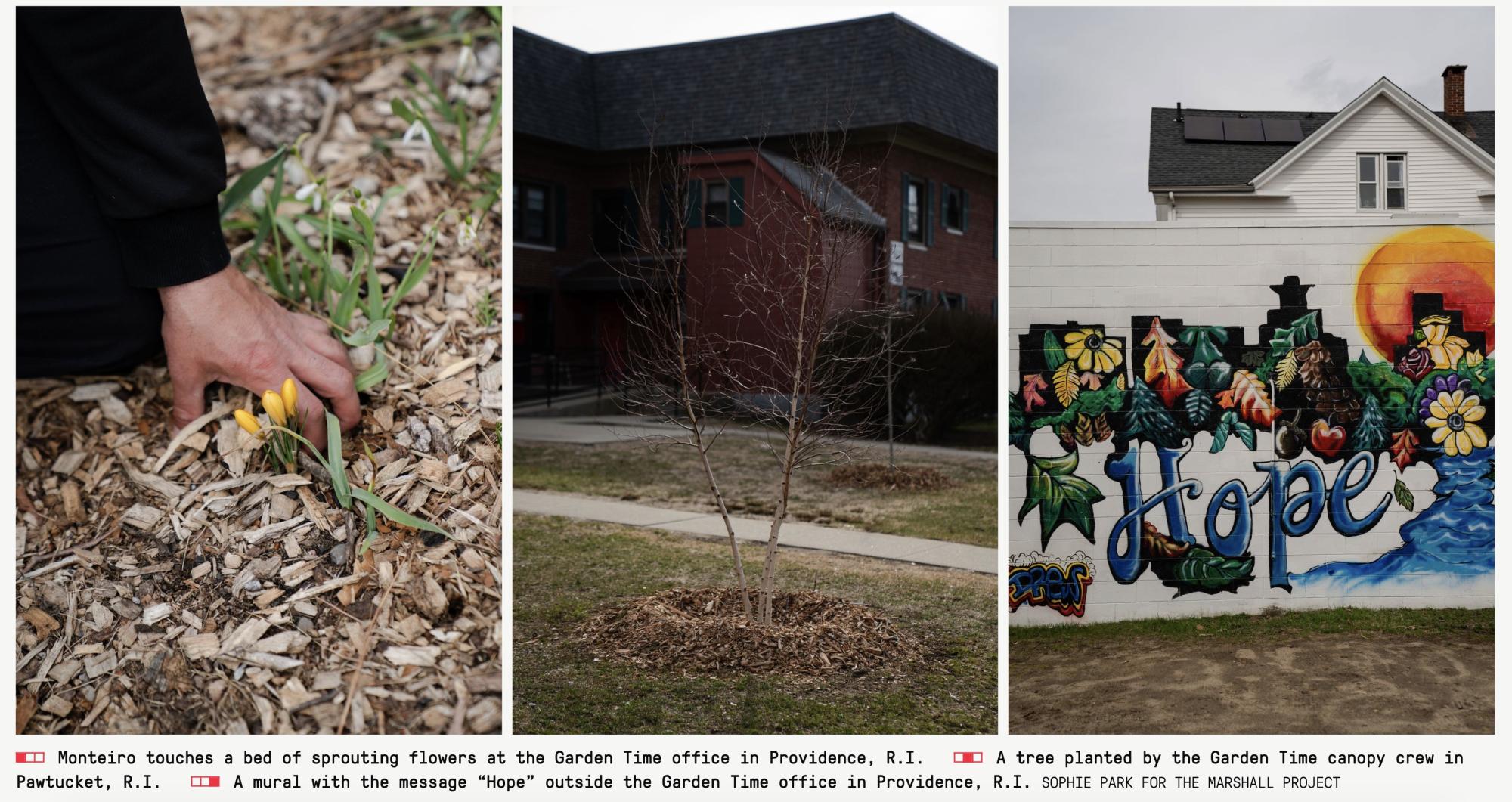
I learned to garden in Rhode Island's Maximum Security prison, which I entered as an 18-year-old kid. I was serving two consecutive life sentences for a gang-related murder I committed at 17, and I was struggling to fully grasp the possibility that I would die in prison while holding onto hope that I wouldn't. The guys in the crew and I loved that 50- by 20-foot garden, which was fenced off in a corner behind the old gym that was set ablaze decades ago in a riot. At first, it was watering, weeding, trying to figure out how to smuggle strawberries back to the cell block, and learning the science of the soil from a teacher we called Dr. Dirt. Then, the garden became a lifeline for us. When spring came, we could finally see the new life we helped take root. Each sprout was a quiet victory, and each harvest was a reminder that, even in unexpected places, growth was possible. After 23 winters behind bars. I was released under the Youthful Offender Act, which is also known as Mario's Law, because it was inspired by my case. This legislation allows people who received long sentences for crimes they committed as children the opportunity to apply for parole after serving 20 years in prison. Going into prison as a kid was not what I needed. It did not teach me about remorse, accountability, trauma or my potential. I had very little access to programming or education. Prison would have kept me dormant if it weren't for the gardeners in my life who wouldn't leave me in a drought.
Latest
Latest News
Each news summary is created according to strict standards. Here's how we do it.
Each summary is created using a consistent editorial procedure. The target length is approximately 16 lines of 11-point Arial text in a 650-pixel-wide column. Up to 25% of a summary may be set in bold to emphasize the most important ideas. Summaries are composed of verbatim excerpts presented in the same sequence as they appear in the original news source, with very minor editorial additions. Where material has been omitted between excerpts, the omission is indicated with ellipses (...). Any words added by an editor for clarity or context appear in [brackets]. Our original news editor was Fred Burks. Tod Fletcher edited most summaries from 2007 through 2014, and Mark Bailey has served as news editor since 2014.