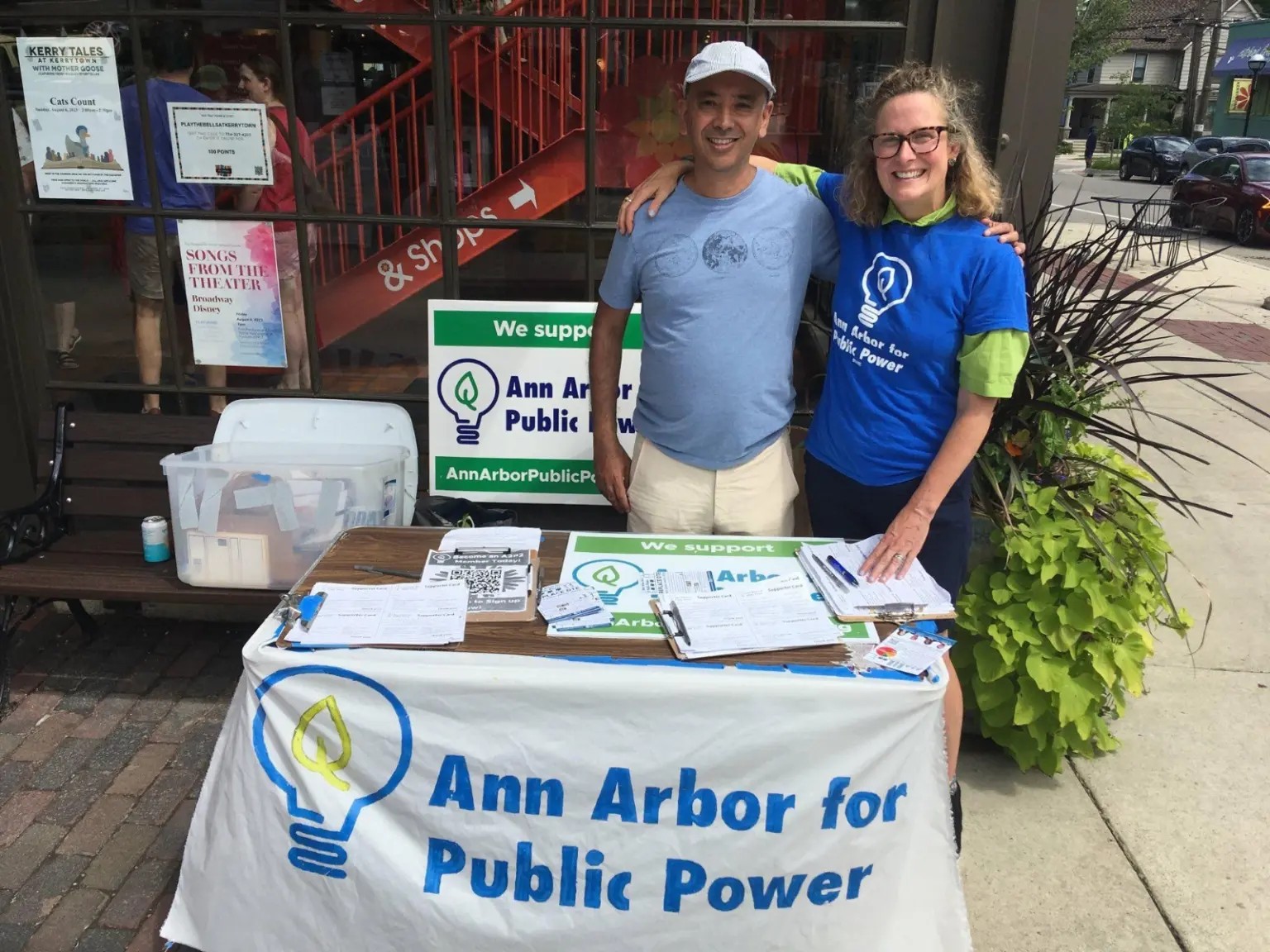
Around a dozen communities across the country have launched campaigns to get rid of their investor-owned electric utilities — the for-profit companies that distribute electricity to three-quarters of U.S. households — and replace them with publicly owned ones. Calling their goal “public power,” advocates argue that existing utilities have saddled customers with high rates and frequent outages, while lobbying to delay rooftop solar and other climate policies. Advocates say local ownership of the power grid would lead to lower electric bills, a quicker transition to renewables, and greater accountability to customers. Publicly owned utilities are far from new. Across the country, around 2,000 consumer-owned utilities serve more than 50 million customers, in places like Sacramento, Long Island, and the entire state of Nebraska. Unlike investor-owned utilities, public utilities don’t pay dividends to shareholders and have access to tax-exempt, low-interest municipal bonds. Supporters say the benefits of public power are wide ranging. Customers served by publicly owned utilities often have smaller electric bills — on average about $15 lower per month than with an investor-owned utility, according to the American Public Power Association. They also tend to experience more reliable service than investor-owned utility customers, with on average about half the annual duration of interrupted power.
Latest
Latest News
Each news summary is created according to strict standards. Here's how we do it.
Each summary is created using a consistent editorial procedure. The target length is approximately 16 lines of 11-point Arial text in a 650-pixel-wide column. Up to 25% of a summary may be set in bold to emphasize the most important ideas. Summaries are composed of verbatim excerpts presented in the same sequence as they appear in the original news source, with very minor editorial additions. Where material has been omitted between excerpts, the omission is indicated with ellipses (...). Any words added by an editor for clarity or context appear in [brackets]. Our original news editor was Fred Burks. Tod Fletcher edited most summaries from 2007 through 2014, and Mark Bailey has served as news editor since 2014.