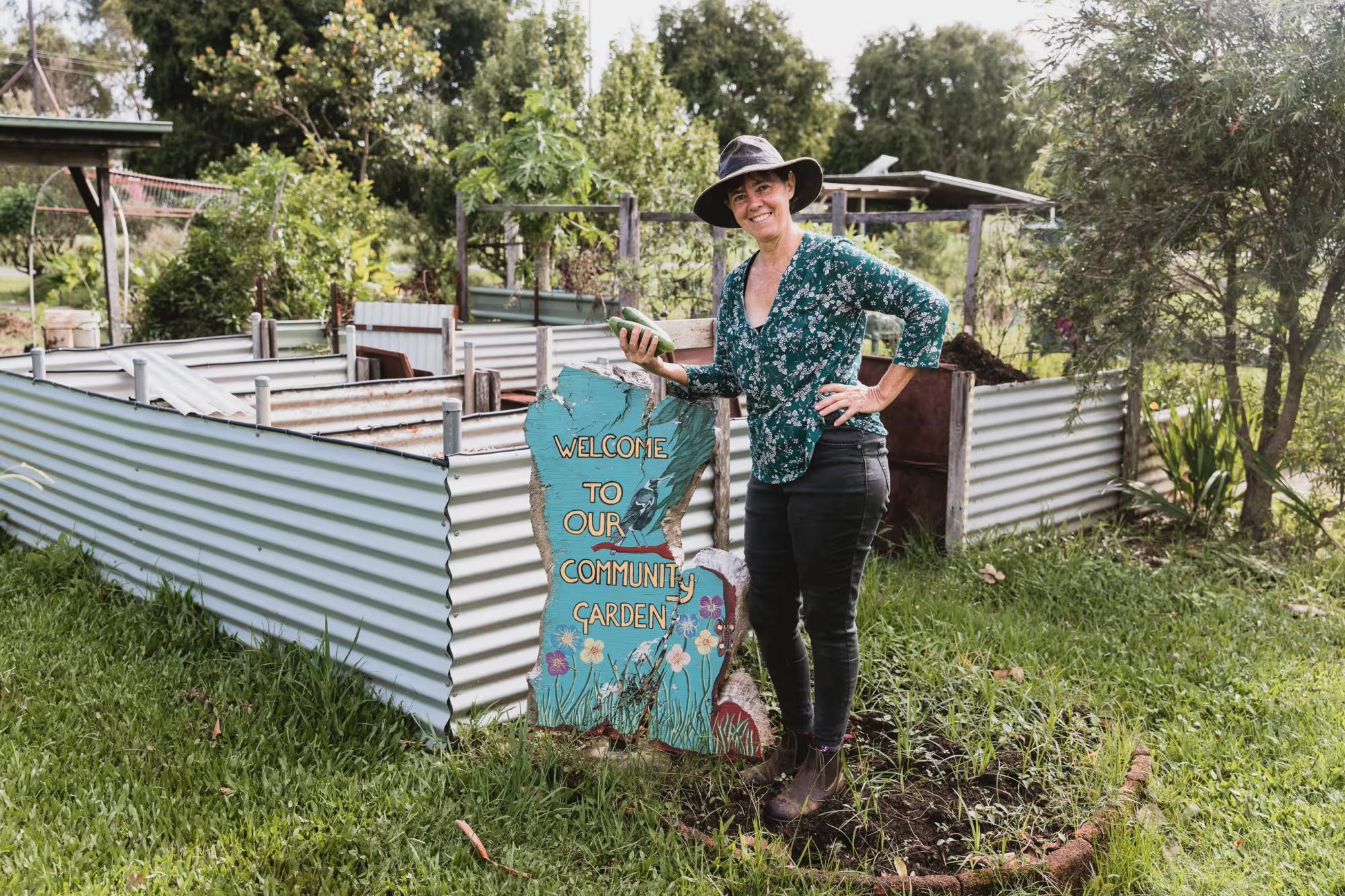
In 2015, [Jo] Nemeth had quit her community development job, given the last of her money to her 18-year-old daughter Amy and closed her bank account. "I was 46, I had a good job and a partner I loved, but I was deeply unhappy," Nemeth says. "I'd been feeling this growing despair about the economic system we live in." Her "lightbulb moment" came when her parents ... gave her a book about people with alternative lifestyles. "When I read about this guy choosing to live without money, I thought, 'Oh my God, I have to do that!'" The first thing Nemeth did was write a list of her needs. I discovered I really didn't need much to be comfortable. Then I just started ... figuring out how I could meet my needs without having any negative impacts." For the first three years, Nemeth lived on a friend's farm, where she built a small shack from discarded building materials before doing some housesitting and living off-grid for a year in a "little blue wagon" in another friend's back yard. Instead of paying rent, Nemeth cooks, cleans, manages the veggie garden and makes items such as soap, washing powder and fermented foods. And she couldn't be happier. She soon started tapping into the "gift economy" more deeply, giving without expecting anything in return, receiving without any sense of obligation. "That second part took a while to get used to," she says. "It's very different to bartering or trading, which involves thinking in a monetary, transactional way: I'll give you this if you give me that. I actually feel more secure than I did when I was earning money," she says, "because all through human history, true security has always come from living in community and I have time now to build that 'social currency'. To help people out, care for sick friends or their children, help in their gardens. That's one of the big benefits of living without money."
Latest
Latest News
Each news summary is created according to strict standards. Here's how we do it.
Each summary is created using a consistent editorial procedure. The target length is approximately 16 lines of 11-point Arial text in a 650-pixel-wide column. Up to 25% of a summary may be set in bold to emphasize the most important ideas. Summaries are composed of verbatim excerpts presented in the same sequence as they appear in the original news source, with very minor editorial additions. Where material has been omitted between excerpts, the omission is indicated with ellipses (...). Any words added by an editor for clarity or context appear in [brackets]. Our original news editor was Fred Burks. Tod Fletcher edited most summaries from 2007 through 2014, and Mark Bailey has served as news editor since 2014.