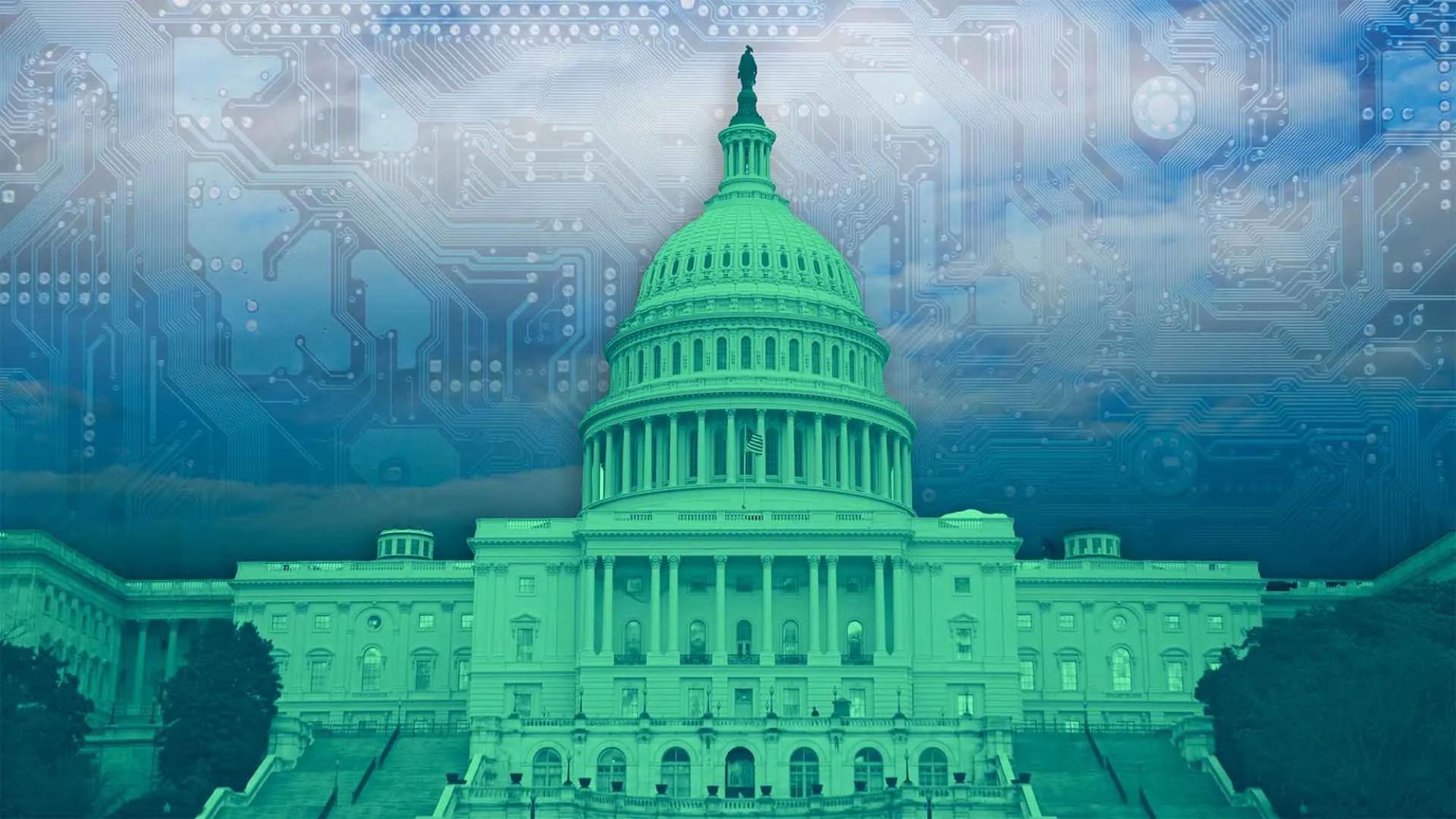
In Silicon Valley, AI tech giants are in a bidding war, competing to hire the best and brightest computer programmers. But a different hiring spree is underway in D.C. AI firms are on an influence-peddling spree, hiring hundreds of former government officials and retaining former members of Congress as consultants and lobbyists. The latest disclosure filings show over 500 entities lobbying on AI policyfrom federal rules designed to preempt state and local safety regulations to water and energy-intensive data centers and integration into government contracting and certifications. Lawmakers are increasingly making the jump from serving constituents as elected officials to working directly as influence peddlers for AI interests. Former Sen. Laphonza Butler, D-Calif., a former lobbyist appointed to the U.S. Senate to fill the seat of Sen. Dianne Feinstein, left Congress last year and returned to her former profession. She is now working as a consultant to OpenAI, the firm behind ChatGPT. Former Sen. Richard Burr, R-N.C., recently registered for the first time as a lobbyist. Among his initial clients is Lazarus AI, which sells AI products to the Defense Department. The expanding reach of artificial intelligence is rapidly reshaping hundreds of professions, weapons of war, and the ways we connect with one another. What's clear is that the AI firms set to benefit most from these changes are taking control of the policymaking apparatus to write the laws and regulations during the transition.
Latest
Latest News
Each news summary is created according to strict standards. Here's how we do it.
Each summary is created using a consistent editorial procedure. The target length is approximately 16 lines of 11-point Arial text in a 650-pixel-wide column. Up to 25% of a summary may be set in bold to emphasize the most important ideas. Summaries are composed of verbatim excerpts presented in the same sequence as they appear in the original news source, with very minor editorial additions. Where material has been omitted between excerpts, the omission is indicated with ellipses (...). Any words added by an editor for clarity or context appear in [brackets]. Our original news editor was Fred Burks. Tod Fletcher edited most summaries from 2007 through 2014, and Mark Bailey has served as news editor since 2014.