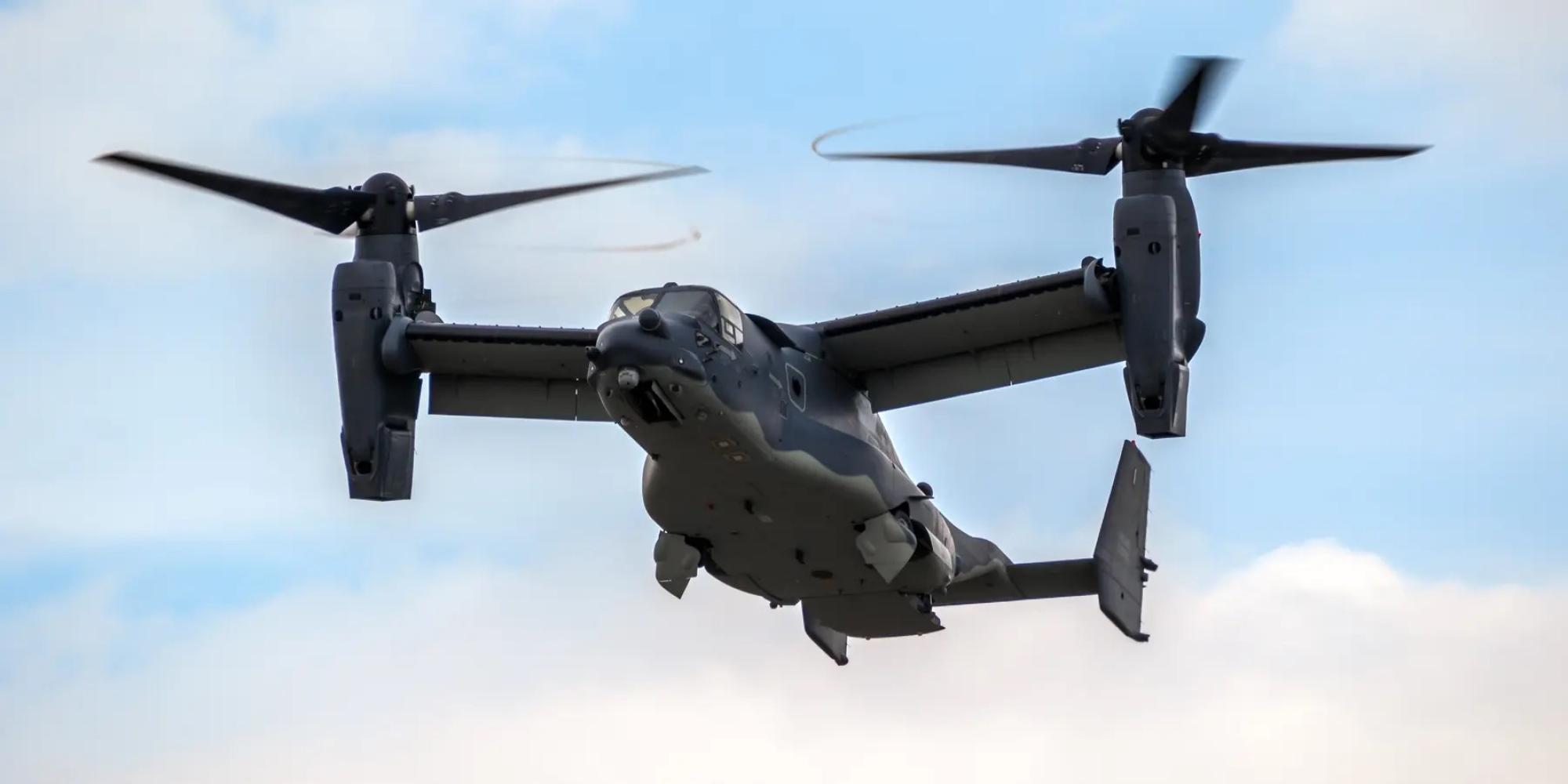
Military aviation accidents are spiking. As Sen. Elizabeth Warren's (D- Mass.) office reported this week, the rate of severe accidents per 100,000 flight hours, was a staggering 55% higher than it was in 2020. Her office said mishaps cost the military $9.4 billion, killed 90 service members and DoD civilian employees, and destroyed 89 aircraft between 2020 to 2024. The Air Force lost 47 airmen to "preventable mishaps" in 2024 alone. The U.S. continues to utilize aircraft with known safety issues or are otherwise prone to accidents, like the V-22 Osprey, whose gearbox and clutch failures can cause crashes. Dan Grazier, director of the Stimson Center's National Security Reform Program, told RS that the lack of flight crew experience is a problem. "The total number of flight hours U.S. military pilots receive has been abysmal for years. Pilots in all branches simply don't fly often enough to even maintain their flying skills, to say nothing of improving them," he said. This is often because aircraft are not ready to fly. "One of the main reasons behind the lack of flying time, is the simple fact that modern military aircraft are excessively complex machines that don't work as often as the services need them to do," Grazier told RS. He said that popular aircraft, like the F-35, often are not mission capable. "Pentagon officials can ... insist on simpler aircraft with high readiness rates as a key performance parameter."
Latest
Latest News
Each news summary is created according to strict standards. Here's how we do it.
Each summary is created using a consistent editorial procedure. The target length is approximately 16 lines of 11-point Arial text in a 650-pixel-wide column. Up to 25% of a summary may be set in bold to emphasize the most important ideas. Summaries are composed of verbatim excerpts presented in the same sequence as they appear in the original news source, with very minor editorial additions. Where material has been omitted between excerpts, the omission is indicated with ellipses (...). Any words added by an editor for clarity or context appear in [brackets]. Our original news editor was Fred Burks. Tod Fletcher edited most summaries from 2007 through 2014, and Mark Bailey has served as news editor since 2014.