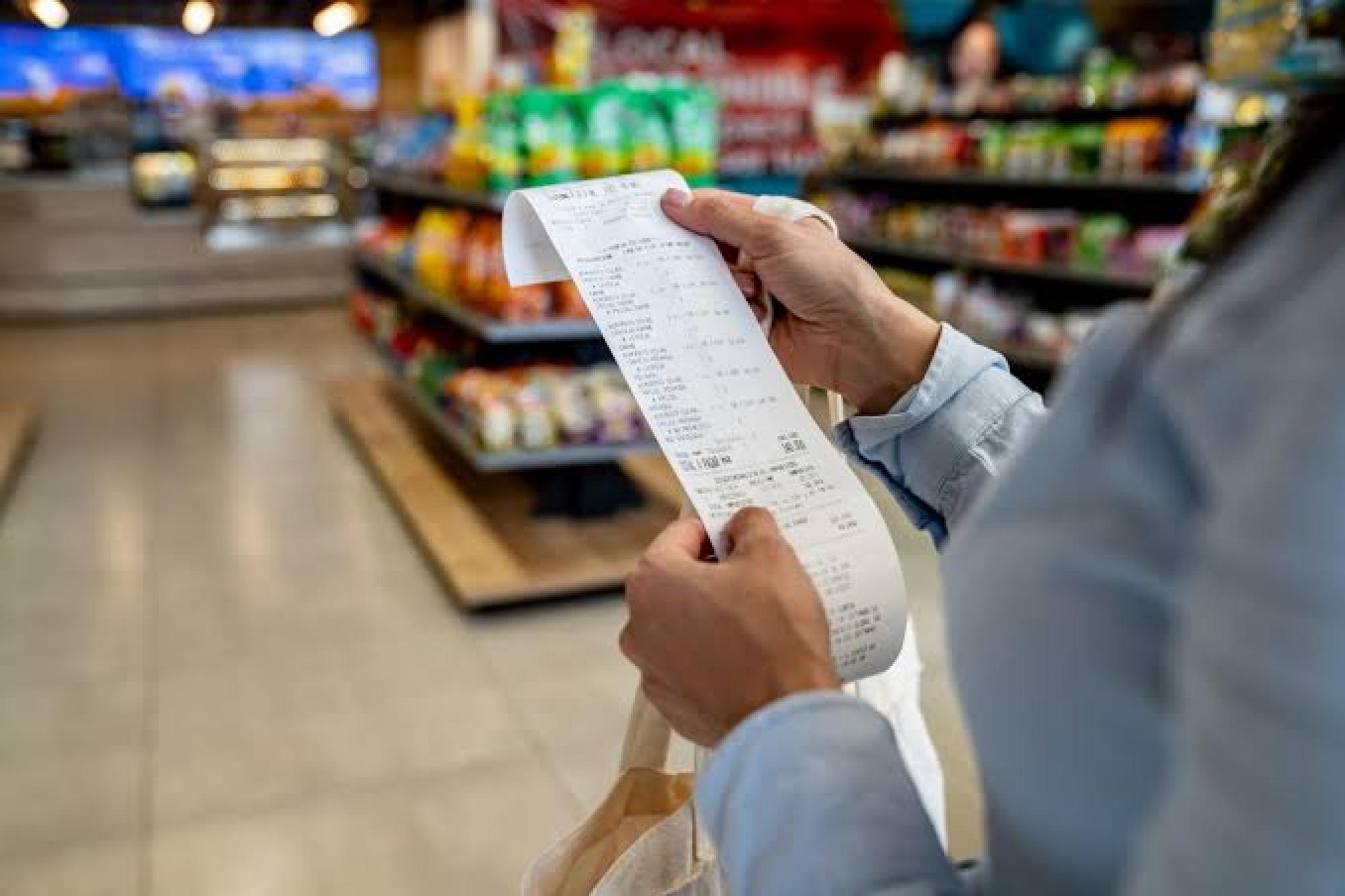
Millions of Americans are borrowing money or draining their savings to buy groceries, highlighting the financial strain many households face as the cost of living rises, new research has found. More than a quarter of working-age adults who relied on credit cards to buy groceries were either unable to pay their balance in full or missed their minimum payment, according to the Urban Institute, a nonpartisan think tank. About one in 10 adults relied on so-called "buy now, pay later" loans to cover their groceries " of those, about a third missed a payment last year, the analysis found. About 20% of working-age adults said they had tapped long-term savings that weren't intended for everyday expenses, such as an emergency fund, at least once in the last 12 months to pay for groceries, the researchers said. Over the past five years, grocery prices have jumped 32%, making food affordability a top concern. In a May CBS News poll, more than three-quarters of Americans said their incomes aren't keeping up with inflation. About 12% of low- and middle-income adults who used credit cards to pay for groceries missed a minimum payment last year, triple the rate for higher-income consumers, the study found. Lower-earning households were also about four times as likely to miss a buy now, pay later payment as higher-income households.
Latest
Latest News
Each news summary is created according to strict standards. Here's how we do it.
Each summary is created using a consistent editorial procedure. The target length is approximately 16 lines of 11-point Arial text in a 650-pixel-wide column. Up to 25% of a summary may be set in bold to emphasize the most important ideas. Summaries are composed of verbatim excerpts presented in the same sequence as they appear in the original news source, with very minor editorial additions. Where material has been omitted between excerpts, the omission is indicated with ellipses (...). Any words added by an editor for clarity or context appear in [brackets]. Our original news editor was Fred Burks. Tod Fletcher edited most summaries from 2007 through 2014, and Mark Bailey has served as news editor since 2014.