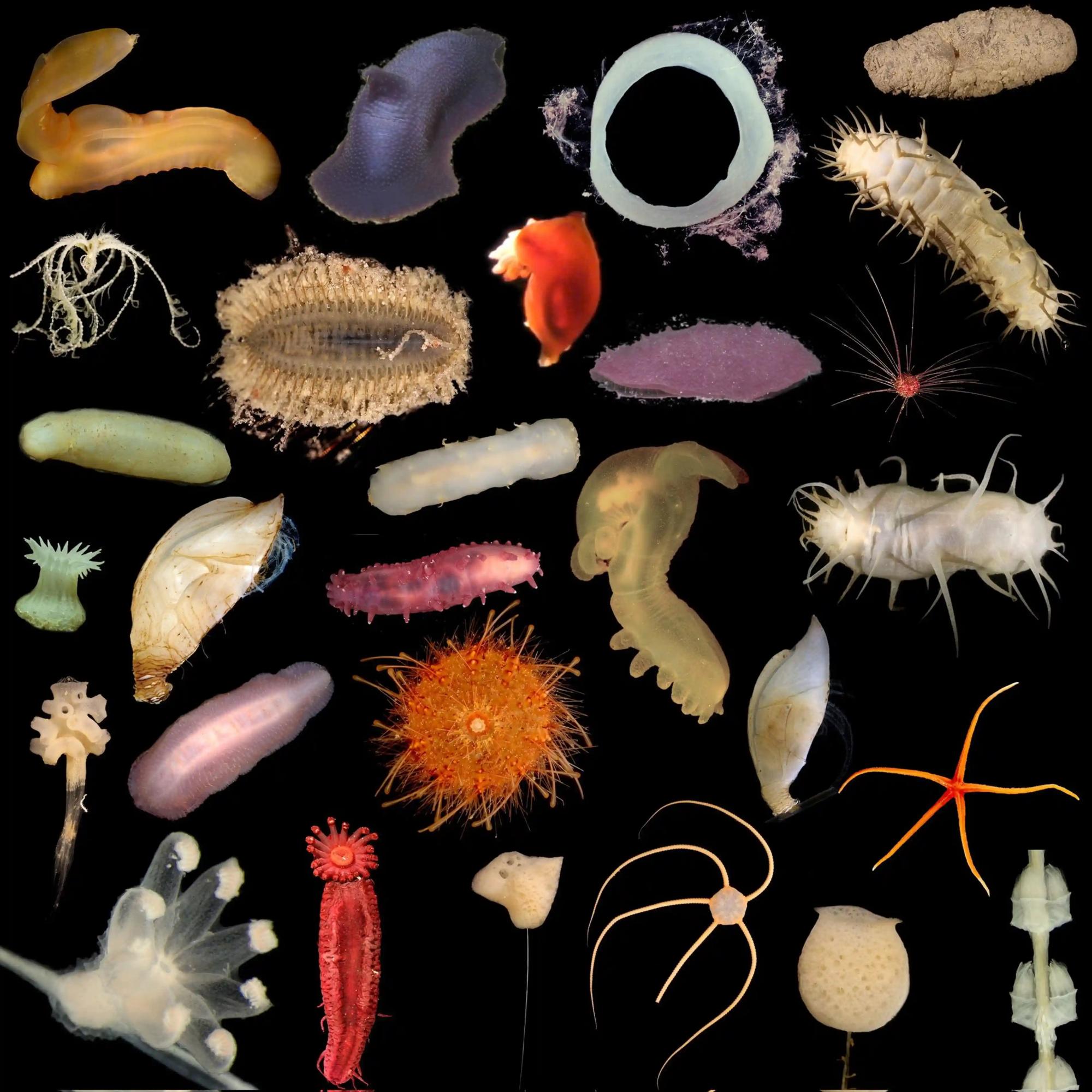
Scientists have discovered more than 5,000 new species living on the seabed in an untouched area of the Pacific Ocean that has been identified as a future hotspot for deep-sea mining, according to a review of the environmental surveys done in the area. It is the first time the previously unknown biodiversity of the Clarion-Clipperton Zone (CCZ), a mineral-rich area of the ocean floor that spans 1.7m sq miles between Hawaii and Mexico in the Pacific, has been comprehensively documented. The research will be critical to assessing the risk of extinction of the species, given contracts for deep-sea mining in the near-pristine area appear imminent. Most of the animals identified by researchers exploring the zone are new to science, and almost all are unique to the region: only six, including a carnivorous sponge and a sea cucumber, have been seen elsewhere. One of the deep-sea animals discovered was nicknamed the "gummy squirrel", because of its huge tail and jelly-like appearance, he said. There are also glass sponges, some of which look like vases. The most common categories of creatures in the CCZ are arthropods, worms, members of the spider family and echinoderms, which include spiny invertebrates such as sea urchins, and sponges. "Our role as scientists ... is to provide the data," [biologist Dr. Adrian Glover] said. "Everyone who lives on this planet should be concerned about using it in a sustainable way. I see it as very positive that we can come up with a regulatory structure before mining takes place."
Latest
Latest News
Each news summary is created according to strict standards. Here's how we do it.
Each summary is created using a consistent editorial procedure. The target length is approximately 16 lines of 11-point Arial text in a 650-pixel-wide column. Up to 25% of a summary may be set in bold to emphasize the most important ideas. Summaries are composed of verbatim excerpts presented in the same sequence as they appear in the original news source, with very minor editorial additions. Where material has been omitted between excerpts, the omission is indicated with ellipses (...). Any words added by an editor for clarity or context appear in [brackets]. Our original news editor was Fred Burks. Tod Fletcher edited most summaries from 2007 through 2014, and Mark Bailey has served as news editor since 2014.