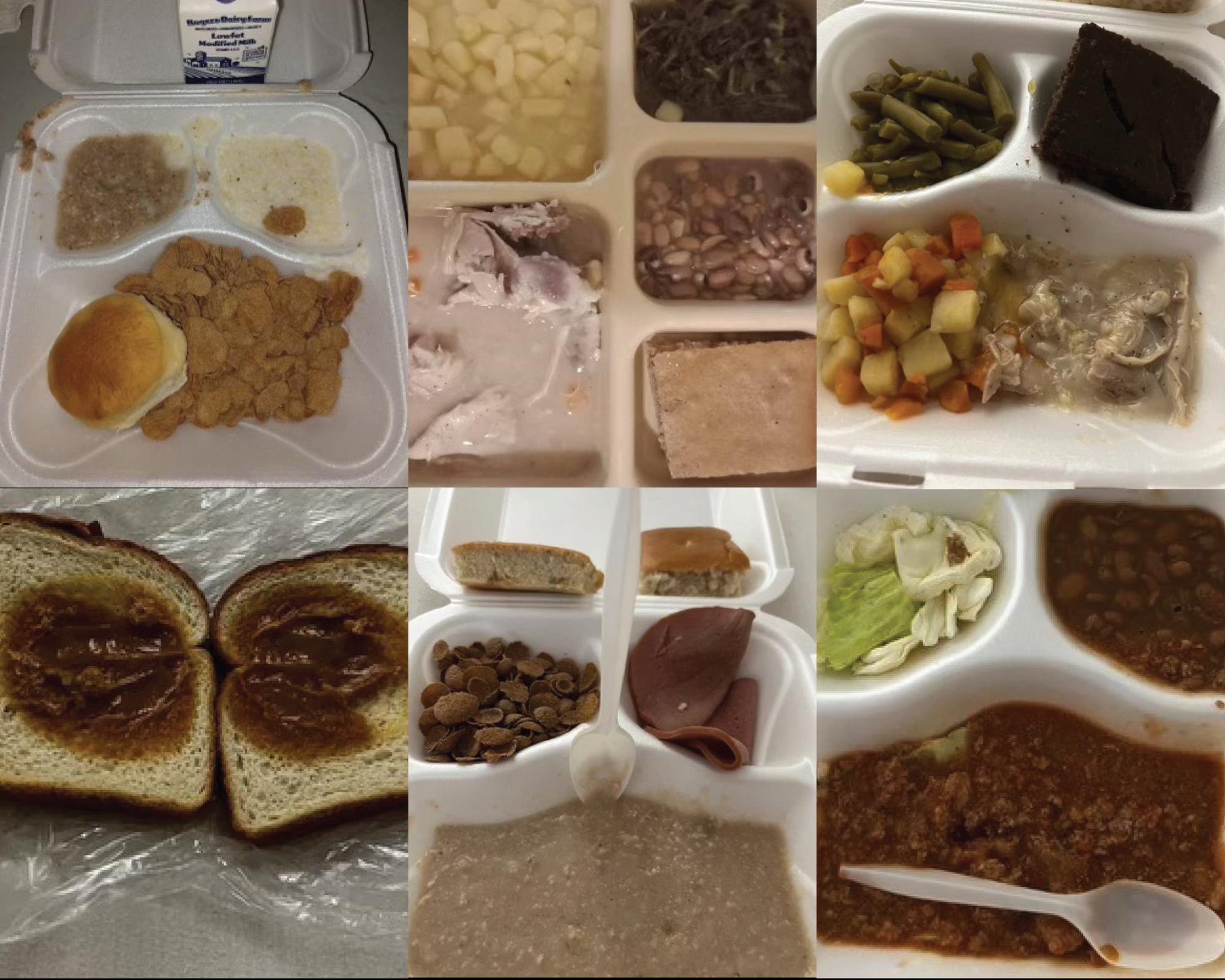
In prisons and jails across the US, people are routinely fed unhealthy, tasteless or inedible meals. Many are left hungry and malnourished, with devastating long-term health consequences. The hidden crisis affecting millions of incarcerated people is the subject of Eating Behind Bars, a new book offering a disturbing account of how correctional institutions punish their residents through the food they provide and withhold. The book by Leslie Soble ... describes roaches and rats in prison kitchens, rotten meat and guard dogs who are fed better meals than incarcerated people. It is a compelling, and at times nauseating, indictment of the criminal justice system. Soble manages the Food in Prison Project at Impact Justice, a national non-profit that advocates for reforms and supports incarcerated people. The prison food crisis [is] a public health crisis, with estimates suggesting each year behind bars reduces life expectancy by two years. It's a labor rights issue, as incarcerated people earn pennies per hour running the kitchens, barely enough to buy canteen snacks to supplement their meager diets. And there are environmental ramifications: US correctional facilities create an estimated 300,000 tons of food waste annually as residents reject unpalatable offerings. A typical prison diet is very high in ultra-processed foods, highly refined carbohydrates, sugar and salt, and very low in fresh fruits and vegetables, quality protein, whole grains.
Latest
Latest News
Each news summary is created according to strict standards. Here's how we do it.
Each summary is created using a consistent editorial procedure. The target length is approximately 16 lines of 11-point Arial text in a 650-pixel-wide column. Up to 25% of a summary may be set in bold to emphasize the most important ideas. Summaries are composed of verbatim excerpts presented in the same sequence as they appear in the original news source, with very minor editorial additions. Where material has been omitted between excerpts, the omission is indicated with ellipses (...). Any words added by an editor for clarity or context appear in [brackets]. Our original news editor was Fred Burks. Tod Fletcher edited most summaries from 2007 through 2014, and Mark Bailey has served as news editor since 2014.