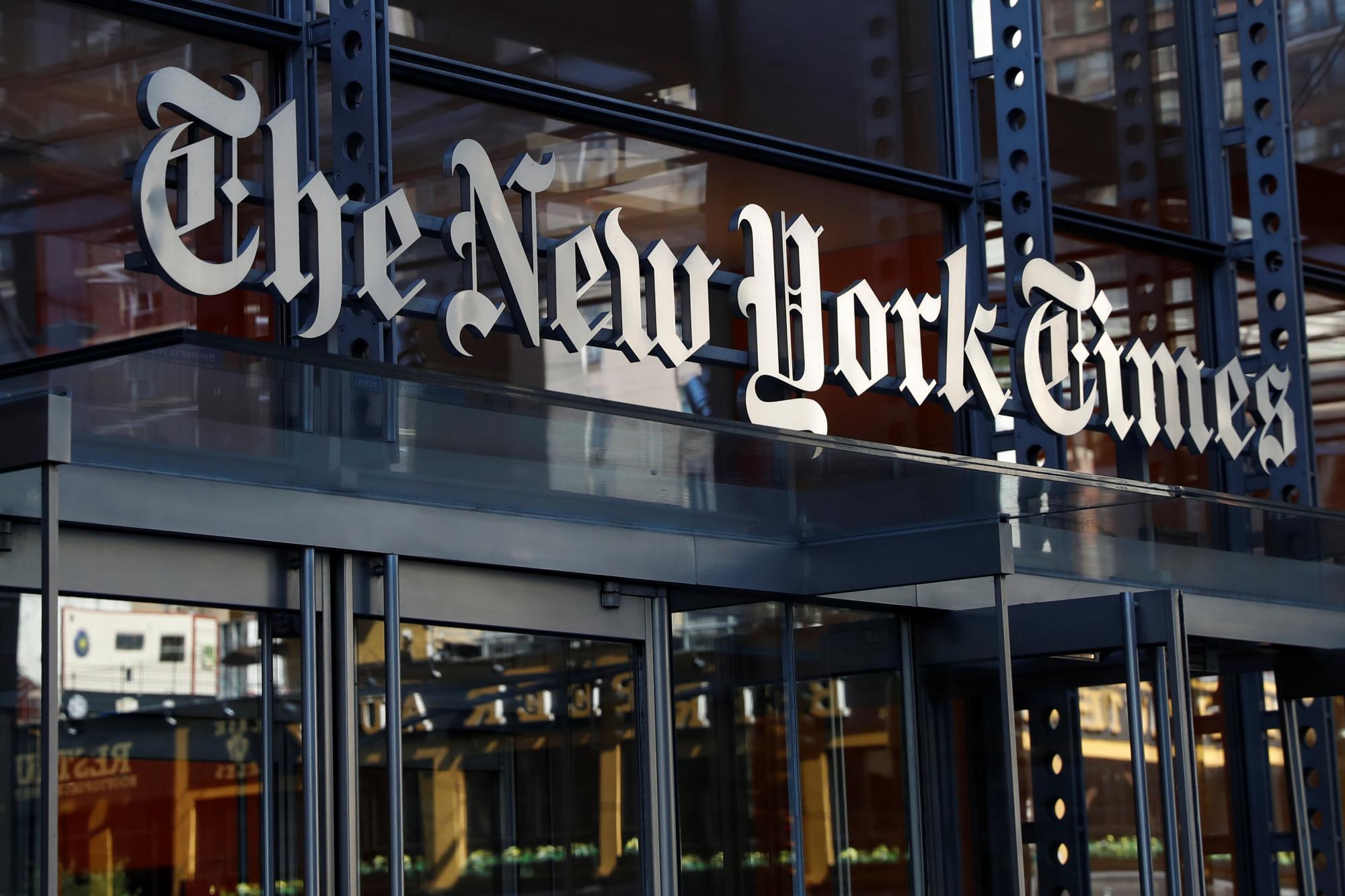
The New York Times tried to block a web crawler that was affiliated with the famous Internet Archive. The Internet Archive's Wayback Machine has long been used to compare webpages as they are updated over time, clearly delineating the differences between two iterations of any given page. Several years ago, the archive added a feature called "Changes" that lets users compare two archived versions of a website from different dates or times on a single display. The tool can be used to uncover changes in news stories that have been made without any accompanying editorial notes, so-called stealth edits. The Times has, in the past, faced public criticisms over some of its stealth edits. In a notorious 2016 incident, the paper revised an article about then-Democratic presidential candidate Sen. Bernie Sanders, I-Vt. ... drastically after publication " changing the tone from one of praise to skepticism. More recently, the Times stealth-edited an article that originally listed "death" as one of six ways "you can still cancel your federal student loan debt." Following the edit, the "death" section title was changed to a more opaque heading of "debt won't carry on." A service called NewsDiffs " which provides a similar comparative service but focuses on news outlets such as the New York Times, CNN, the Washington Post, and others " has also chronicled a long list of significant examples of articles that have undergone stealth edits, though the service appears to not have been updated in several years.
Latest
Latest News
Each news summary is created according to strict standards. Here's how we do it.
Each summary is created using a consistent editorial procedure. The target length is approximately 16 lines of 11-point Arial text in a 650-pixel-wide column. Up to 25% of a summary may be set in bold to emphasize the most important ideas. Summaries are composed of verbatim excerpts presented in the same sequence as they appear in the original news source, with very minor editorial additions. Where material has been omitted between excerpts, the omission is indicated with ellipses (...). Any words added by an editor for clarity or context appear in [brackets]. Our original news editor was Fred Burks. Tod Fletcher edited most summaries from 2007 through 2014, and Mark Bailey has served as news editor since 2014.