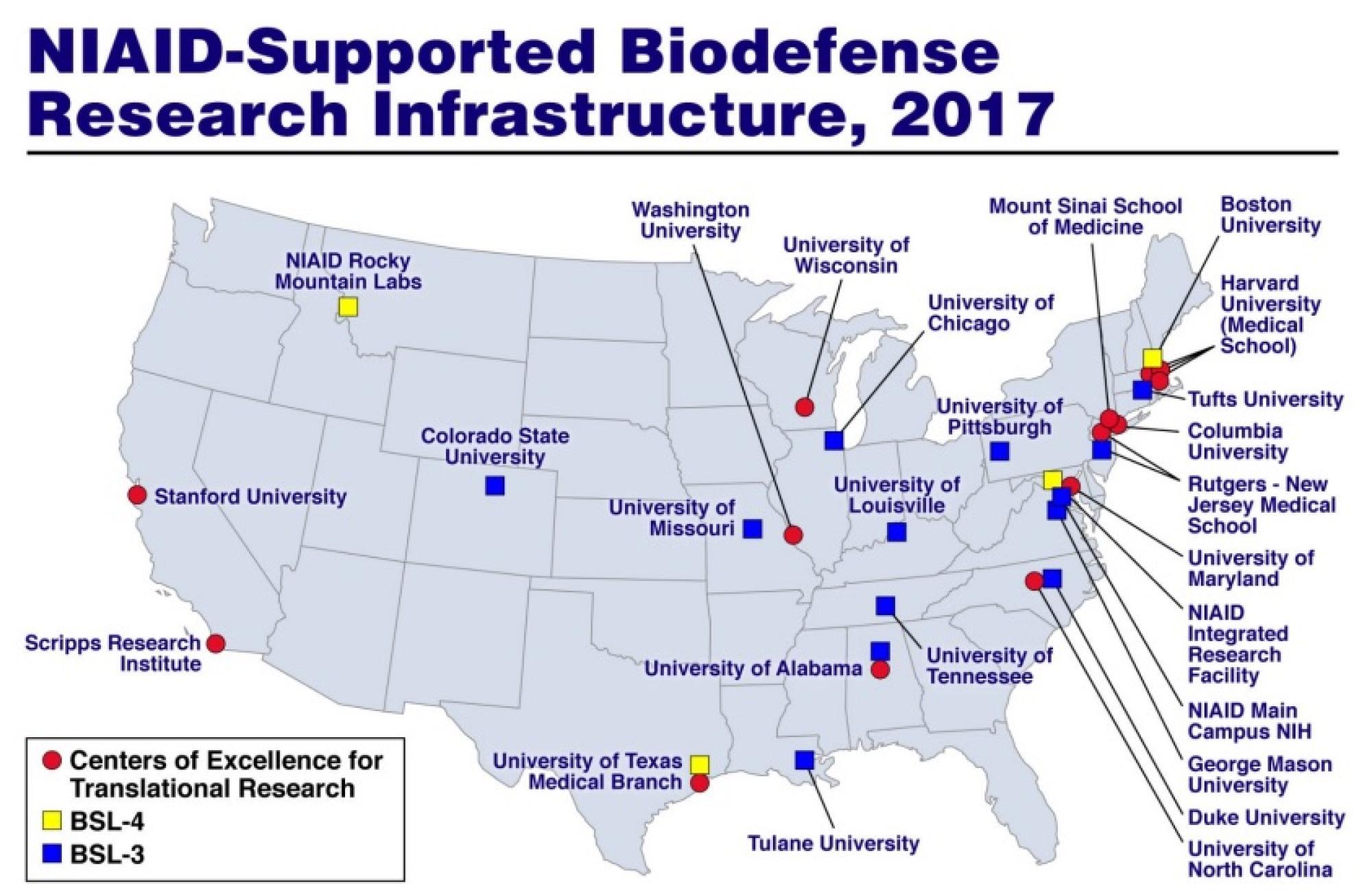
The pandemic's most contentious question: Did SARS-CoV-2 emerge through natural spillover from animals to humans, or through a laboratory incident tied to research intended to anticipate the next outbreak? A flashpoint in that debate has been DEFUSE " a 2018 grant proposal submitted to DARPA, the Defense Department's advanced research agency. DEFUSE outlined plans to test spike-protein swaps and cleavage-site insertions in bat coronaviruses. Newly obtained NIH records suggest that the experimental concepts later spotlighted in DEFUSE " tuning bat coronavirus infectivity through spike swaps, receptor-binding changes, and cleavage-site insertions" were already embedded in multiple U.S.-funded coronavirus research projects years before the pandemic. NIH ... reviewers saw potential risk. In an internal "biohazard comment," a grants manager warned that recombinant coronaviruses engineered to enhance spike cleavage or strengthen ACE2 binding "may have novel and unexpected virulence phenotypes" " or, new and unpredictable traits that could make the virus more dangerous. NIH reviewed " and frequently approved " experiments designed to alter receptor-binding domains, swap spike proteins between viruses, or modify cleavage sites that influence how coronaviruses infect cells. American and Chinese researchers shared sequences, experimental ideas and preliminary findings in real time.
Latest
Latest News
Each news summary is created according to strict standards. Here's how we do it.
Each summary is created using a consistent editorial procedure. The target length is approximately 16 lines of 11-point Arial text in a 650-pixel-wide column. Up to 25% of a summary may be set in bold to emphasize the most important ideas. Summaries are composed of verbatim excerpts presented in the same sequence as they appear in the original news source, with very minor editorial additions. Where material has been omitted between excerpts, the omission is indicated with ellipses (...). Any words added by an editor for clarity or context appear in [brackets]. Our original news editor was Fred Burks. Tod Fletcher edited most summaries from 2007 through 2014, and Mark Bailey has served as news editor since 2014.