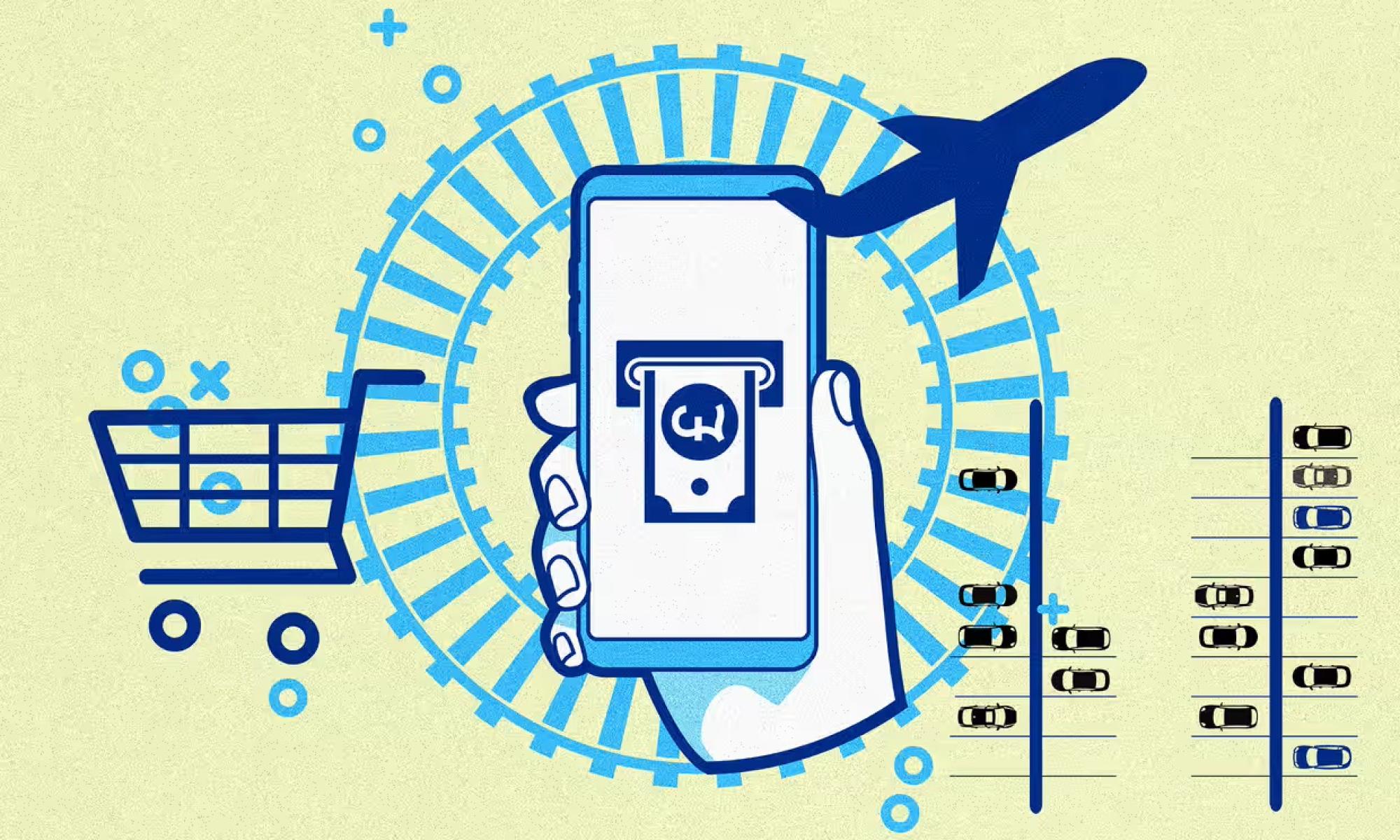
The cashless society is effectively already a reality for most of us, but there remains a minority for whom it represents a continuing headache. The government last week told high street banks that they must offer access to cash machines within three miles of customers after the closure of thousands of branches had reduced the number of ATMs. There are also an estimated to be 1.3 million adults in this country who are "unbanked" " ie do not have a bank account. For them, something as mundane as parking a car is increasingly fraught " a quarter of London councils have removed pay and display parking machines in favour of smartphone-centred apps. The shiny, bright future of full computerisation looks very much like a dystopia to someone who either doesn't understand it or have the means to access it. And almost by definition, the people who can't access the digitalised world are seldom visible, because absence is not easy to see. What is apparent is that improved efficiency doesn't necessarily lead to greater wellbeing. Technology doesn't have to be dehumanising, but if it's to avoid that outcome it has to be human-focused, not just consumer-focused, and in particular not just digital-consumer-focused. Cash, like printed air tickets or indeed train tickets, will no doubt one day soon seem as anachronistic as the barter system. In the meantime the transition should focus on ensuring that no one is discounted because they are too old, too poor or too disabled to matter to the gods of efficiency.
Latest
Latest News
Each news summary is created according to strict standards. Here's how we do it.
Each summary is created using a consistent editorial procedure. The target length is approximately 16 lines of 11-point Arial text in a 650-pixel-wide column. Up to 25% of a summary may be set in bold to emphasize the most important ideas. Summaries are composed of verbatim excerpts presented in the same sequence as they appear in the original news source, with very minor editorial additions. Where material has been omitted between excerpts, the omission is indicated with ellipses (...). Any words added by an editor for clarity or context appear in [brackets]. Our original news editor was Fred Burks. Tod Fletcher edited most summaries from 2007 through 2014, and Mark Bailey has served as news editor since 2014.