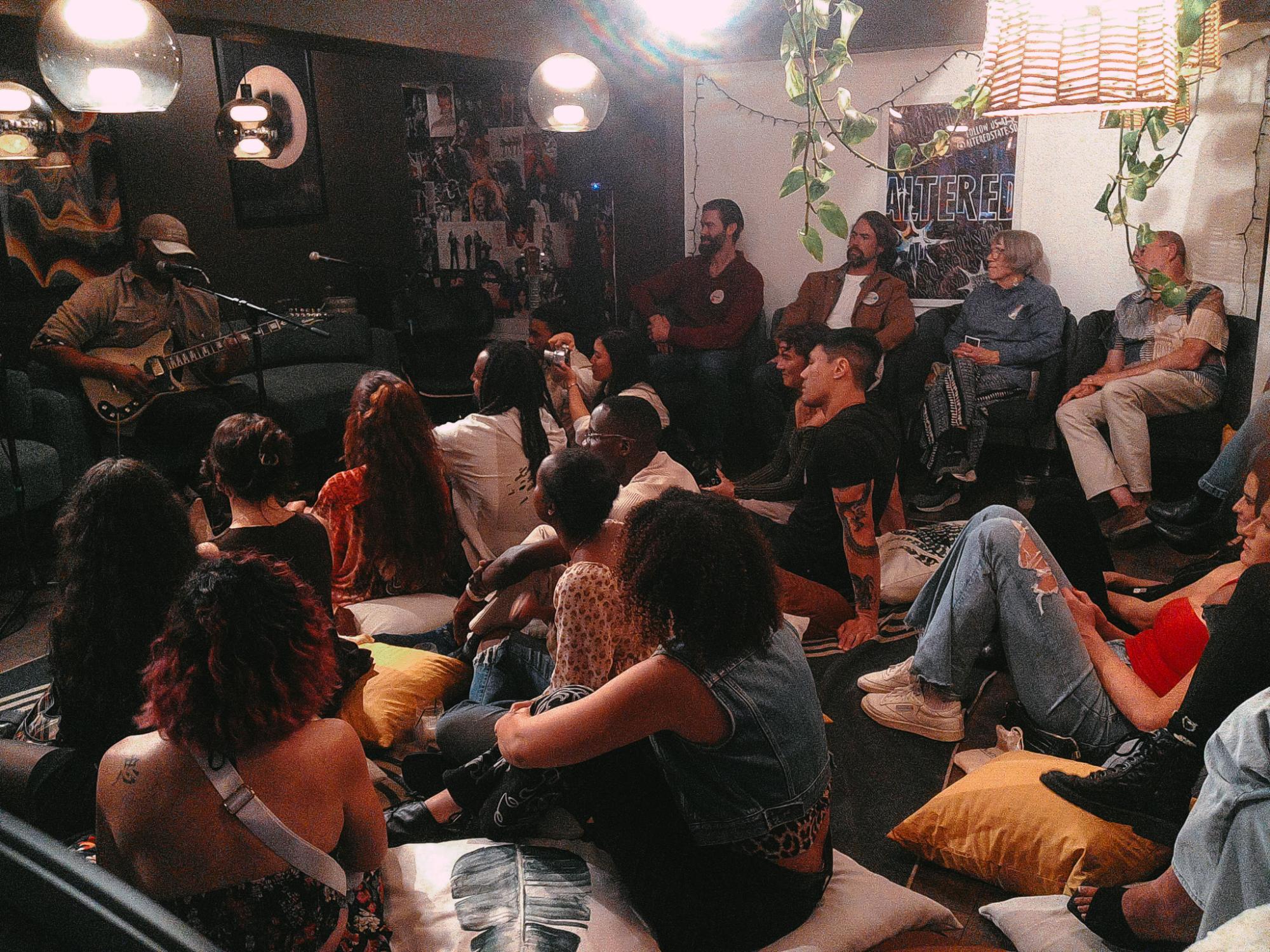
A recent survey from the British Standards Institution found that 68% of teen respondents said they feel worse when they spend too much time on social media, and 47% would remove them from existence if they could. So it's not surprising that hundreds of thousands of people are now attending 'IRL' events (in real life) where phones are either banned or limited. Several new services are now curating "offline experiences" for social gatherings and dating, and the number of these events that are landing on the calendars of Americans and Europeans is a testament to the deep desire for human-to-human contact. The Offline Club of Europe has over half-a-million Instagram followers (an ironic yardstick of success), and chapters across the continent gather at venues where one's smartphone is locked in a box at the start of the event. Once inside, reading, chatting, sharing a drink, playing a board gamein short, everything we used to do to socialize"are preferred over looking down at your phone. In addition to the Offline Club, companies like Kanso, Sofar Sounds, and the app 222, are making a business out of disconnecting humans from their social media feeds that overflow with targeted ads and AI-generated drivel. Each one has found itself a niche, but all are returning us to the social activities that our parents used to do before phones. There are likely more options for engaging with the world and humanity offline; these are just a few that are exploding in popularity.
Latest
Latest News
Each news summary is created according to strict standards. Here's how we do it.
Each summary is created using a consistent editorial procedure. The target length is approximately 16 lines of 11-point Arial text in a 650-pixel-wide column. Up to 25% of a summary may be set in bold to emphasize the most important ideas. Summaries are composed of verbatim excerpts presented in the same sequence as they appear in the original news source, with very minor editorial additions. Where material has been omitted between excerpts, the omission is indicated with ellipses (...). Any words added by an editor for clarity or context appear in [brackets]. Our original news editor was Fred Burks. Tod Fletcher edited most summaries from 2007 through 2014, and Mark Bailey has served as news editor since 2014.