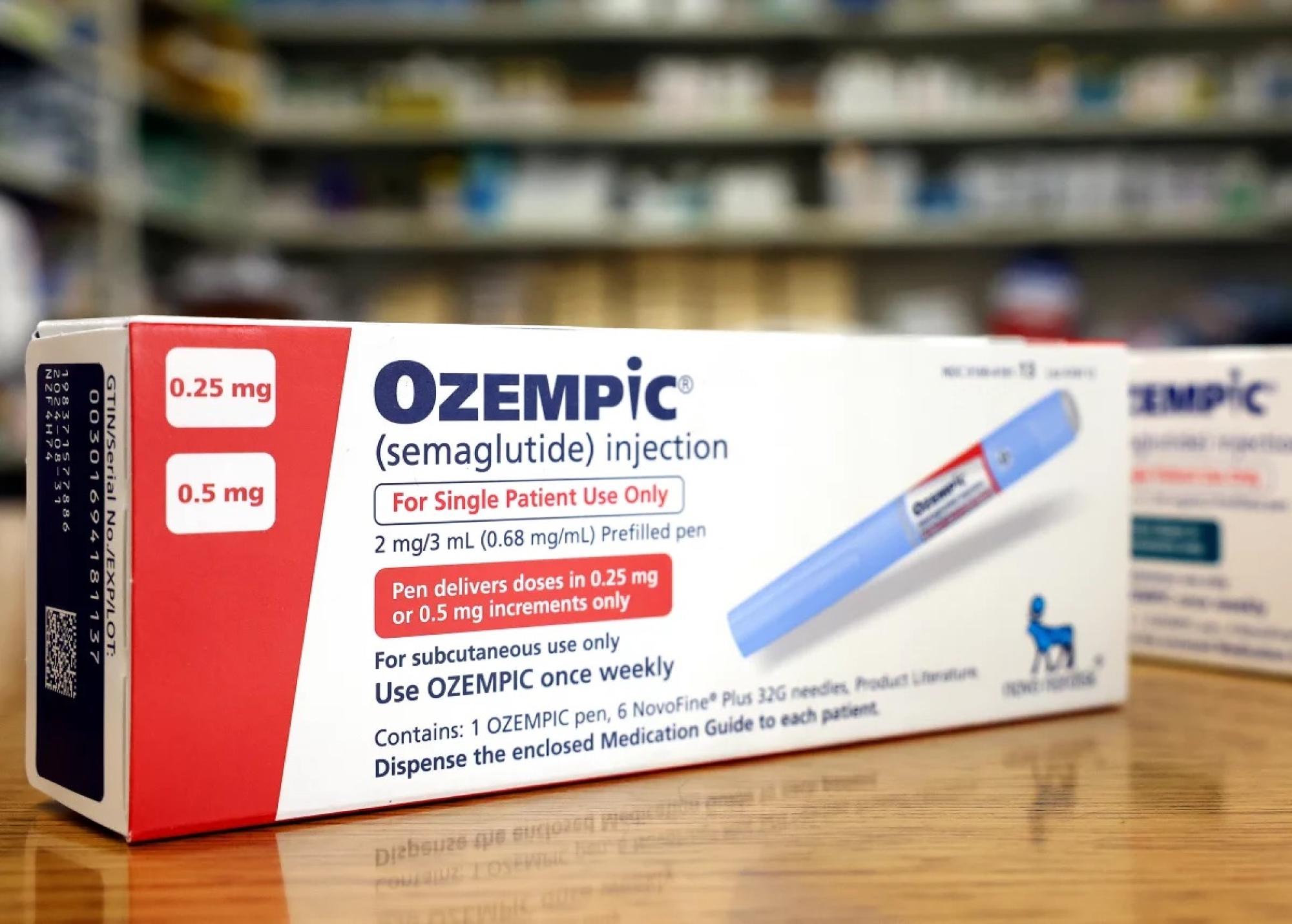
What if your entire economy was based on one product? For all intents and purposes, Denmark quite literally runs on Ozempic, a diabetes medication that is now widely used by consumers to lose weight. Worldwide sales have increased by over 60% in the past year alone. In the United States, which is one of its largest markets, prescriptions for Ozempic and similar drugs quadrupled between 2020 and 2022. At the end of 2023, Novo became the largest company in Europe. And its rise has eclipsed the Danish economy, creating a lot of value on the one hand, but an imbalanced economy on the other. You might have heard of "petrostates," countries where fossil fuel extraction dominates the economy. By that measure, you might call Denmark a pharmastate, because Novo now dominates the Danish economy. Nearly 1 out of every 5 Danish jobs created last year was at Novo. And that's just directly. If you also include the jobs that Novo has created indirectly " like, for example, at its suppliers, or from all the newly wealthy Novo employees spending their money at shops and restaurants " nearly half of all private-sector nonfarm jobs created in Denmark can be traced back to Novo. Novo Nordisk's meteoric trajectory raises a question about economic growth that's much bigger than just Denmark: Namely, what are the risks of having one giant company driving your entire economy? And crucially, what happens if that company's fortunes take a turn for the worse?
Latest
Latest News
Each news summary is created according to strict standards. Here's how we do it.
Each summary is created using a consistent editorial procedure. The target length is approximately 16 lines of 11-point Arial text in a 650-pixel-wide column. Up to 25% of a summary may be set in bold to emphasize the most important ideas. Summaries are composed of verbatim excerpts presented in the same sequence as they appear in the original news source, with very minor editorial additions. Where material has been omitted between excerpts, the omission is indicated with ellipses (...). Any words added by an editor for clarity or context appear in [brackets]. Our original news editor was Fred Burks. Tod Fletcher edited most summaries from 2007 through 2014, and Mark Bailey has served as news editor since 2014.