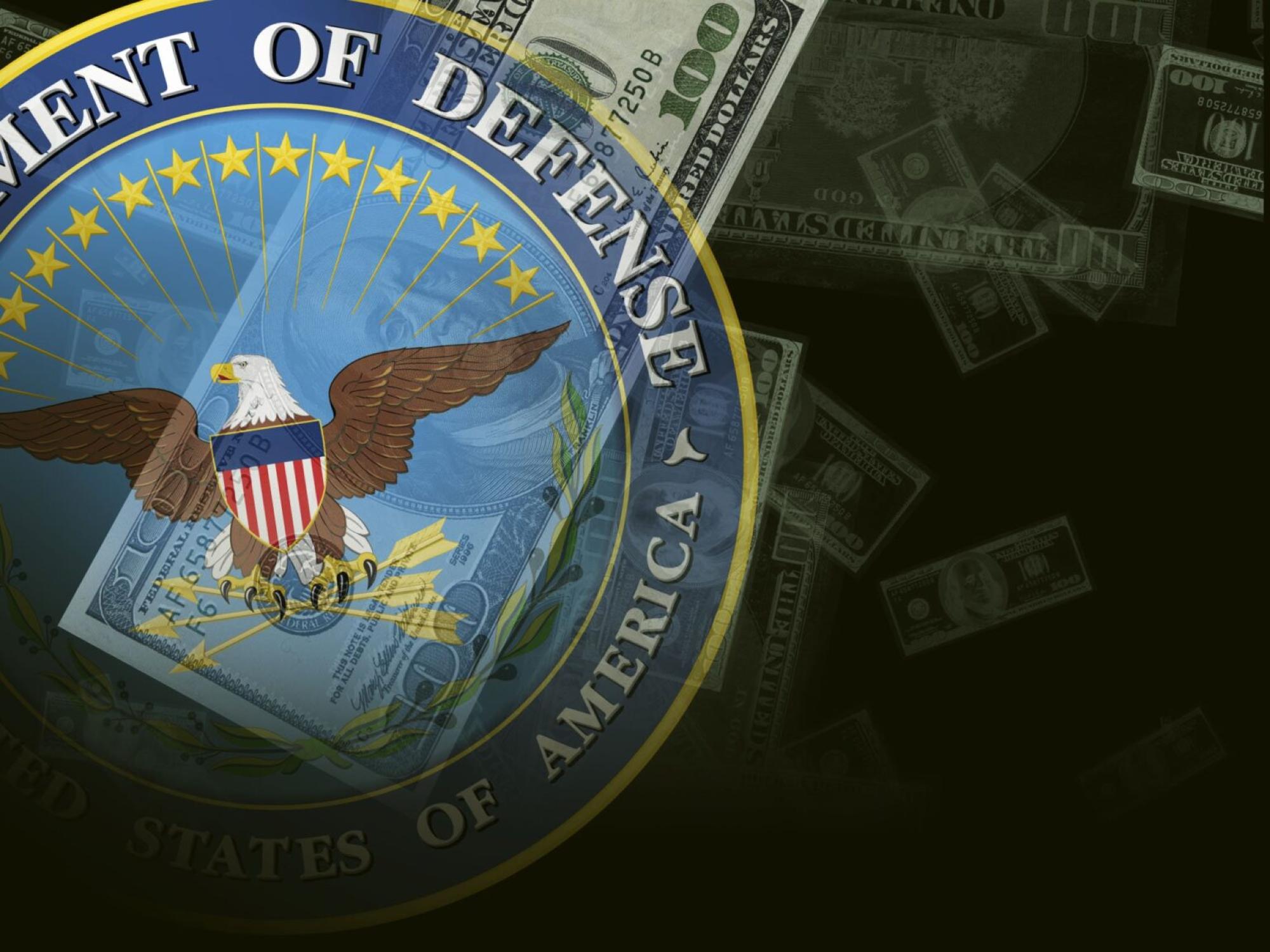
The Pentagon announced late last week that it failed its seventh consecutive audit. As with its past failures to achieve a clean audit, the U.S. Defense Department attempted to cast the 2024 results in a positive light, with the Pentagon's chief financial officer declaring in a statement that "momentum is on our side." The Pentagon is the largest U.S. federal agency and is responsible for roughly half of the government's annual discretionary spending, with its yearly budget approaching $1 trillion despite long-standing concerns about the department's inability to account for vast sums of money approved by lawmakers and presidents from both major parties. The latest financial assessment published Friday by the Defense Department's inspector general office estimates that the Pentagon has $4.1 trillion in assets. It is the only major federal agency that has never passed a clean audit, as required by law. Since the department's first failed audit in 2018, Congress has authorized trillions of dollars in additional military spending. According to the Costs of War Project, more than half of the department's annual budget "is now spent on military contractors" that are notorious for overbilling. Lawmakers have long cited the Pentagon's failure to pass a clean audit as evidence of the department's pervasive waste and fraud. The Pentagon buried a 2015 report identifying $125 billion in administrative waste out of concern that the findings would be used as a justification "to slash the defense budget."
Latest
Latest News
Each news summary is created according to strict standards. Here's how we do it.
Each summary is created using a consistent editorial procedure. The target length is approximately 16 lines of 11-point Arial text in a 650-pixel-wide column. Up to 25% of a summary may be set in bold to emphasize the most important ideas. Summaries are composed of verbatim excerpts presented in the same sequence as they appear in the original news source, with very minor editorial additions. Where material has been omitted between excerpts, the omission is indicated with ellipses (...). Any words added by an editor for clarity or context appear in [brackets]. Our original news editor was Fred Burks. Tod Fletcher edited most summaries from 2007 through 2014, and Mark Bailey has served as news editor since 2014.