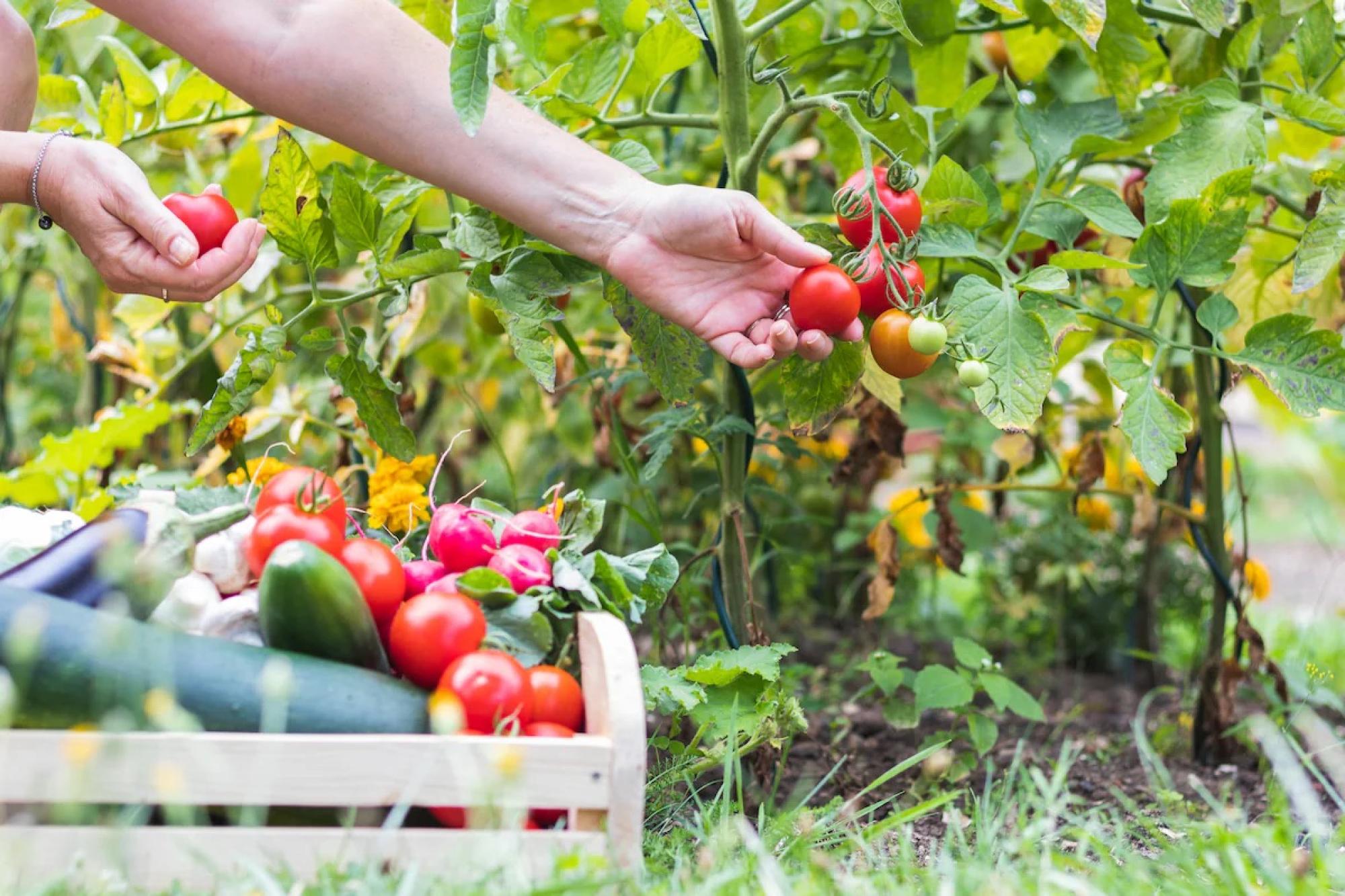
Can you eat a diet that's good for your health and good for the planet? A new study suggests that it's possible. It found that people who ate mostly minimally processed plant foods such as nuts, beans, fruits, vegetables, whole grains and olive oil, along with modest amounts of meat, fish, eggs and dairy, had lower rates of premature death from heart disease, cancer and other chronic diseases. At the same time, their diets had a smaller environmental footprint because they consisted of foods that were grown using relatively less land and water and that were produced with fewer greenhouse gas emissions. The study ... was inspired by a landmark 2019 report from the EAT-Lancet Commission, which designed a "Planetary Health Diet" capable of sustaining 10 billion people and the planet by 2050. The planetary health diet, in broad strokes, encourages people to eat more plants and whole foods alongside small portions of meat and dairy. People whose eating habits most closely adhered to the planetary health diet were 30 percent less likely to die prematurely compared to people who ate the lowest amounts of foods that form the basis of the planetary health diet. Planetary health eaters had a 10 percent lower risk of dying from cancer, a 14 percent lower likelihood of dying from cardiovascular diseases, a 47 percent reduction in the risk of dying from lung disease, and a 28 percent lower likelihood of dying of Alzheimer's disease and other neurodegenerative disorders.
Latest
Latest News
Each news summary is created according to strict standards. Here's how we do it.
Each summary is created using a consistent editorial procedure. The target length is approximately 16 lines of 11-point Arial text in a 650-pixel-wide column. Up to 25% of a summary may be set in bold to emphasize the most important ideas. Summaries are composed of verbatim excerpts presented in the same sequence as they appear in the original news source, with very minor editorial additions. Where material has been omitted between excerpts, the omission is indicated with ellipses (...). Any words added by an editor for clarity or context appear in [brackets]. Our original news editor was Fred Burks. Tod Fletcher edited most summaries from 2007 through 2014, and Mark Bailey has served as news editor since 2014.