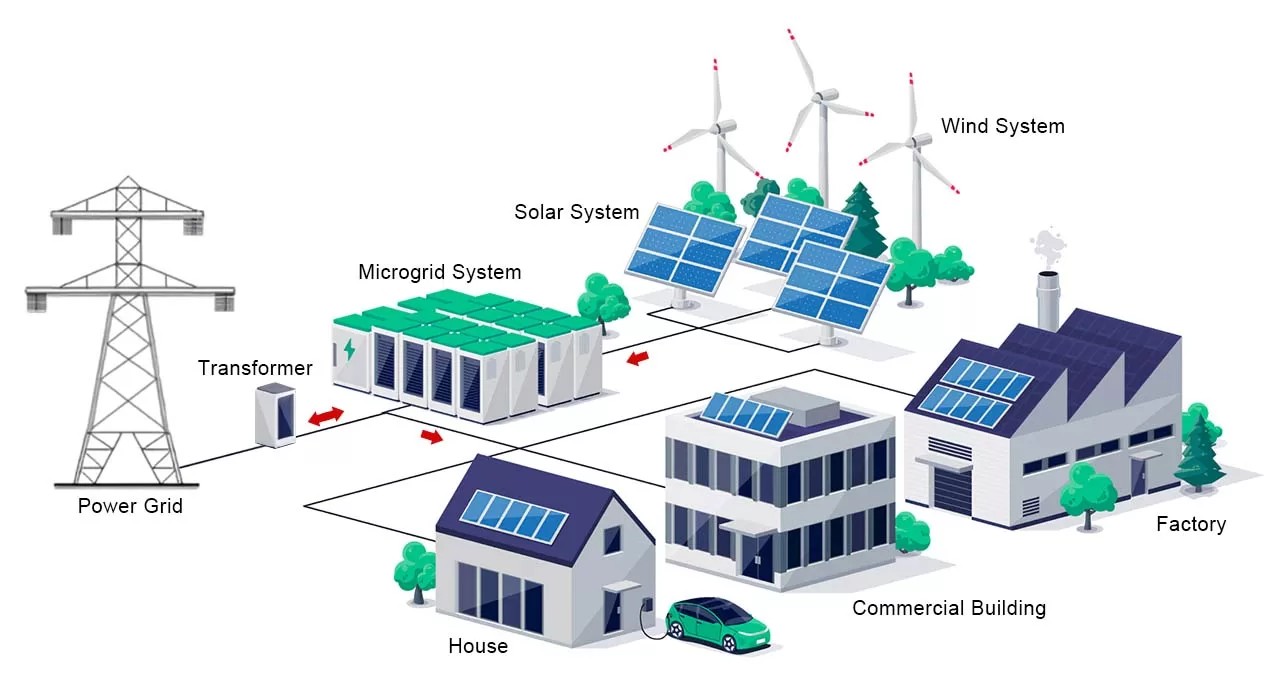
Community microgrids provide a new approach to the design and operation of the power grid at the community level. These microgrids, serving a specific area and supported by renewable energy and other distributed energy resources (DERs), help achieve a sustainable, secure, and cost-effective energy system. The installations, which can include energy storage among their DERs, can provide indefinite, always-on power. That’s of particular importance in areas prone to extreme weather events. A BlockEnergy installation in Florida, approved as a pilot project by the Florida Public Service Commission, is an example of a community microgrid that already has proved its worth. Tampa-based BlockEnergy, considered among the world’s first utility-owned, residential community microgrid developers, in 2022 partnered with home-builder Lennar and Tampa-based Metro Development Group to launch a 37-home microgrid community within the Medley at Southshore Bay residential development in Wimauma, Florida. Each home has power generation and battery energy storage that supplements electricity from the local grid. The system is scalable and, importantly, storm-resilient. That was proven last year when Hurricane Ian pummeled Florida, leaving more than 2.2 million power customers without electricity. The BlockEnergy homes at Medley at Southshore Bay, though, never lost power. None of the microgrid equipment was damaged by the hurricane.
Latest
Latest News
Each news summary is created according to strict standards. Here's how we do it.
Each summary is created using a consistent editorial procedure. The target length is approximately 16 lines of 11-point Arial text in a 650-pixel-wide column. Up to 25% of a summary may be set in bold to emphasize the most important ideas. Summaries are composed of verbatim excerpts presented in the same sequence as they appear in the original news source, with very minor editorial additions. Where material has been omitted between excerpts, the omission is indicated with ellipses (...). Any words added by an editor for clarity or context appear in [brackets]. Our original news editor was Fred Burks. Tod Fletcher edited most summaries from 2007 through 2014, and Mark Bailey has served as news editor since 2014.