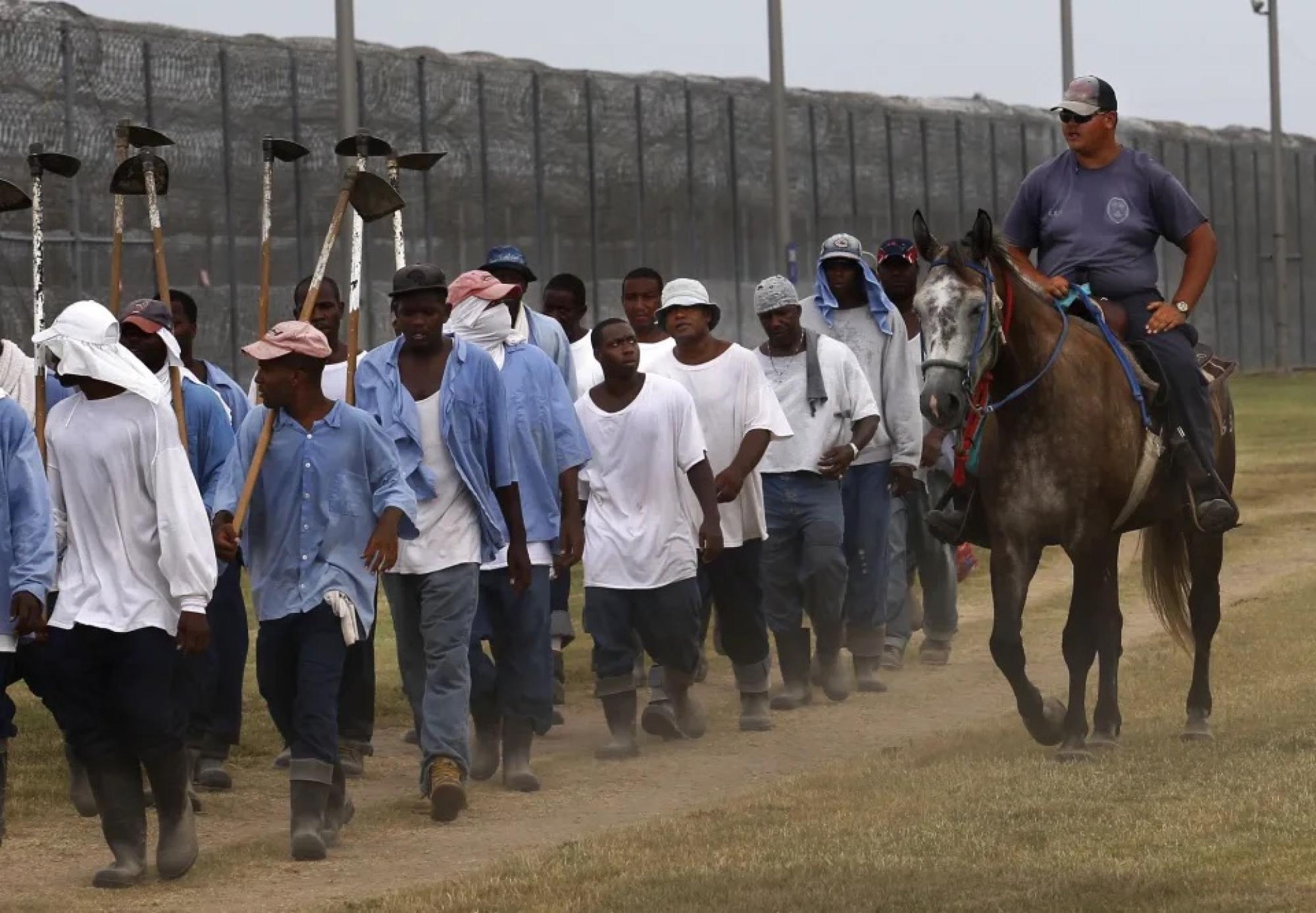
Unmarked trucks packed with prison-raised cattle roll out of the Louisiana State Penitentiary, where men are sentenced to hard labor and forced to work, for pennies an hour or sometimes nothing at all. They are among America's most vulnerable laborers. If they refuse to work, some can jeopardize their chances of parole or face punishment like being sent to solitary confinement. The goods ... prisoners produce wind up in the supply chains of a dizzying array of products found in most American kitchens, from Frosted Flakes cereal and Ball Park hot dogs to Gold Medal flour, Coca-Cola and Riceland rice. They are on the shelves of virtually every supermarket in the country, including Kroger, Target, Aldi and Whole Foods. It's completely legal. Enshrined in the Constitution by the 13th Amendment, slavery and involuntary servitude are banned except as punishment for a crime. With about 2 million people locked up, U.S. prison labor from all sectors has morphed into a multibillion-dollar empire. Almost all of the country's state and federal adult prisons have some sort of work program, employing around 800,000 people. Altogether, labor tied specifically to goods and services produced through state prison industries brought in more than $2 billion in 2021. "Slavery has not been abolished," said Curtis Davis, who spent more than 25 years at [Louisiana's Angola] penitentiary. "It is still operating in present tense," he said. "Nothing has changed."
Latest
Latest News
Each news summary is created according to strict standards. Here's how we do it.
Each summary is created using a consistent editorial procedure. The target length is approximately 16 lines of 11-point Arial text in a 650-pixel-wide column. Up to 25% of a summary may be set in bold to emphasize the most important ideas. Summaries are composed of verbatim excerpts presented in the same sequence as they appear in the original news source, with very minor editorial additions. Where material has been omitted between excerpts, the omission is indicated with ellipses (...). Any words added by an editor for clarity or context appear in [brackets]. Our original news editor was Fred Burks. Tod Fletcher edited most summaries from 2007 through 2014, and Mark Bailey has served as news editor since 2014.