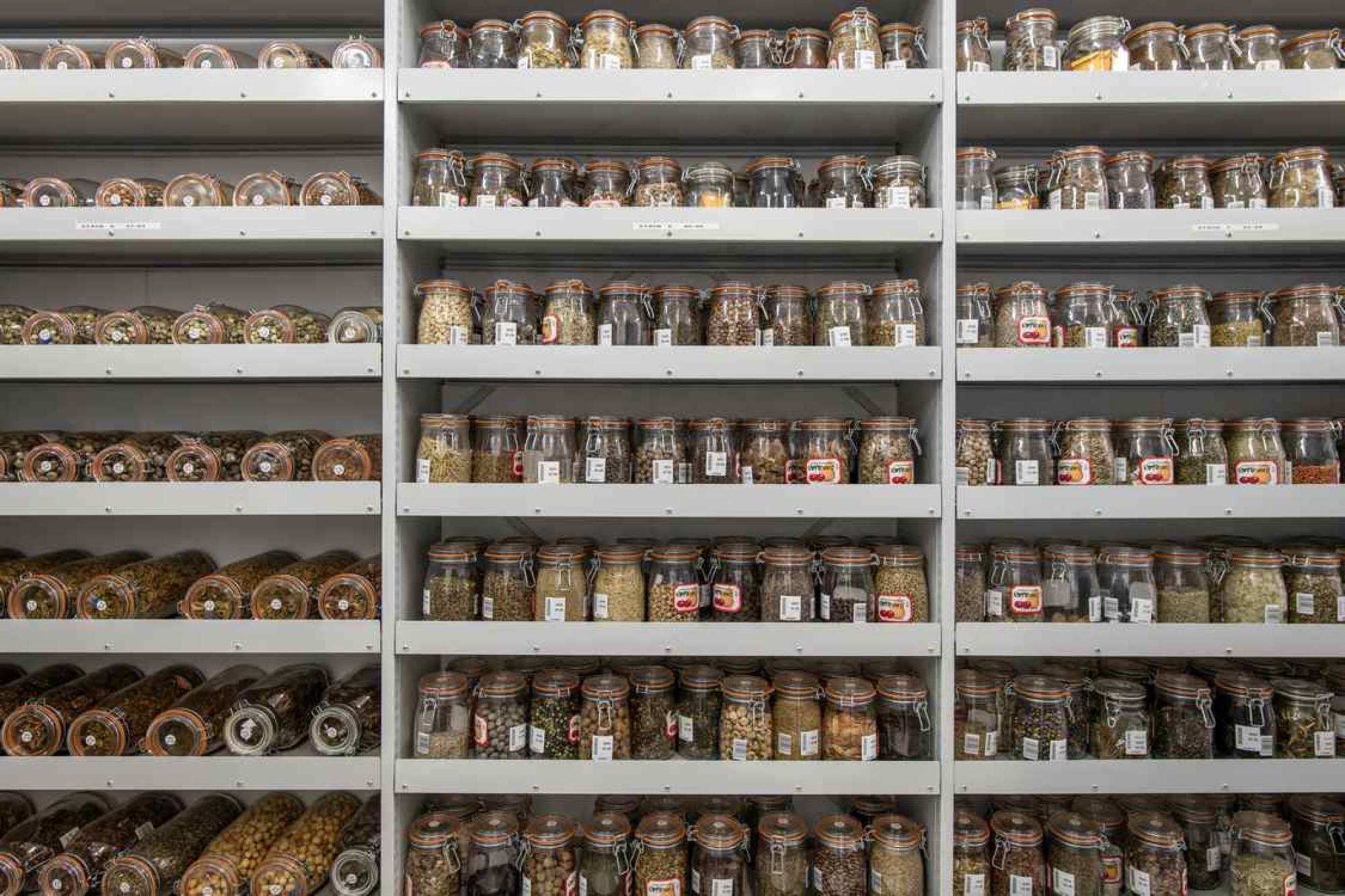
A large chunk of the world's plant diversity lies safely tucked away underground for future generations. By the numbers, the Millennium Seed Bank holds over 2 billion seeds from over 40,000 species, collected by scientists and volunteers from 279 organizations spanning over 100 countries. It's likely the largest seed vault on Earth, with the other contender being located on the Norwegian Arctic archipelago of Svalbard. Located at the Royal Botanic Gardens Kew facility in Wakehurst, seeds from all over the world are carefully cleaned, dried, and stored in walk-in freezers at -20°C, or about -4°F. For 25 years, the work has been carried out by experts who have developed the skills not only to store the seeds, but also to wake them up again, often using bespoke protocols for seed germination. "Within species there is incredible genetic diversity, which protects against disease, climate change and other threats," Dale Sanders, biologist and former director of the John Innes Centre in Norwich, told AP. "Maintaining that diversity is essential if we want to preserve the diversity of life itself." For all the archiving and record keeping and preservation, the MSB is hardly just a storehouse. To the contrary, it's always growing something: funds for ecosystem restoration or botanical research, young scientists looking to begin a career in plant conservation, or plans to restore existing ecosystems by leveraging the vault's vast reserves.
Latest
Latest News
Each news summary is created according to strict standards. Here's how we do it.
Each summary is created using a consistent editorial procedure. The target length is approximately 16 lines of 11-point Arial text in a 650-pixel-wide column. Up to 25% of a summary may be set in bold to emphasize the most important ideas. Summaries are composed of verbatim excerpts presented in the same sequence as they appear in the original news source, with very minor editorial additions. Where material has been omitted between excerpts, the omission is indicated with ellipses (...). Any words added by an editor for clarity or context appear in [brackets]. Our original news editor was Fred Burks. Tod Fletcher edited most summaries from 2007 through 2014, and Mark Bailey has served as news editor since 2014.