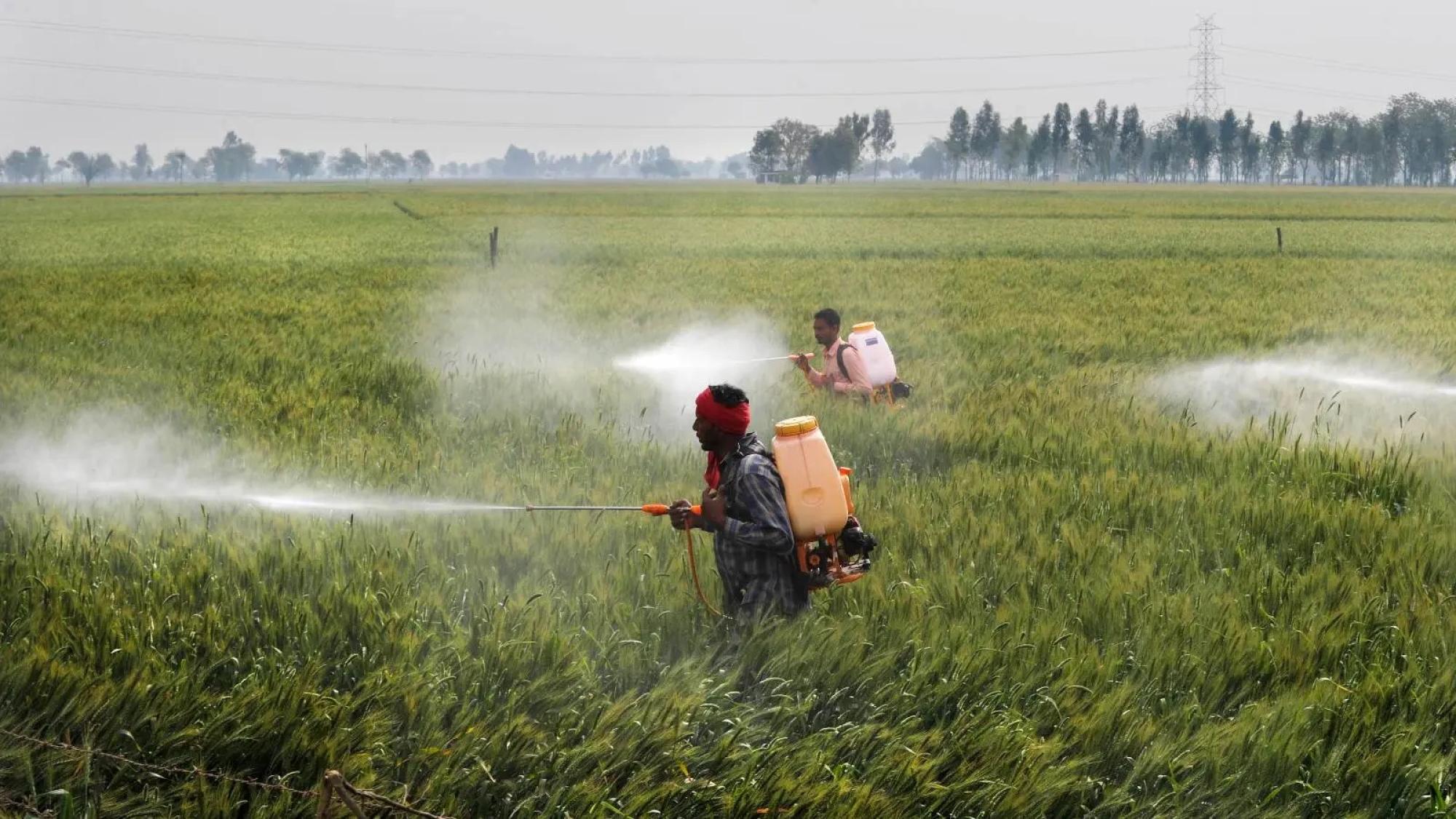
Seventeen major food manufacturers earned an average grade of F for their lack of progress in reducing pesticides in the products they sell, according to a new analysis by As You Sow, a nonprofit specializing in shareholder advocacy. "It's disheartening to see so many bad grades across the board for these major food production companies," said Jane Houlihan, research director for Healthy Babies, Bright Futures. "Studies find the highest amounts of pesticides in some of the most popular foods children eat " berries and apples, for example," said Houlihan. "Pesticides are also found in breast milk and umbilical cord blood, meaning that exposures start before birth and continue through infancy and beyond." Long-term exposure to pesticides has been linked to cancer, asthma, anxiety, Parkinson's disease, depression, and attention deficit and hyperactivity disorder, according to the report. Kale, collard and mustard greens contained the largest number of pesticides " 103 types " while nearly 90% of blueberry and green bean samples had concerning findings, according to the analysis. Green bean samples contained extremely high levels of acephate, an insecticide banned for use in the vegetable in 2011. Blueberry samples contained acephate, phosmet and malathion " organophosphates which interfere with the normal function of the nervous system. What can consumers do? Choosing organic foods is a surefire way to reduce pesticide exposure.
Latest
Latest News
Each news summary is created according to strict standards. Here's how we do it.
Each summary is created using a consistent editorial procedure. The target length is approximately 16 lines of 11-point Arial text in a 650-pixel-wide column. Up to 25% of a summary may be set in bold to emphasize the most important ideas. Summaries are composed of verbatim excerpts presented in the same sequence as they appear in the original news source, with very minor editorial additions. Where material has been omitted between excerpts, the omission is indicated with ellipses (...). Any words added by an editor for clarity or context appear in [brackets]. Our original news editor was Fred Burks. Tod Fletcher edited most summaries from 2007 through 2014, and Mark Bailey has served as news editor since 2014.