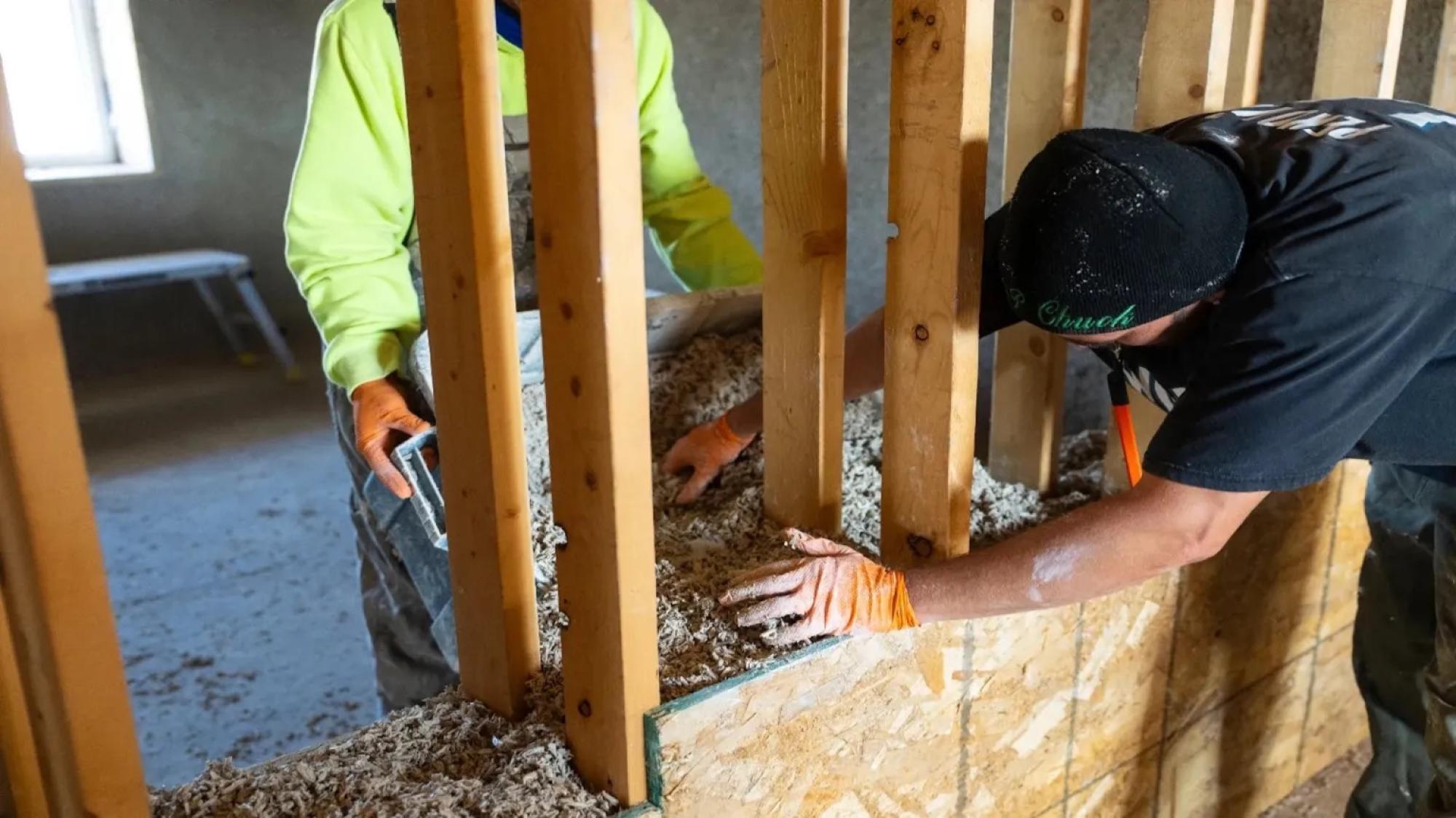
For now, it's only a gaping hole in the ground. But when construction is complete next April, the Lower Siouxalso known as part of the Mdewakanton Band of Dakota"will have a 20,000-square-foot manufacturing campus that will allow them to pioneer a green experiment, the first of its kind in the United States. They will have an integrated vertical operation to grow hemp, process it into insulation called hempcrete, and then build healthy homes with it. Right now, no one in the US does all three. Once the tribe makes this low-carbon material, they can begin to address a severe shortage of housing and jobs. Recapturing a slice of sovereignty would be a win for the Lower Sioux. They lost most of their lands in the 19th century, and the territory finally allotted to them two hours south of Minneapolis consists of just 1,743 acres of poor soil. That stands in contrast to the fertile black earth of the surrounding white-owned farmlands. Nearly half of the 1,124 enrolled members of the tribe need homes. "The idea of making homes that would last and be healthy was a no-brainer," said Robert "Deuce" Larsen, the tribal council president. Leading the national charge on an integrated hempcrete operation is no mean feat, seeing that virtually no one in the community had experience with either farming or construction before the five-person team was assembled. Hemp can grow in a variety of climates. What's more, hemp regenerates soil, sequesters carbon, and doesn't require fertilizers.
Latest
Latest News
Each news summary is created according to strict standards. Here's how we do it.
Each summary is created using a consistent editorial procedure. The target length is approximately 16 lines of 11-point Arial text in a 650-pixel-wide column. Up to 25% of a summary may be set in bold to emphasize the most important ideas. Summaries are composed of verbatim excerpts presented in the same sequence as they appear in the original news source, with very minor editorial additions. Where material has been omitted between excerpts, the omission is indicated with ellipses (...). Any words added by an editor for clarity or context appear in [brackets]. Our original news editor was Fred Burks. Tod Fletcher edited most summaries from 2007 through 2014, and Mark Bailey has served as news editor since 2014.