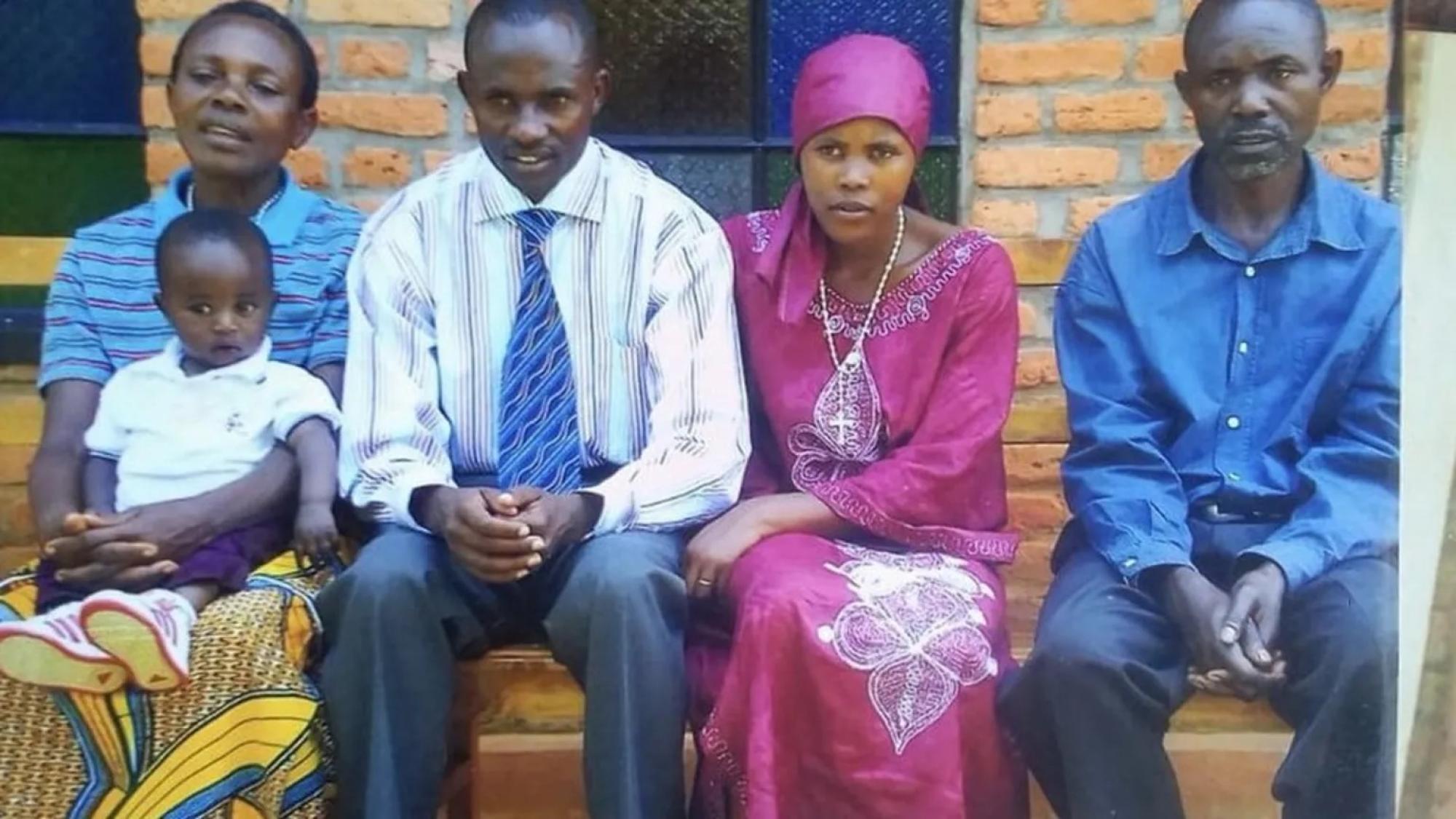
To heal you must love - so believes a woman who not only forgave the man who killed her husband 28 years ago during Rwanda's genocide, but allowed his daughter to marry her son. Bernadette Mukakabera has been telling her story as part of continuing efforts by the Catholic Church to bring reconciliation to a society torn apart in 1994 when some 800,000 people were slaughtered in 100 days. Our children had nothing to do with what happened. They just fell in love and nothing should stop people from loving each other," Bernadette told the BBC. [In 1994] thousands of Hutus ... began well organised killings - turning on their Tutsi neighbours. One of these was Gratien Nyaminani, whose family lived next to Bernadette's. After the massacres ended, with a Tutsi rebel group taking power, hundreds of thousands of people accused of involvement in the killings were detained. Gratien was taken into custody and eventually tried by one of the community courts, known as gacaca, set up to deal with genocide suspects. At these weekly hearings, communities were given a chance to face the accused and both hear and give evidence about what really happened - and how it happened. The final reconciliation happens in public where the accused and the victim stand together. The victim stretches their hands towards the accused as a sign of forgiveness. In 2004, Gratien told Bernadette how he had killed her husband and apologised - and at the same hearing she chose to forgive him. This meant that he did not have to serve a 19-year jail term, but a two-year community service sentence instead.
Latest
Latest News
Each news summary is created according to strict standards. Here's how we do it.
Each summary is created using a consistent editorial procedure. The target length is approximately 16 lines of 11-point Arial text in a 650-pixel-wide column. Up to 25% of a summary may be set in bold to emphasize the most important ideas. Summaries are composed of verbatim excerpts presented in the same sequence as they appear in the original news source, with very minor editorial additions. Where material has been omitted between excerpts, the omission is indicated with ellipses (...). Any words added by an editor for clarity or context appear in [brackets]. Our original news editor was Fred Burks. Tod Fletcher edited most summaries from 2007 through 2014, and Mark Bailey has served as news editor since 2014.