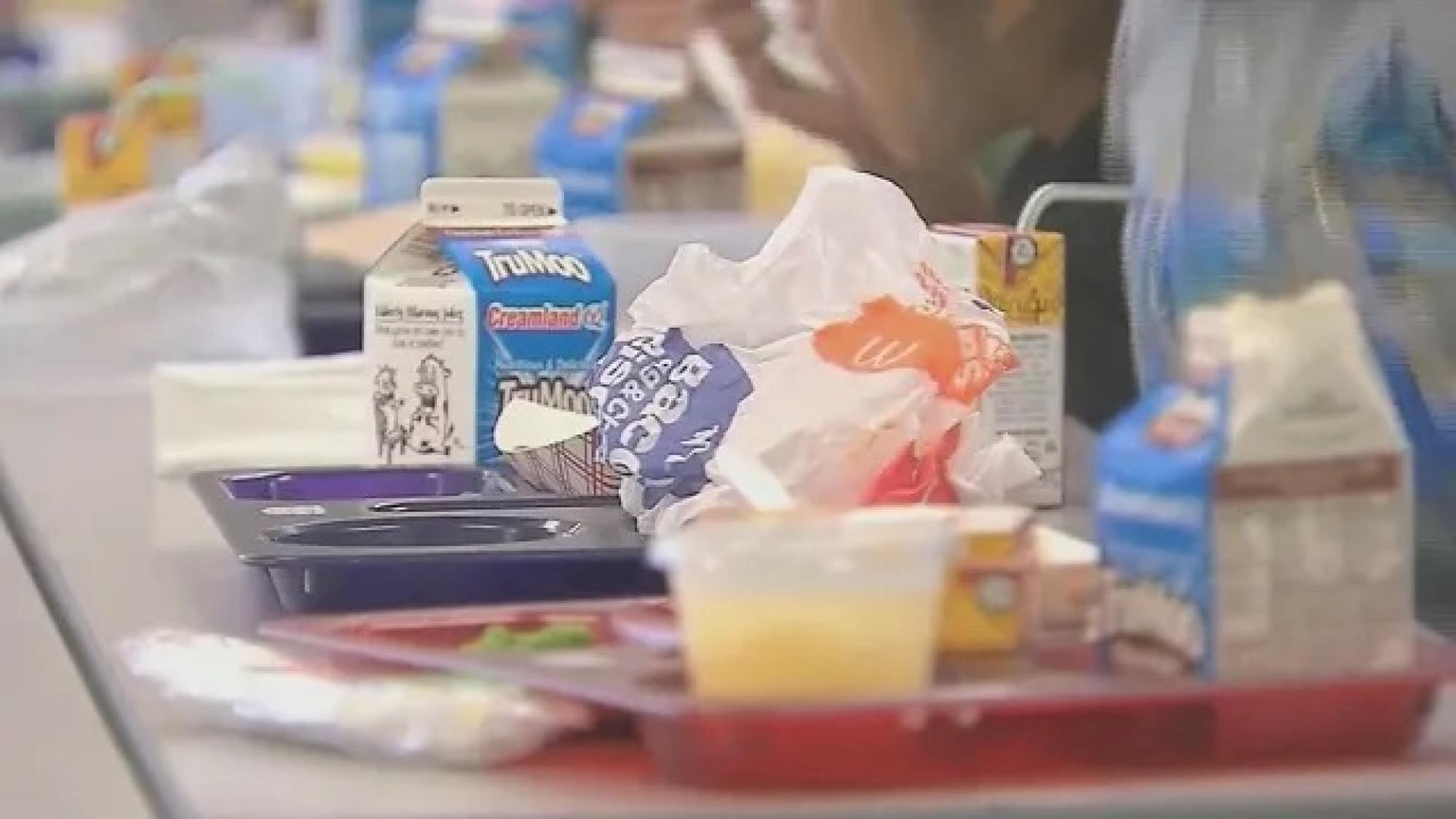
In America's schools, 30 million lunches are served every day. There are standards in place for things like calories, sodium, and added sugar. The USDA asserts that lunches consumed from schools are the most nutritious. We sent school lunches to the Health Research Institute, an accredited lab in Iowa, to hunt for what standards don't cover: heavy metals, pesticides, and veterinary drugs. Our tests revealed unseen, largely unregulated components increasingly connected to everything from attention deficit disorder and liver disease to hormone disruption and cancer. Samples we collected from schools in Washington DC, Virginia, and Maryland included common fare like breadsticks, pizza, potatoes, and fruit. The lab identified more than 50 pesticides in our samples, with dozens often layered into one meal. 38 different pesticides were detected in just one elementary school lunch. 23 pesticides were found in a single strawberry cup. The fungicide, carbendazim, which is banned in most European countries, Brazil and Australia because it is increasingly connected to cancer, infertility, and birth defects, was found in five of our twelve samples. Glyphosate, a widely used and controversial weed killer ... connected to cancer, diabetes, and heart problems, was detected in multiple samples, often in wheat-based products like bread. Cadmium, a known carcinogen, was detected in our samples at a level 12 times higher than the FDA's limit for bottled water.
Latest
Latest News
Each news summary is created according to strict standards. Here's how we do it.
Each summary is created using a consistent editorial procedure. The target length is approximately 16 lines of 11-point Arial text in a 650-pixel-wide column. Up to 25% of a summary may be set in bold to emphasize the most important ideas. Summaries are composed of verbatim excerpts presented in the same sequence as they appear in the original news source, with very minor editorial additions. Where material has been omitted between excerpts, the omission is indicated with ellipses (...). Any words added by an editor for clarity or context appear in [brackets]. Our original news editor was Fred Burks. Tod Fletcher edited most summaries from 2007 through 2014, and Mark Bailey has served as news editor since 2014.