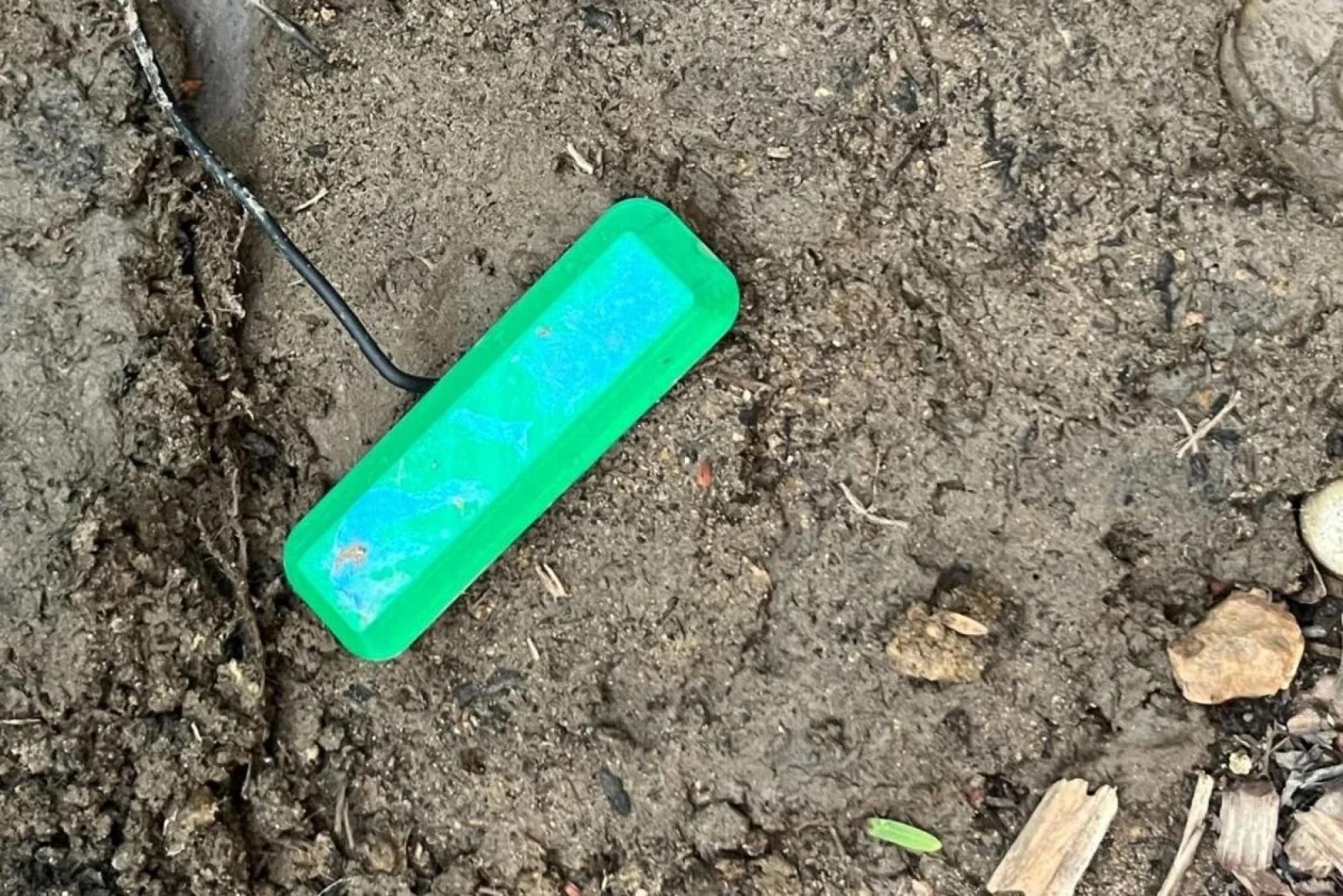
Scientists have developed a new type of fuel cell that can provide endless power through electricity harvested from dirt. A team from Northwestern University in the US say the book-sized unit could be used to power sensors used in farming, as well as remote devices in the Internet of Things (IoT). The technology works by generating electricity from naturally-occurring bacteria within the soil, offering a sustainable and renewable alternative to toxic and flammable batteries. "These microbes are ubiquitous; they already live in soil everywhere," said George Wells ... at Northwestern University. "We can use very simple engineered systems to capture their electricity. We're not going to power entire cities with this energy. But we can capture minute amounts of energy to fuel practical, low-power applications." The soil-based microbial fuel cell (MFC) is based on a 113-year-old technology first developed by British botanist Michael Cressé Potter, who was the first person to successfully generate electricity from microorganisms. It took until the 21st century for the first commercial applications to be proposed, with Foster's Brewing using a prototype to convert the yeast in brewery wastewater into electricity. The latest fuel cell was tested in wet and dry conditions to power sensors measuring soil moisture and detecting touch, outlasting the power of similar technologies by 120 per cent.
Latest
Latest News
Each news summary is created according to strict standards. Here's how we do it.
Each summary is created using a consistent editorial procedure. The target length is approximately 16 lines of 11-point Arial text in a 650-pixel-wide column. Up to 25% of a summary may be set in bold to emphasize the most important ideas. Summaries are composed of verbatim excerpts presented in the same sequence as they appear in the original news source, with very minor editorial additions. Where material has been omitted between excerpts, the omission is indicated with ellipses (...). Any words added by an editor for clarity or context appear in [brackets]. Our original news editor was Fred Burks. Tod Fletcher edited most summaries from 2007 through 2014, and Mark Bailey has served as news editor since 2014.