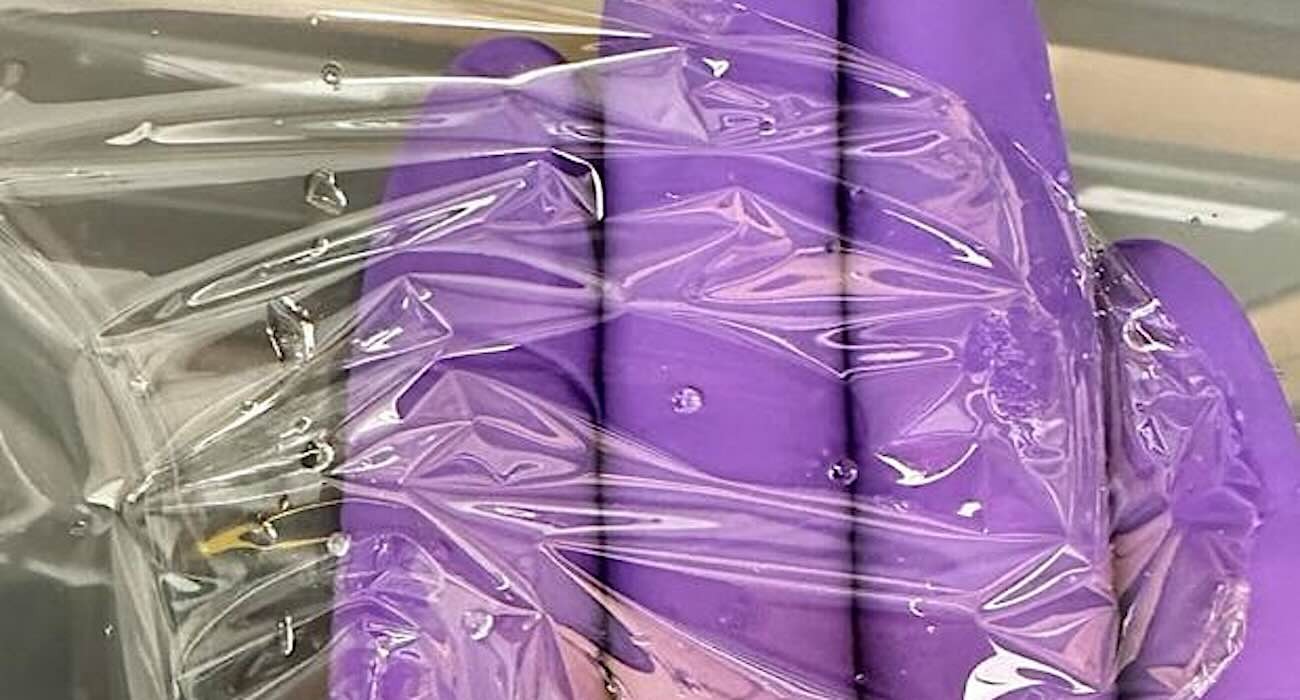
A surprisingly robust, yet green, alternative to plastic packaging has been developed from the hemp plant–an age-old form of the cannabis plant that doesn’t get people high. The non-toxic plastic alternative is a stretchy thermoplastic that can extend up to 1,600% of its size. The material also has a high “glass transition temperature”—a quality that allows plastics to stay durable when it comes into contact with boiling hot water—according to a study published this week in the journal Chem Circularity. “Very few, if any, plastics made from natural resources have this quality,” said study co-author ... Professor Gregory Sotzing. The research team hopes that cannabidiol (CBD) from the hemp flower can replace bisphenol-A, the synthetic industrial chemical found in today’s processed plastics, because bisphenol-A is “a known endocrine disruptor”—meaning it can disturb the delicate balance of our hormones. Prof. Sotzing says the hemp material is suitable for producing transparent plastic films, coatings, and other common materials currently made from petroleum-based materials such as polyethylene terephthalate (PET), which is widely used in single-use water bottles, [and] food packaging. PET requires large quantities of fossil fuels ... and, once discarded, breaks down into tiny particles called “microplastics” that leach chemicals (including PET) into water, air, and food, which are linked to inflammation and cell damage.
Latest
Latest News
Each news summary is created according to strict standards. Here's how we do it.
Each summary is created using a consistent editorial procedure. The target length is approximately 16 lines of 11-point Arial text in a 650-pixel-wide column. Up to 25% of a summary may be set in bold to emphasize the most important ideas. Summaries are composed of verbatim excerpts presented in the same sequence as they appear in the original news source, with very minor editorial additions. Where material has been omitted between excerpts, the omission is indicated with ellipses (...). Any words added by an editor for clarity or context appear in [brackets]. Our original news editor was Fred Burks. Tod Fletcher edited most summaries from 2007 through 2014, and Mark Bailey has served as news editor since 2014.