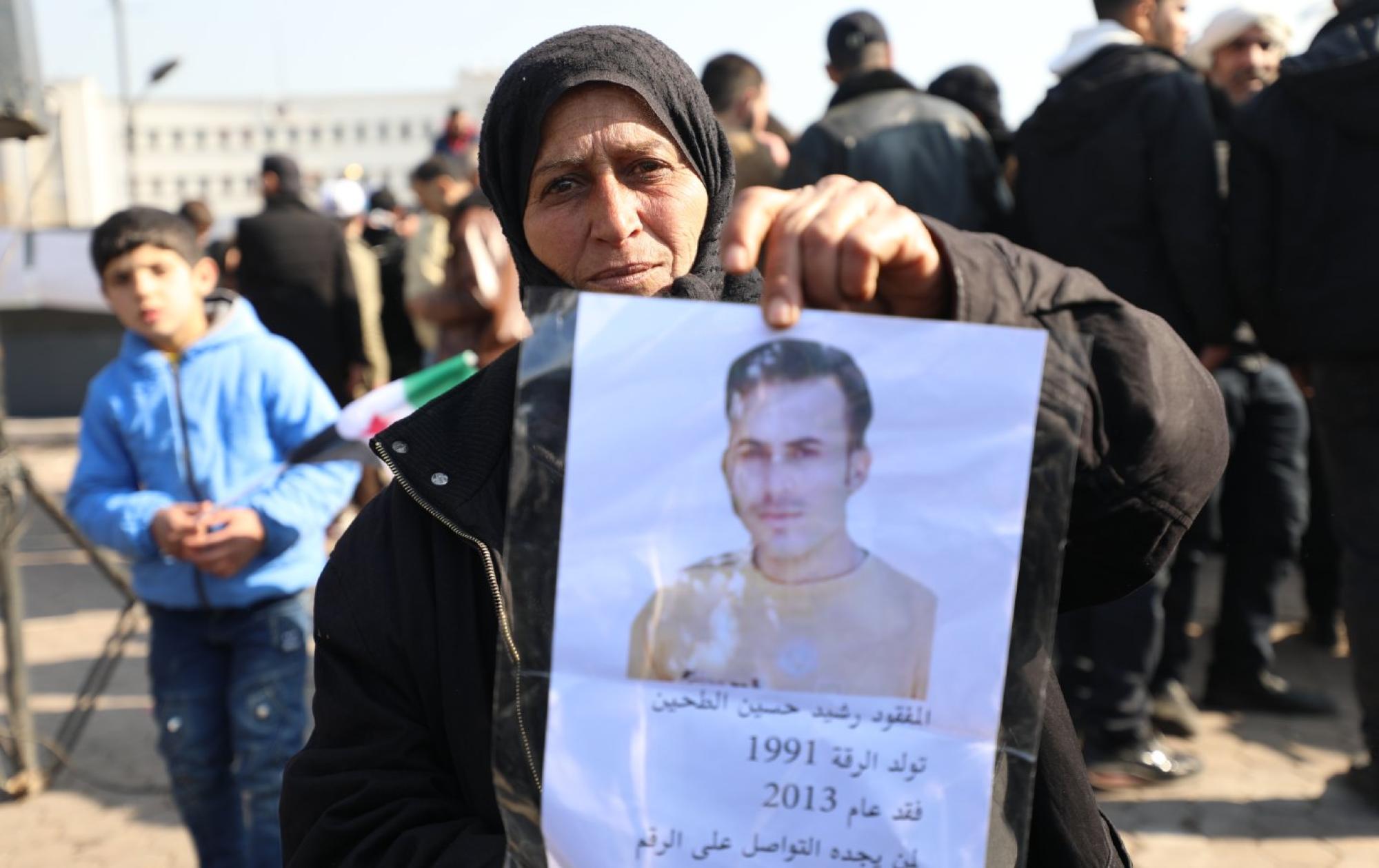
Even before 9/11, as the US hunted for terrorists, the CIA launched "extraordinary rendition"an ingenious scheme to interrogate "high-value" suspects outside the country and thus avoid US laws on torture. The first suspects were taken to Egypt as early as in the mid-1990s and the program continued until 2007. How many did the CIA render? A 2014 Senate Intelligence Committee report noted that exact numbers can't be known. But according to a ... Washington Post article, "thousands were arrested and held with US assistance in countries known for brutal treatment of prisoners." In 2004, former CIA agent Robert Baer [said] that "conceptually, the practice is a rendition to torture. If you wanted a serious interrogation, you send a prisoner to Jordan. If you want them to be tortured, you send them to Syria. If you want someone to disappear, Egypt." Survivors [of Syria's Sednaya military prison] tell horrific tales: they were sodomized with swords, suspended in shackles from cages, beaten with iron rods, kept naked in freezing cells the size of coffins, forced to kill cellmates and starved. Some say their genitals were subject to electric shocks. Besides Syria, the CIA dispatched suspects to Egypt, Uzbekistan, Morocco, Algeria, Jordan, Pakistan, Poland, Thailand and Romania. The Senate report stated that "the CIA provided millions of dollars in cash payments to foreign government officials to host secret CIA detention sites."
Latest
Latest News
Each news summary is created according to strict standards. Here's how we do it.
Each summary is created using a consistent editorial procedure. The target length is approximately 16 lines of 11-point Arial text in a 650-pixel-wide column. Up to 25% of a summary may be set in bold to emphasize the most important ideas. Summaries are composed of verbatim excerpts presented in the same sequence as they appear in the original news source, with very minor editorial additions. Where material has been omitted between excerpts, the omission is indicated with ellipses (...). Any words added by an editor for clarity or context appear in [brackets]. Our original news editor was Fred Burks. Tod Fletcher edited most summaries from 2007 through 2014, and Mark Bailey has served as news editor since 2014.